


WE Project Store
Monthly Report • May 2026
Empowering women through sustainable livelihoods, artisan entrepreneurship, skill development and community-led innovation.
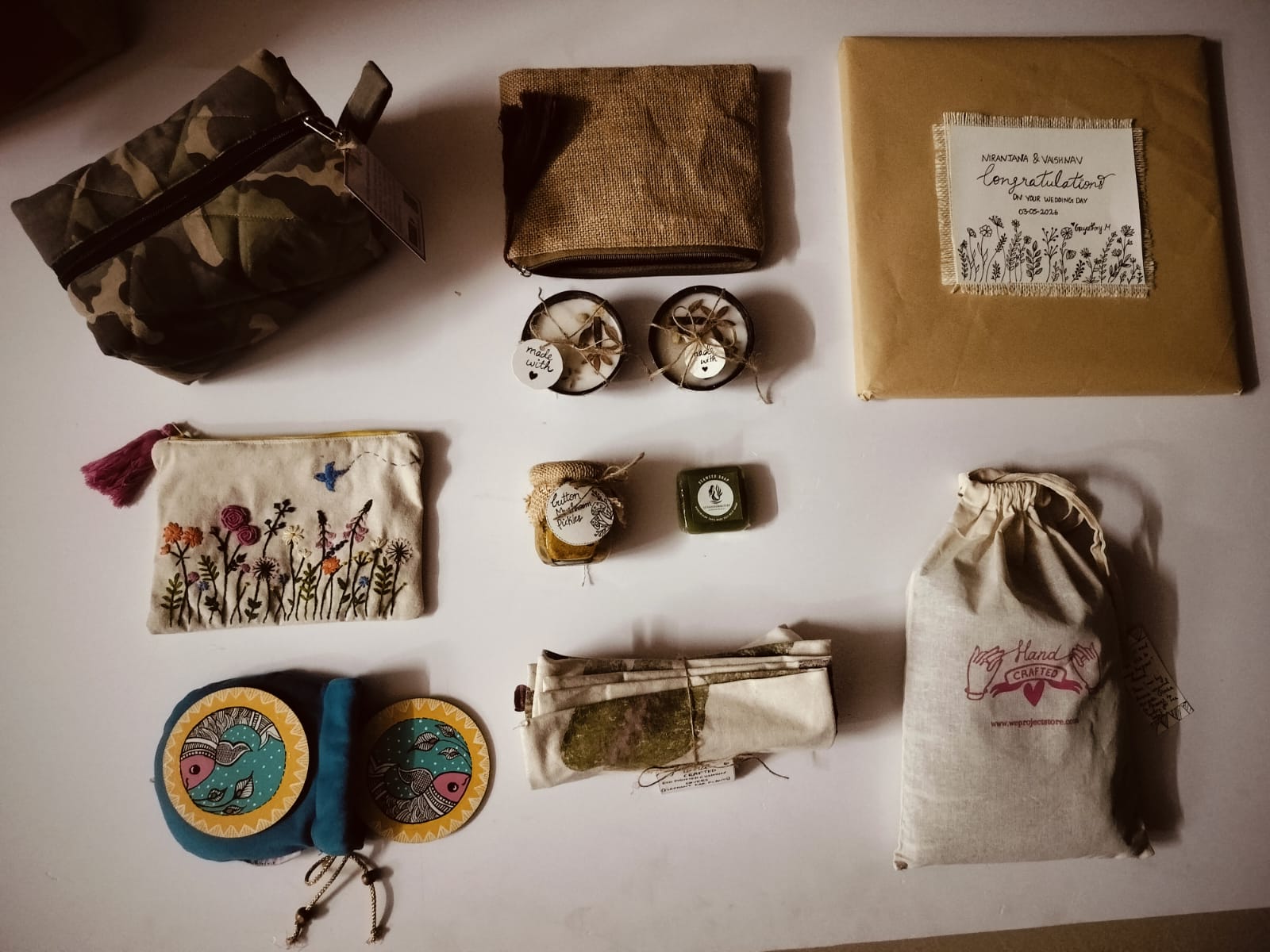
WE STORE proudly marked a new milestone by receiving and curating its very first customized wedding gift hamper, showcasing the creativity and craftsmanship of its artisan community. Designed as a unique, personalized gift for a wedding celebration, the hamper reflected the beauty of handcrafted products while demonstrating WE STORE's ability to create bespoke gifting experiences.
Every item in the hamper was thoughtfully selected and handcrafted by skilled artisans from across the WE STORE network. The collection included a waterproof khaki-print travel pouch with coffee-themed lining by Bincy Chechi, a hand-embroidered Sweet Spring Handy Pouch, Madhubani art coasters by Primcy Chechi, eco-printed cushion covers by Aswathy Chechi, mushroom pickle sourced from Rajasthan, handcrafted seaweed soap, elegant coconut shell candles by Uma Bhadra, a handcrafted jute pouch by Hemalatha Ji, a stylish Glorka open jacket from Rajasthan, a contemporary mural art frame of Lord Ganapati by Adithya, and a beautifully crafted French knot embroidered portrait of the couple by Jyothi Chechi, capturing the special moment of their wedding.
The customized hamper was carefully assembled to offer a meaningful blend of traditional artistry, sustainable products, and contemporary handcrafted design. It highlighted the collaborative efforts of multiple artisans, each contributing their unique expertise to create a memorable and one-of-a-kind wedding gift.
The order, received on April 26, was successfully completed and delivered on May 1, 2026, reflecting WE STORE's commitment to quality, timely delivery, and personalized customer service.
This milestone reinforces WE STORE's growing capability to offer customized gifting solutions for weddings, corporate events, and special occasions while empowering artisans by providing a platform for their handcrafted creations. Through such initiatives, WE STORE continues to promote sustainable livelihoods, preserve traditional crafts, and deliver thoughtfully curated products that carry both artistic value and personal meaning.
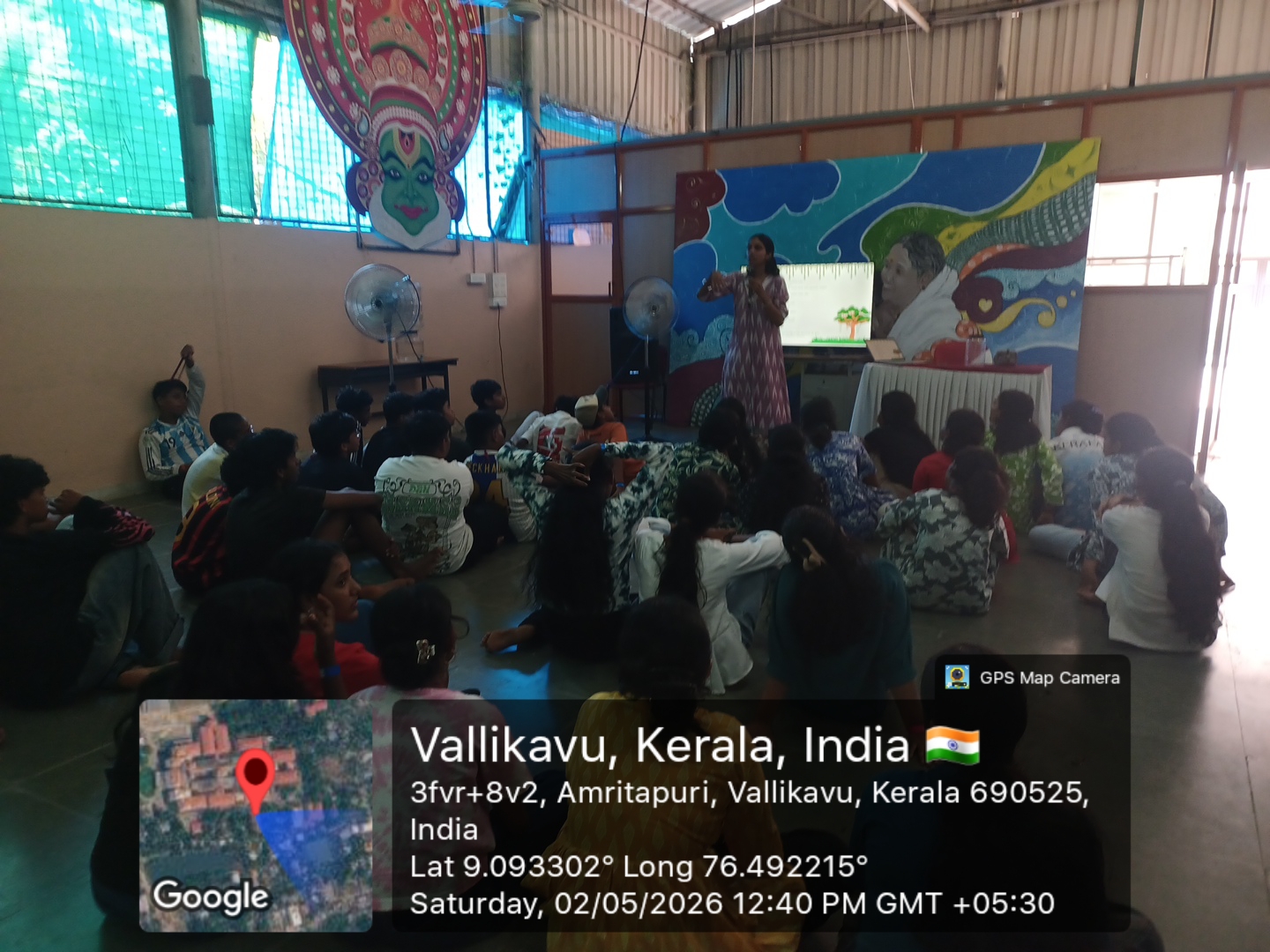
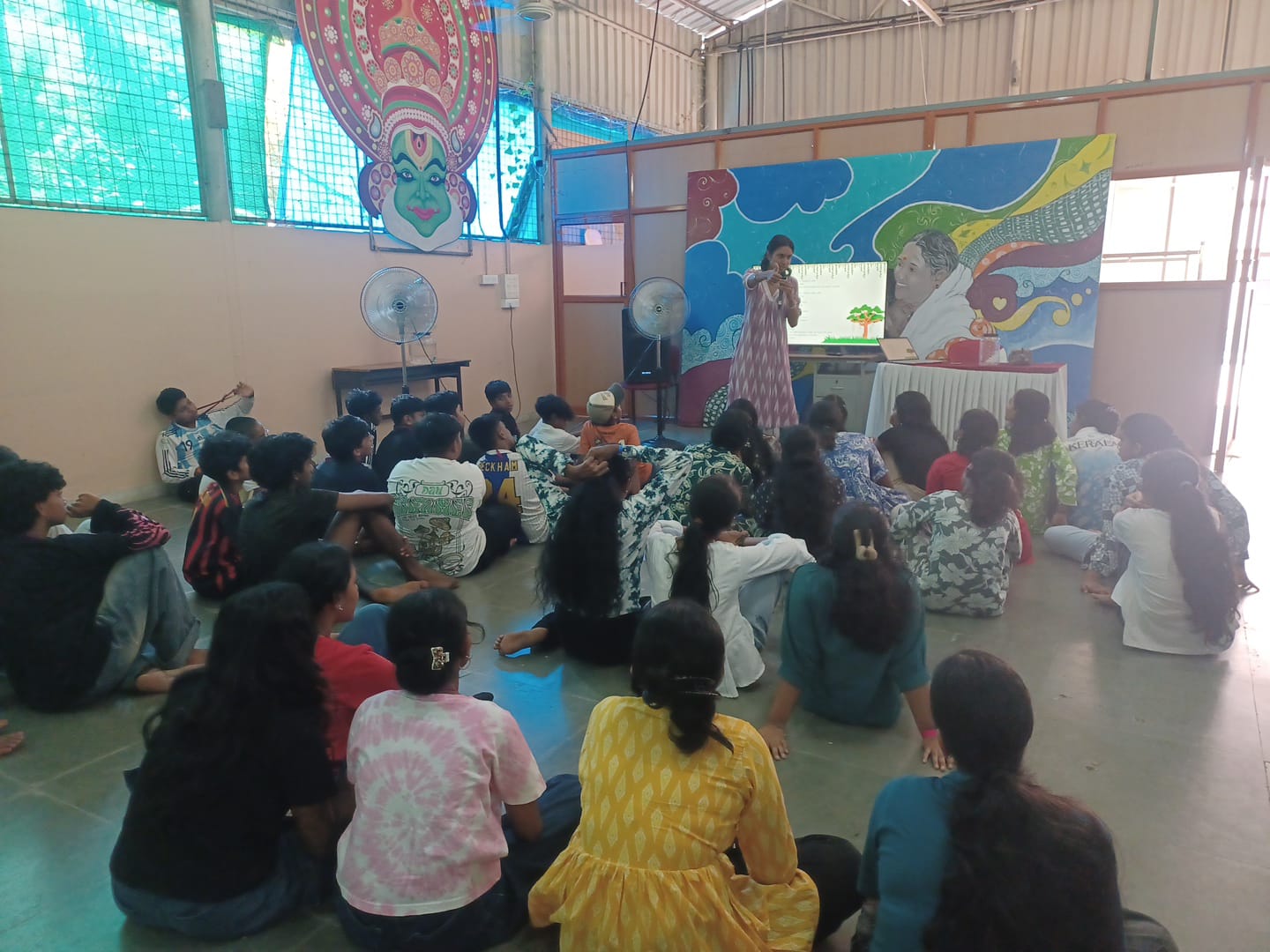
WE STORE's Radhika Shetty Conducts Snake Awareness Session at Vismaya 2026 Summer Camp
The Mata Amritanandamayi Math launched Vismaya 2026, a vibrant and transformative summer camp designed to provide students with an enriching and meaningful vacation experience. Organized by Amrita LEAP, the camp brings together a diverse range of activities, workshops, value-based learning sessions, creative experiences, games, cultural programs, and opportunities for self-discovery, all aimed at nurturing confidence, creativity, teamwork, and personal growth among young participants..
As part of the camp's expert-led learning sessions, Radhika Shetty from WE STORE was invited as a content expert to conduct a special awareness session on snakes and snakebite prevention. Radhika has been actively involved in voluntary snake rescue operations and public awareness initiatives for several years, making her an ideal resource person for this important topic.
With Kerala witnessing a recent increase in snakebite incidents and fatalities due to snake envenomation, the session addressed an issue of significant public importance while also capturing the curiosity of young learners. Through an engaging and interactive presentation, Radhika introduced participants to the common snake species found in Kerala and explained their vital role in maintaining ecological balance. She also highlighted the cultural significance of serpents in Indian traditions, helping students appreciate snakes beyond common misconceptions.
The session provided practical guidance on the dos and don'ts following a snakebite, first-aid measures for victims, methods to prevent snake encounters, and the importance of seeking timely medical treatment. Participants also learned about the production of antivenom, the invaluable contribution of India's Irula tribe in venom collection, and the hospitals equipped to provide appropriate treatment for snakebite cases.
To further encourage learning beyond the classroom, students were introduced to the Snakepedia App, a valuable educational resource for identifying snakes and understanding snake safety. The session concluded with an interactive question-and-answer segment, where students enthusiastically engaged with the topic and clarified their doubts.
Radhika Shetty's participation at Vismaya 2026 reflects WE STORE's commitment to community outreach and knowledge sharing, while demonstrating how artisan and community networks can contribute meaningfully to public awareness and education. The session successfully empowered young participants with life-saving knowledge, environmental awareness, and a deeper appreciation for biodiversity.
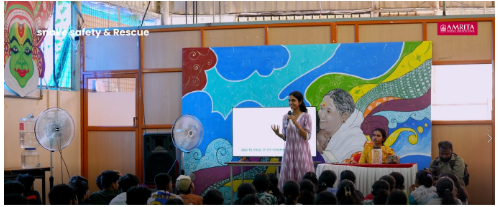
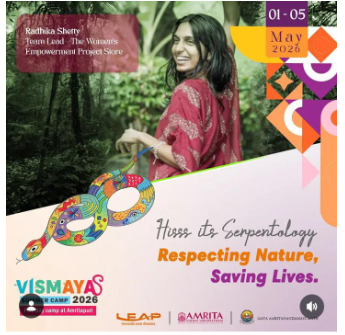
As part of the Vismaya 2026 Children's Summer Camp organized by Amrita LEAP, Radhika Shetty from WE STORE was invited as a content expert to conduct an engaging awareness session on snakes and snakebite prevention. Radhika has been actively involved in voluntary snake rescue operations and public awareness programs for the past several years. With the recent rise in snakebite incidents and fatalities due to snake envenomation, the session addressed a topic of growing public importance while capturing the curiosity and interest of young participants. During the interactive session, Radhika introduced students to the common snake species found in Kerala and explained the important role snakes play in maintaining ecological balance. She also highlighted the cultural significance of serpents in Indian traditions, helping participants understand and appreciate these often-misunderstood reptiles.
The session covered essential safety measures, including the dos and don'ts in the event of a snakebite, first-aid procedures for victims, strategies to prevent snake encounters, and the importance of seeking immediate medical attention. Participants also learned about the production of antivenom, the invaluable contribution of India's Irula tribe in venom collection, and the hospitals that provide specialized treatment for snakebite cases. To encourage continued learning, students were introduced to the Snakepedia App, a useful educational resource for identifying snakes and promoting snake awareness. The session concluded with an interactive question-and-answer segment, where participants enthusiastically engaged with the topic and sought answers to their questions. The session successfully combined science, environmental awareness, and practical safety education, equipping students with valuable knowledge while fostering greater respect for wildlife and biodiversity..
WE STORE successfully completed and delivered a customized wedding gift order featuring a beautifully handcrafted sunflower-themed bag and a matching hand-embroidered sunflower pouch. Designed as a personalized wedding gift, the set reflected the creativity and craftsmanship of WE STORE's artisan network. Adding a special personal touch, the pouch was embroidered with the names of both the bride and groom, making it a unique keepsake for the couple. The intricate embroidery was skillfully handcrafted by Ardhra, while the stitching and finishing of the products were carried out by Santhi Chechi.
The customized order showcased the collaborative efforts of trained artisans, combining detailed hand embroidery with quality craftsmanship to create a meaningful and elegant gift. Successfully delivered on May 3, 2026, the project highlights WE STORE's growing expertise in designing personalized handcrafted products for weddings and other special occasions. Through such customized creations, WE STORE continues to promote sustainable livelihoods for artisans while offering customers distinctive, handcrafted gifts that celebrate life's special moments with a personal touch..
WE STORE Conducts Inclusive Crochet Skill Development Workshop for Deaf Women in Kochi
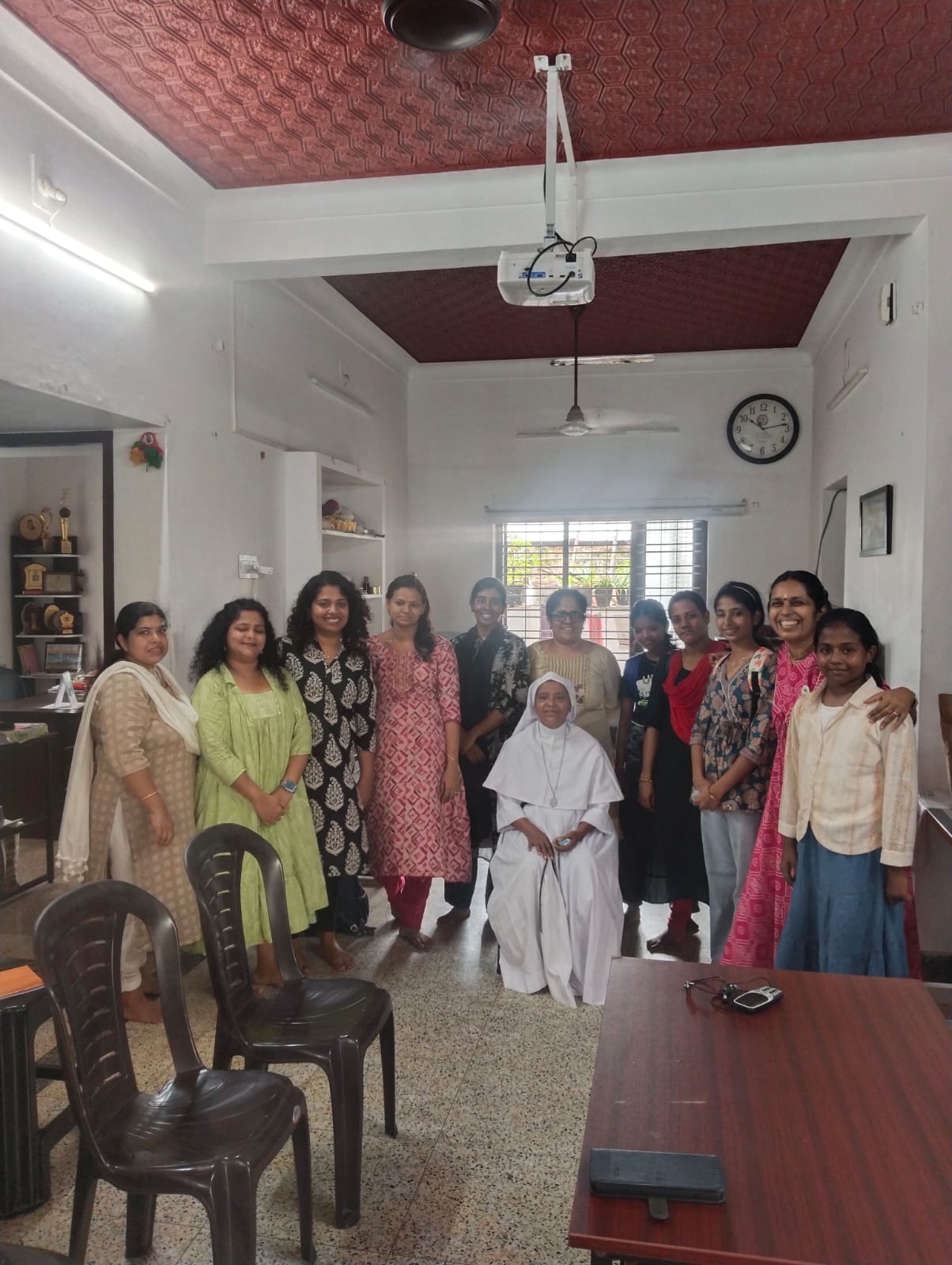
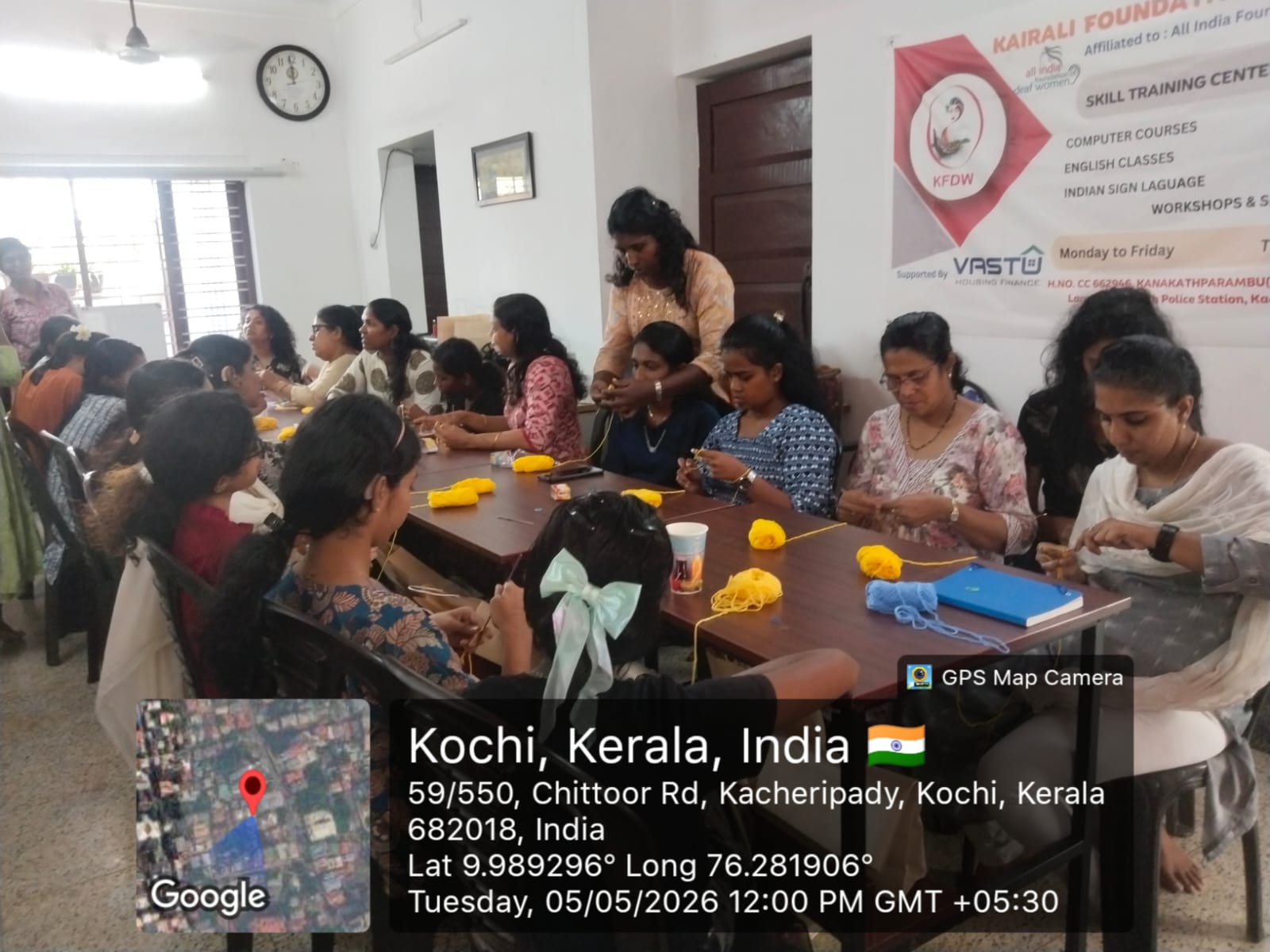
As part of its commitment to inclusive livelihood development and women's empowerment, WE STORE organized a Crochet Skill Development Workshop at the Skill Training Center for Deaf Women, Kacheripady, Kochi, Kerala. The workshop was led by WE STORE artisan Bincy, who introduced participants to the fundamentals of crochet through the creation of a Lord Krishna crochet motif, offering an engaging and culturally meaningful learning experience. A total of 19 deaf women participated in the workshop, which followed a hands-on, practice-oriented approach. Participants were introduced to essential crochet techniques, including holding the crochet hook correctly, creating foundation chains, mastering basic stitches, maintaining stitch consistency, shaping patterns, and assembling the final crochet design. Individual demonstrations and personalized guidance ensured that every participant was able to learn and practice the techniques with confidence.
Beyond developing technical skills, the workshop aimed to nurture creativity, patience, concentration, and fine motor coordination while equipping participants with a practical handicraft skill that can be further developed into a sustainable source of income. The training highlighted the potential of traditional crafts as a pathway to self-employment and entrepreneurship for women with disabilities. The initiative reflects WE STORE's ongoing commitment to promoting inclusive skill development by creating accessible vocational training opportunities for marginalized communities. Through such programmes, WE STORE continues to empower women with disabilities, preserve traditional craft techniques, and support sustainable livelihoods through artisan-led entrepreneurship..
WE STORE Fulfils Customized Tote Bag Order, Empowering Rural Women Artisans
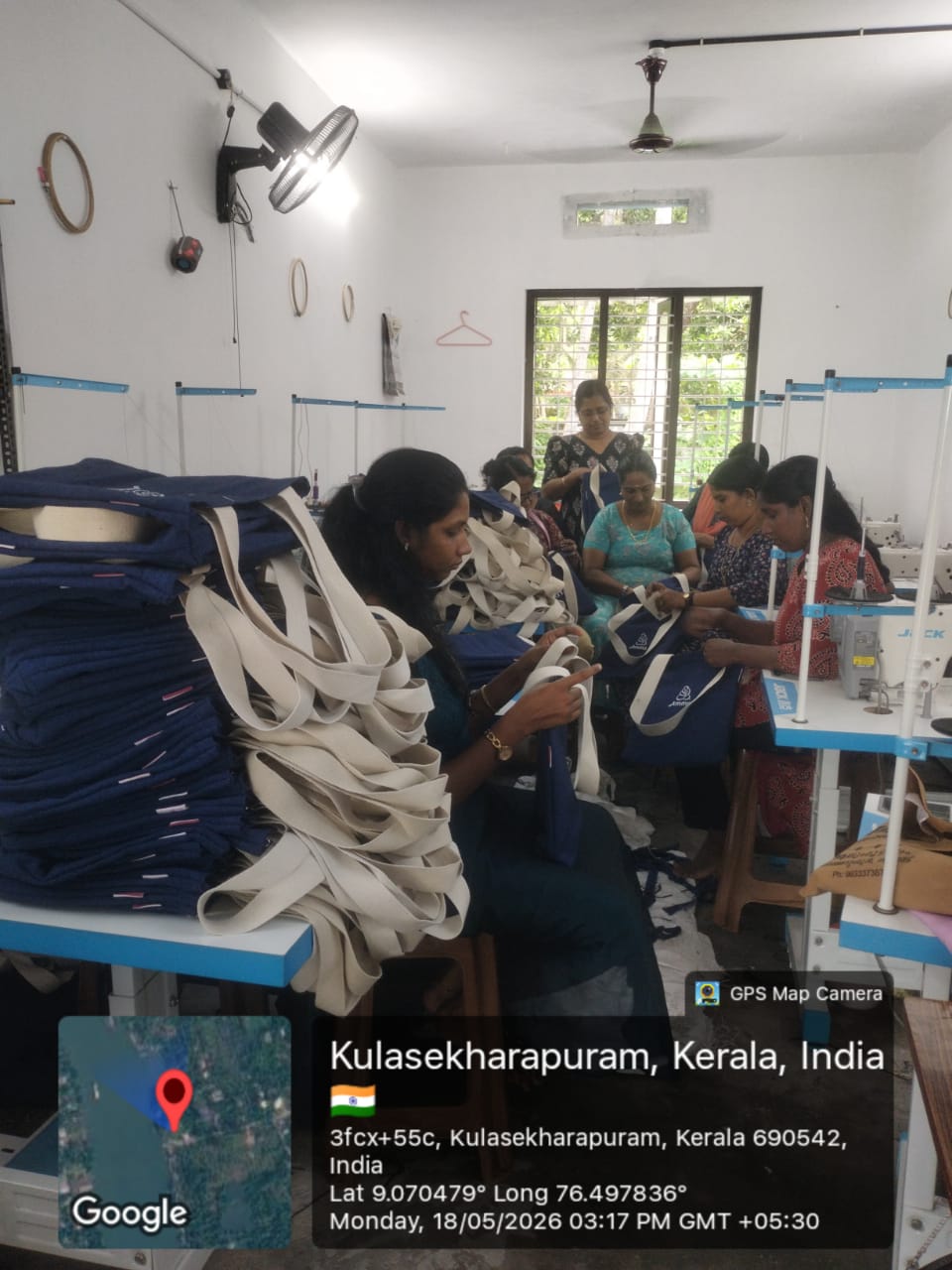
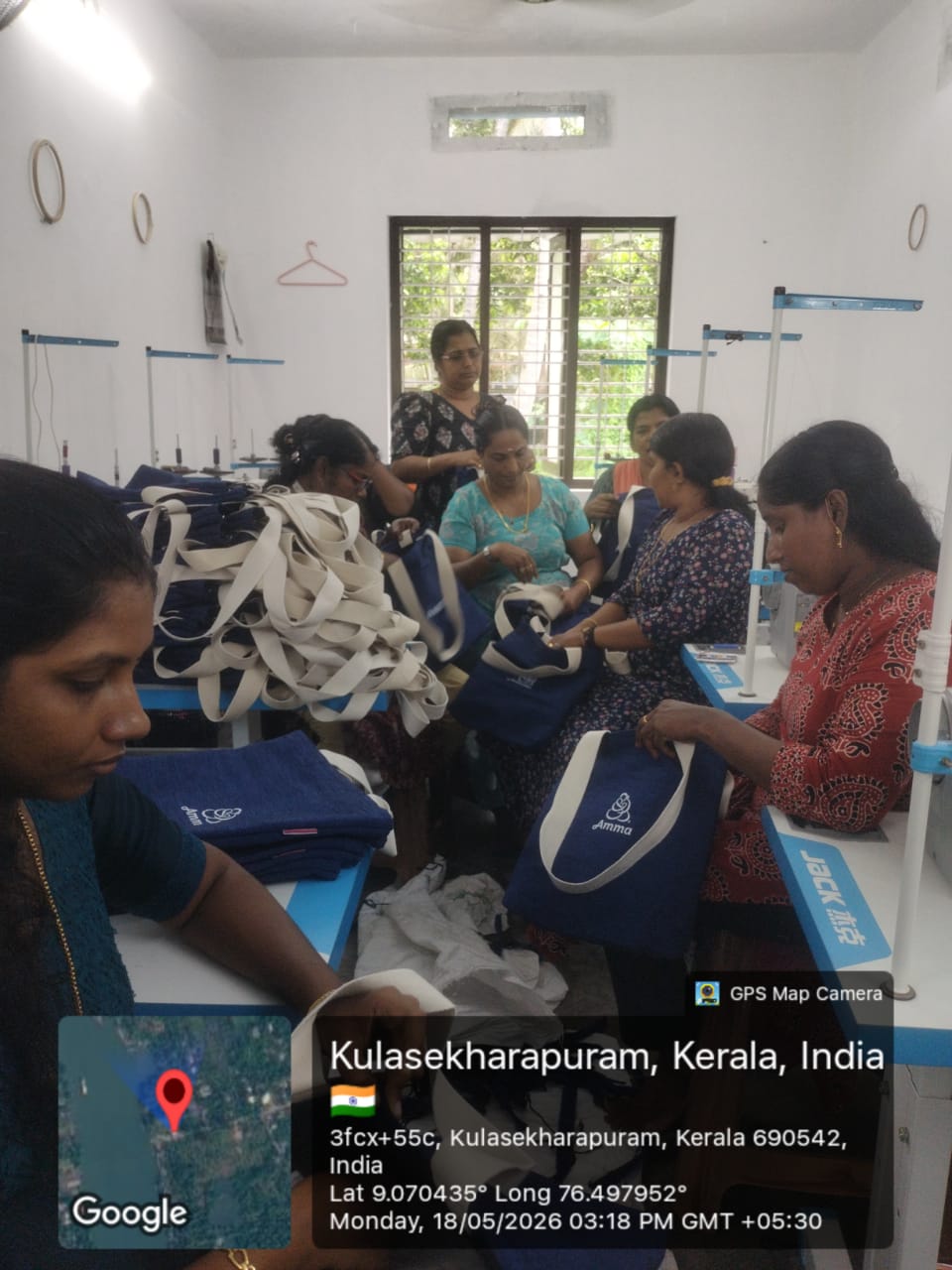
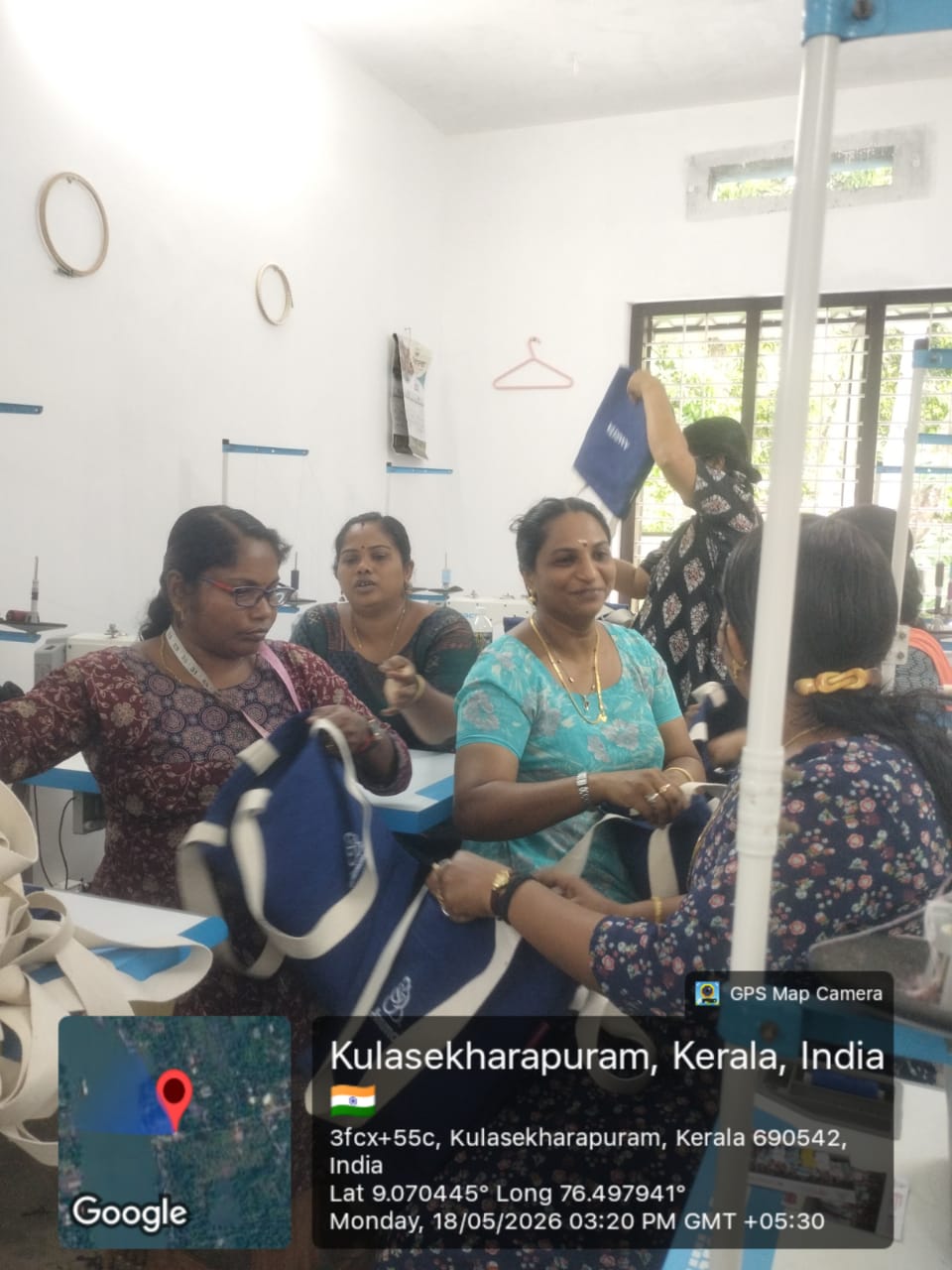
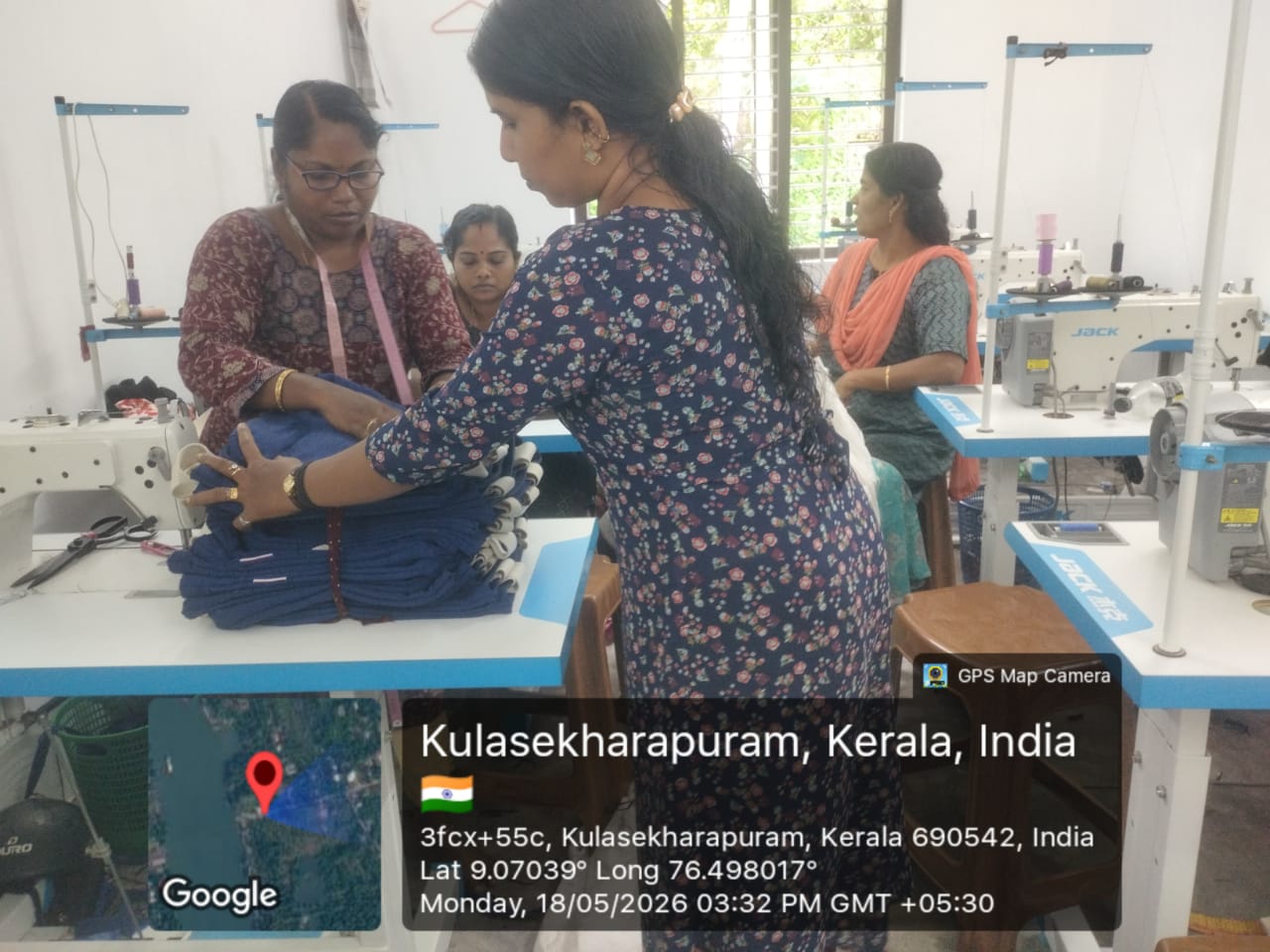
The Amrita School for Sustainable Futures, Amrita Vishwa Vidyapeetham, placed an order with WE Project Store for the production of 100 customized blue tote bags featuring the AMRITA and AMMA logos. The bags were prepared for distribution during a certificate ceremony, encouraging the use of reusable, eco-friendly alternatives to single-use plastic bags and reinforcing the institution's commitment to sustainable practices. The production order was entrusted to the Sivatsakthi Self-Help Group (SHG) based in Katilkadavu, Kollam, as part of WE Project Store's ongoing mission to create sustainable livelihood opportunities for rural women artisans through market-linked production initiatives. The SHG members undertook the entire manufacturing process, including fabric cutting, stitching, quality inspection, and coordination of logo printing, ensuring that every tote bag met the required quality standards and specifications.
The order was completed and delivered within the stipulated timeline, reflecting the artisans' professionalism, craftsmanship, and commitment to timely execution. Beyond fulfilling an institutional requirement, the project generated meaningful income for the participating women while strengthening their production capabilities and enhancing their experience in executing large-scale institutional orders. This initiative exemplifies the collaborative efforts of WE Project Store and Amrita School for Sustainable Futures in advancing environmentally responsible practices while supporting women-led community enterprises. By connecting institutional demand with rural artisan groups, the programme continues to promote sustainable livelihoods, economic empowerment, and community-based entrepreneurship, demonstrating how handcrafted products can contribute to both social impact and environmental sustainability.
WE STORE Artisan Completes AI Training Programme for MSMEs
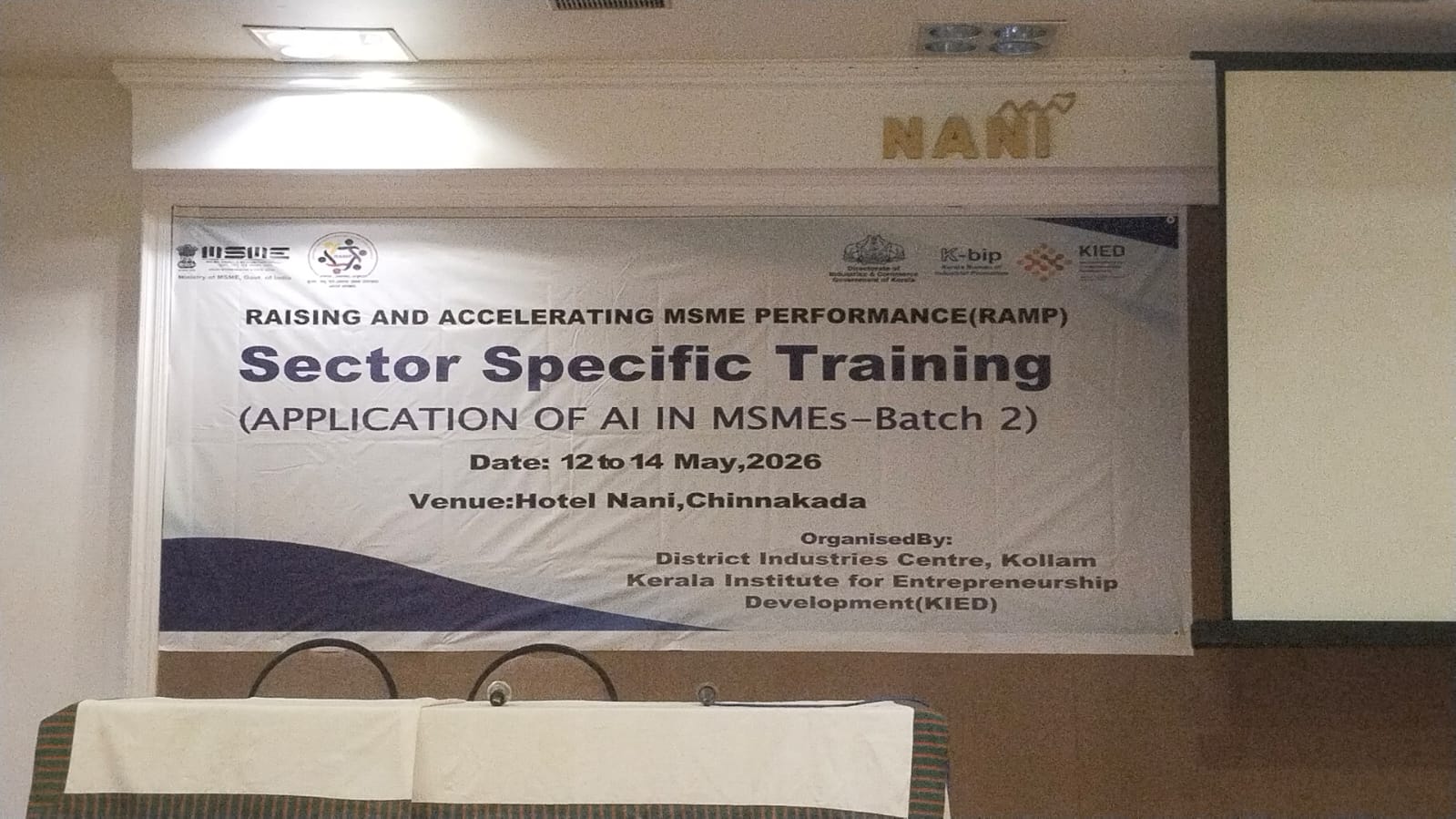
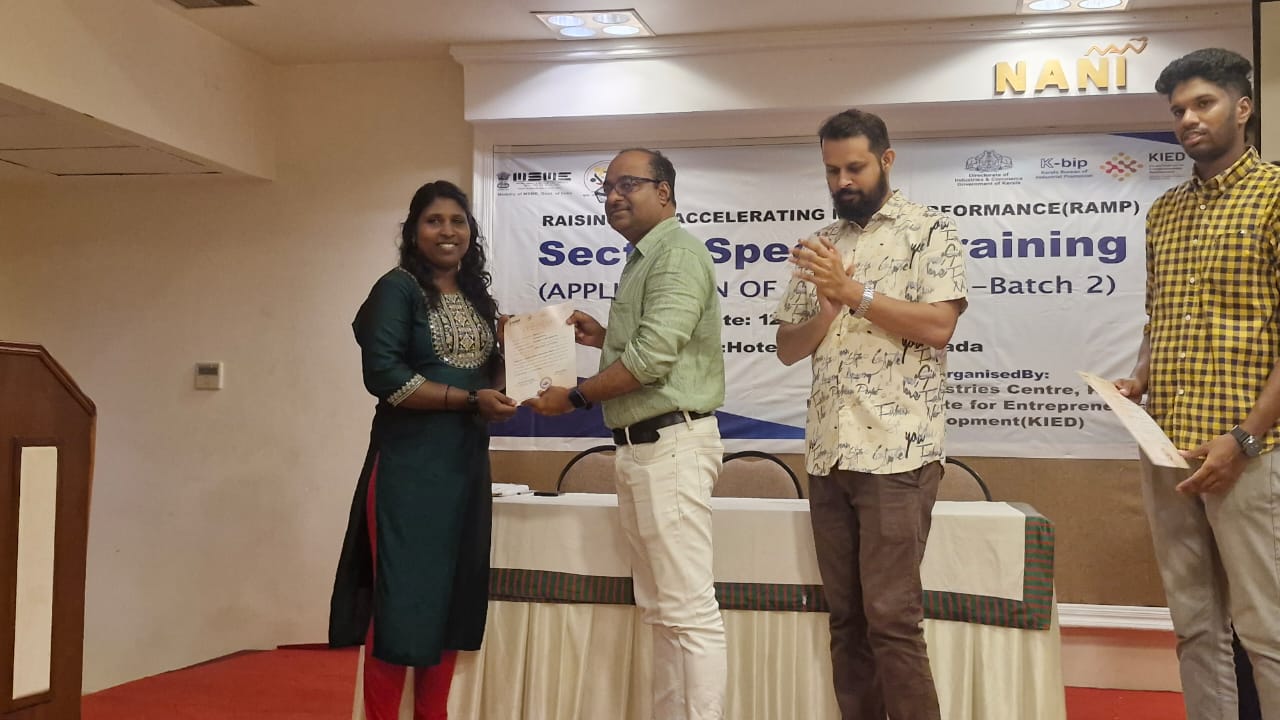
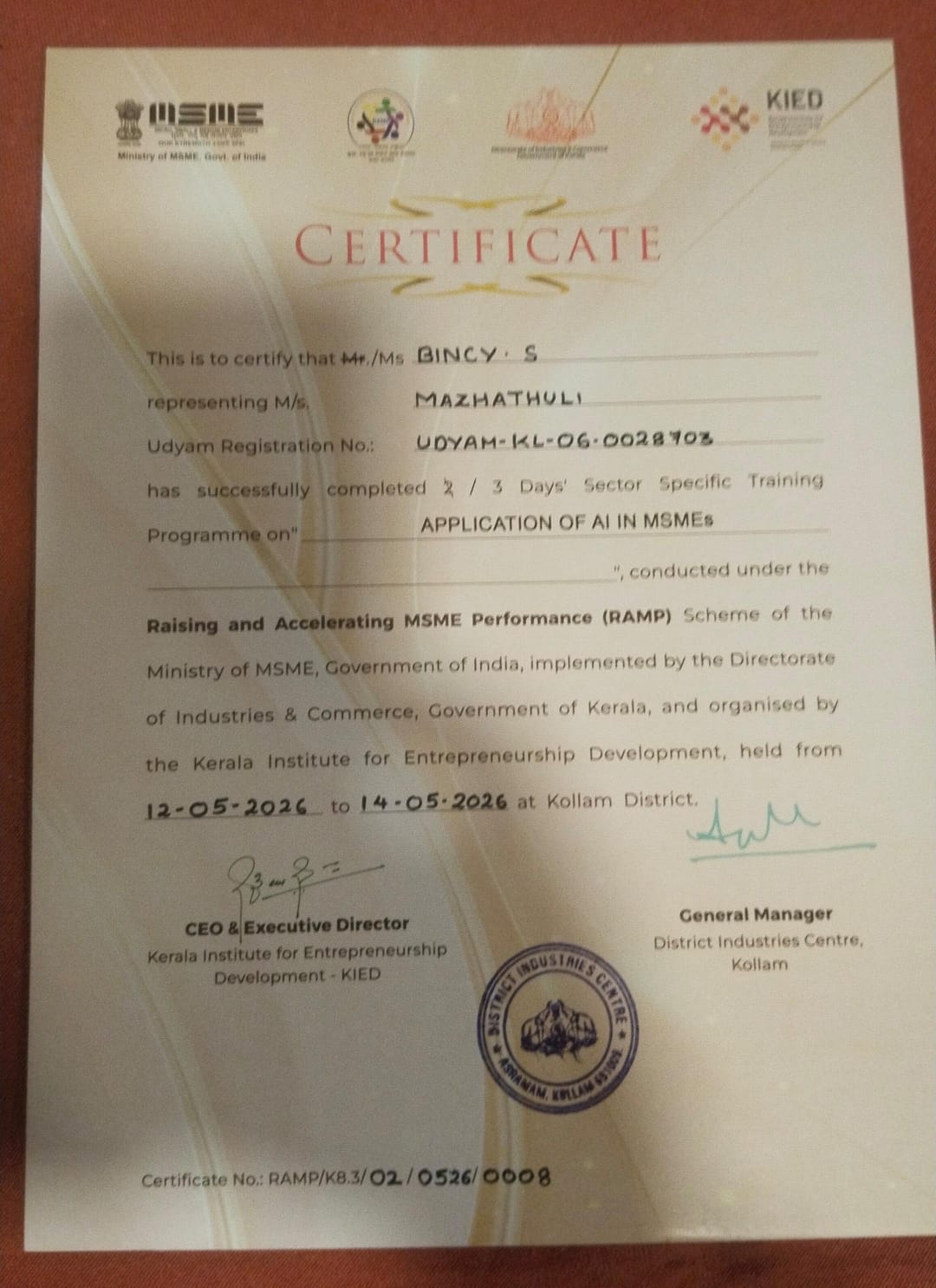
In May 2026, Bincy, an artisan associated with WE STORE, successfully completed a two-day Sector-Specific Training Programme on the Application of Artificial Intelligence (AI) for MSMEs. The programme was conducted under the Raising and Accelerating MSME Performance (RAMP) Scheme of the Ministry of Micro, Small and Medium Enterprises (MSME), Government of India, implemented by the Directorate of Industries and Commerce, Government of Kerala, and organized by the Kerala Institute for Entrepreneurship Development (KIED). The training programme introduced participants to the practical applications of Artificial Intelligence in the MSME sector, highlighting how AI-driven tools and technologies can improve productivity, business operations, customer engagement, marketing, and enterprise management. It also provided insights into emerging digital solutions that can help small businesses become more efficient, innovative, and competitive.
By participating in this programme, Bincy enhanced her understanding of AI-enabled business practices and digital entrepreneurship, strengthening her capacity to apply technology-driven approaches within WE STORE's artisan ecosystem. The training reflects WE STORE's commitment to continuous skill enhancement and equipping its artisans with future-ready knowledge that complements traditional craftsmanship. This achievement reinforces WE STORE's vision of empowering artisans through continuous learning, innovation, and capacity building, enabling them to adapt to evolving market trends while preserving the value of handcrafted products.
Amrita Vishwa Vidyapeetham Hosts UNESCO Chairs Round Table for South Asia
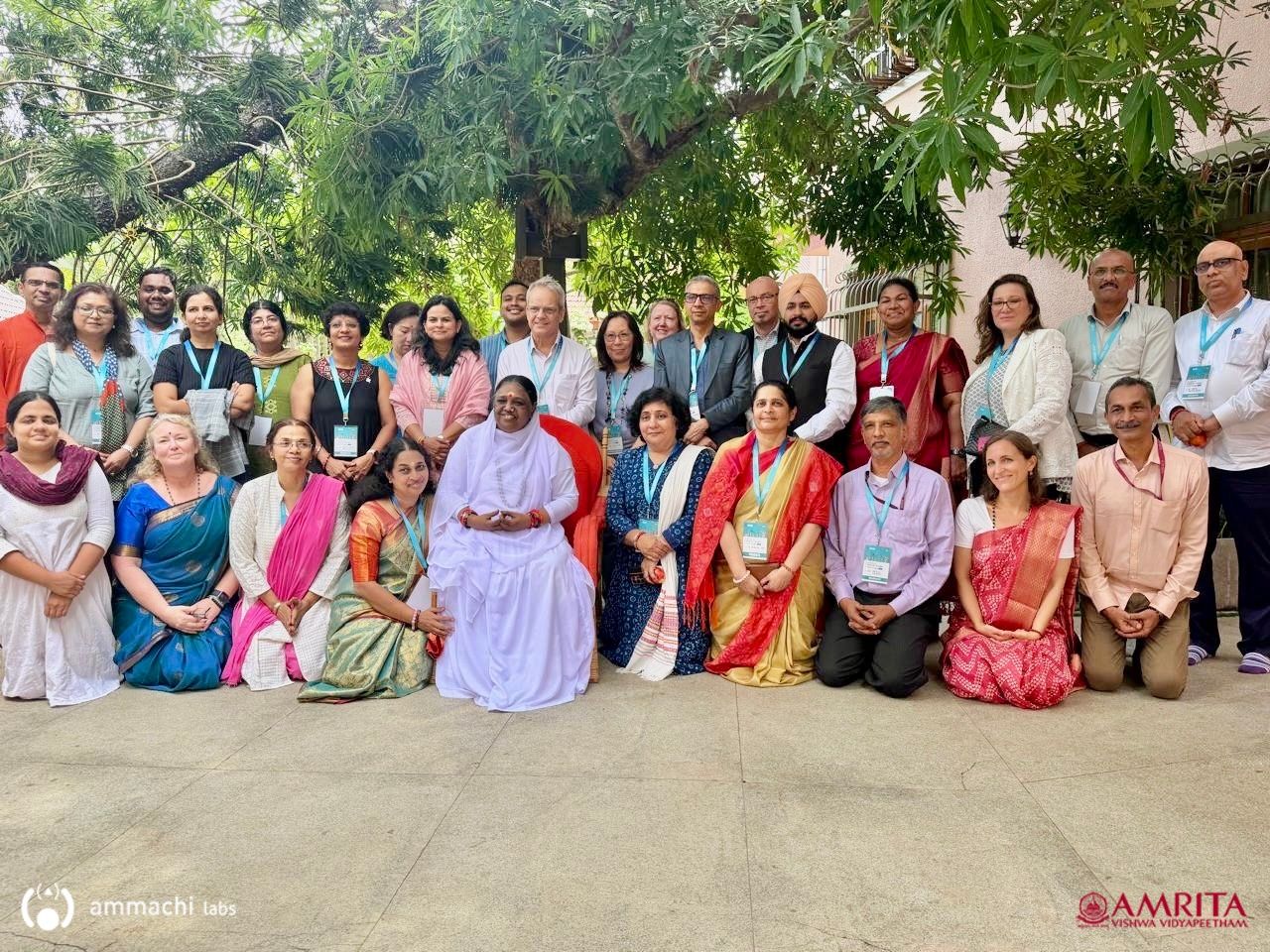
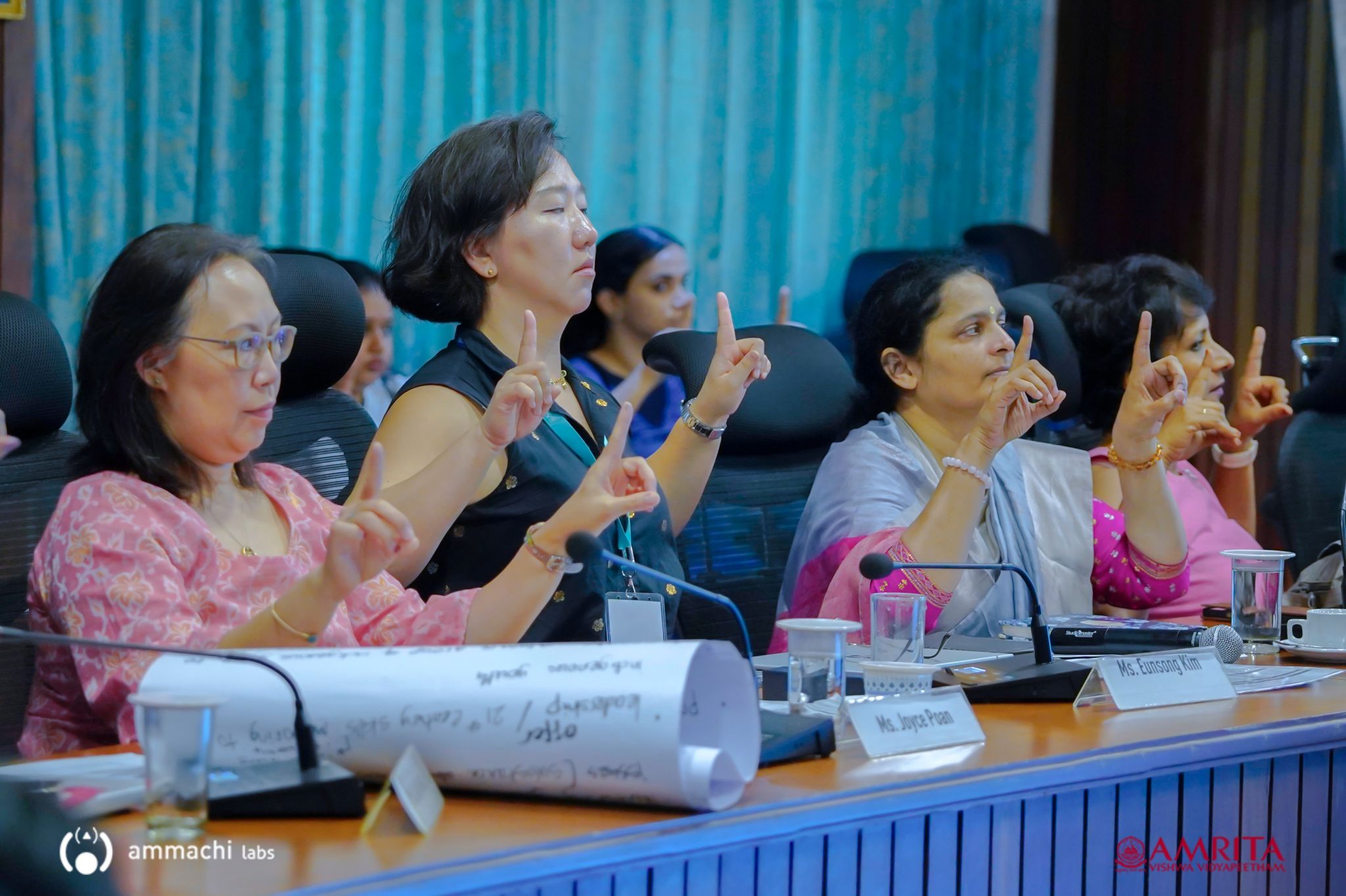
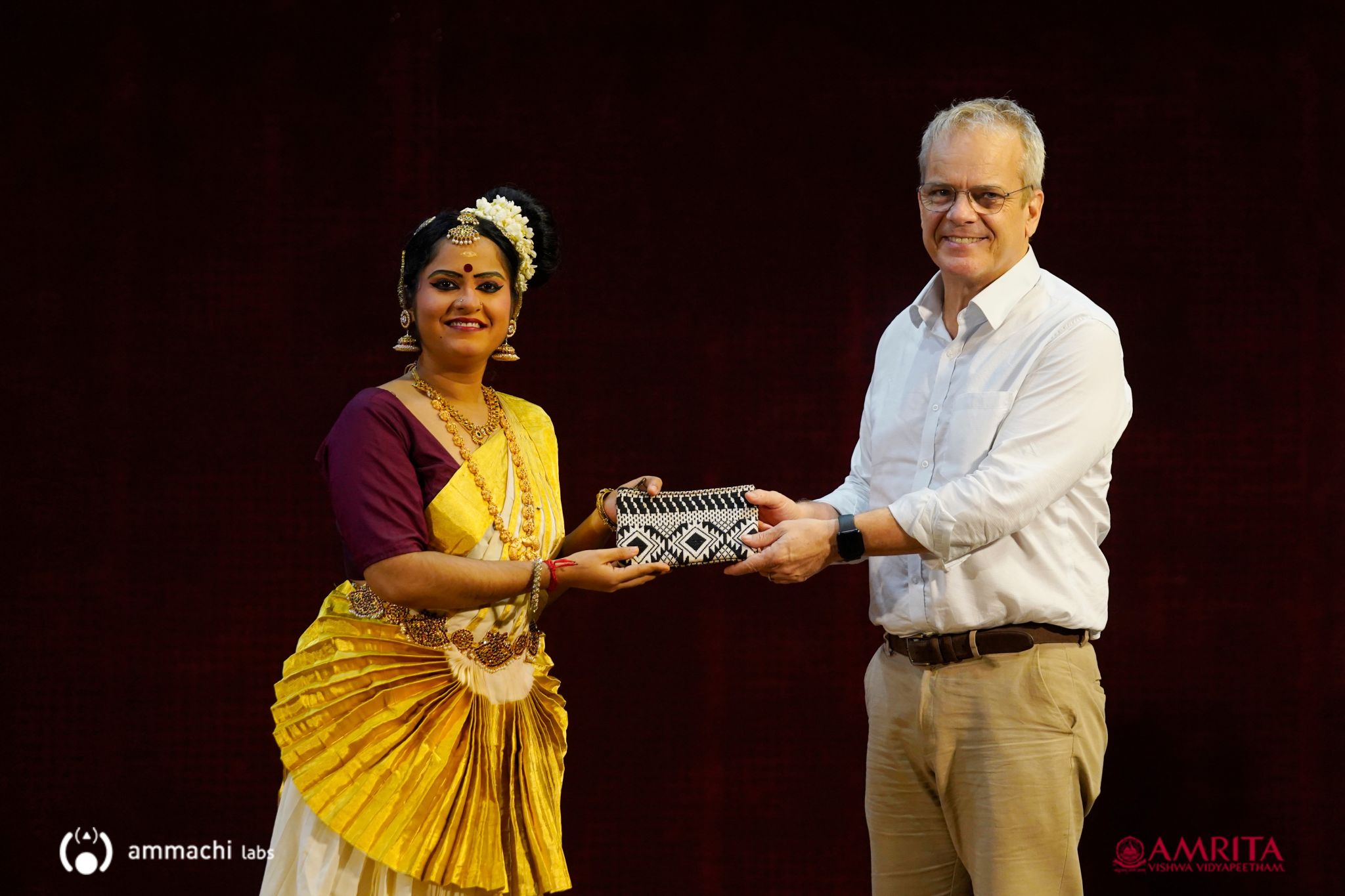
Amrita Vishwa Vidyapeetham had the honour of hosting the Round Table of UNESCO Chairs in South Asia at its Amritapuri Campus, organized in partnership with the UNESCO Regional Office for South Asia. The two-day event brought together more than 30 UNESCO delegates, representatives, and UNESCO Chair holders from across the region to strengthen collaboration and advance UNESCO's priorities for 2026–2027. The roundtable focused on fostering regional cooperation and addressing critical cross-cutting challenges, including environmental sustainability, digital transformation, gender equality, youth engagement, cultural diversity, and inclusive development. Through presentations, thematic discussions, and interactive World Café dialogues, participants explored opportunities for collaborative action to create meaningful social impact across South Asia.
The event was led by Mr. Tim Curtis, Director of the UNESCO Regional Office for South Asia, alongside Mr. Jaco Du Toit, UNESCO Representative to Nepal, and Ms. Sue Vize, UNESCO Representative to Bangladesh. They were joined by UNESCO sector specialists Ms. Jadav Sarita, Ms. Joyce Poan, Ms. Eunsong Kim, Ms. Ma'aly Hazzaz, and Dr. Neha Midha, as well as Mr. Prabhjot Singh from the Ministry of External Affairs, Government of India.
As the host institution and home to three UNESCO Chairs, Amrita Vishwa Vidyapeetham showcased its leadership in advancing education, innovation, gender equality, and inclusive technologies through the work of- Dr. Maneesha Vinodini Ramesh – UNESCO Chair on Experiential Learning for Sustainable Innovation & Development
- Dr. Bhavani Rao R. – UNESCO Chair on Gender Equality and Women's Empowerment
- Dr. Prema Nedungadi and Prof. Raghu Raman – UNESCO Chair on Assistive Technologies in Education
WE Project Store Fulfils Customized Tote Bag Order for Odisha Amrita Vidyalayam
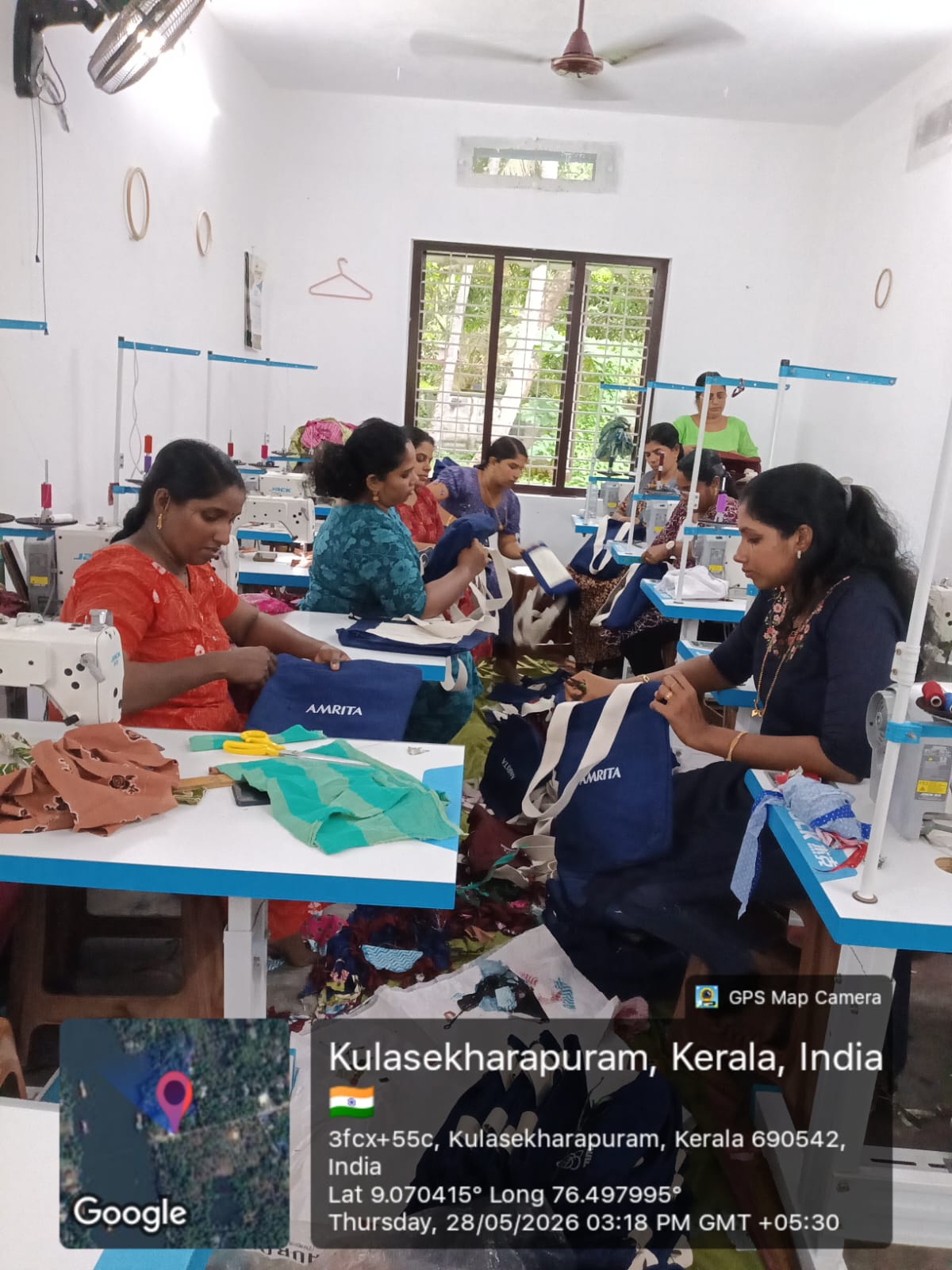
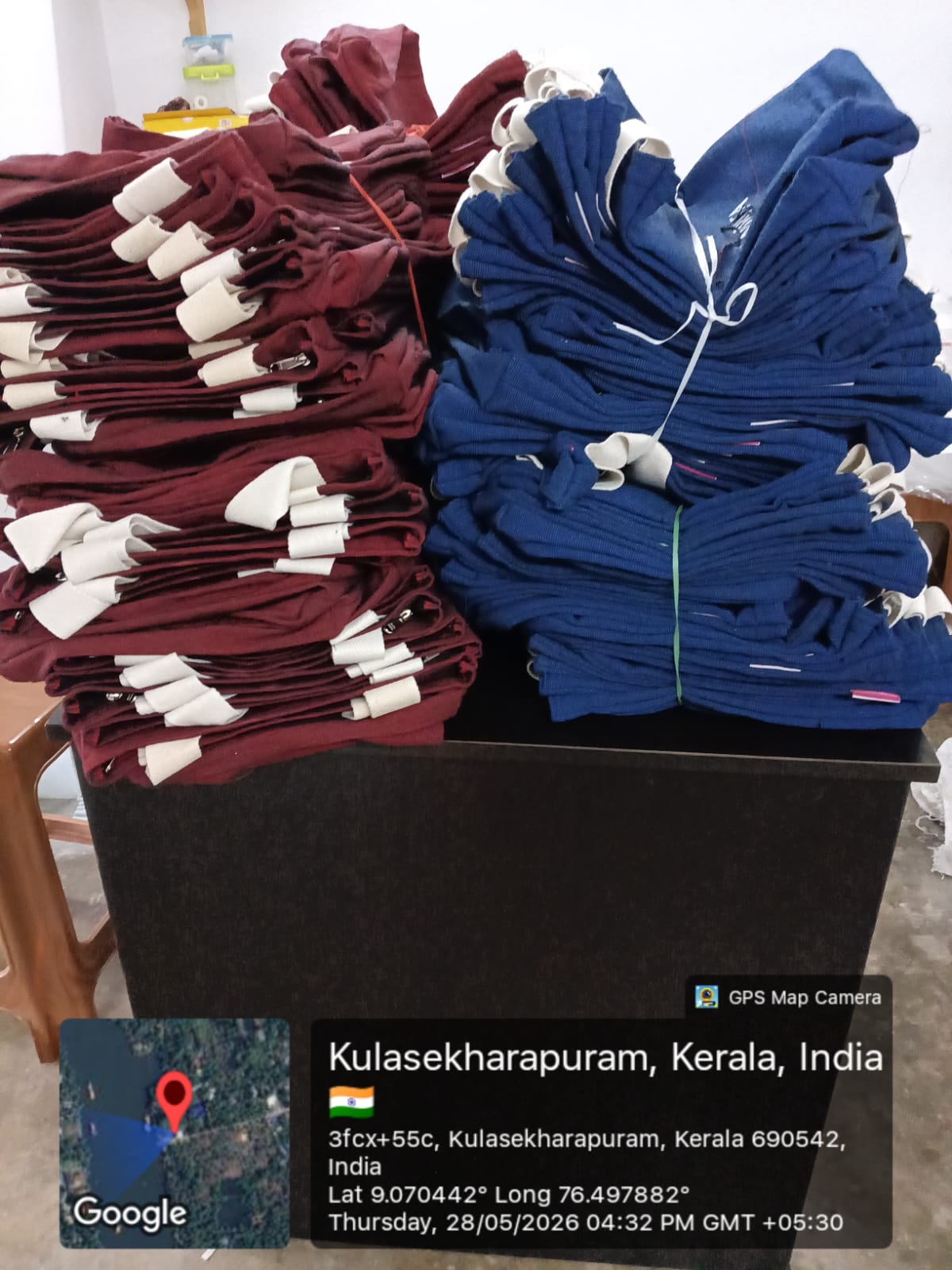
The WE Project Store received an order from Odisha Amrita Vidyalayam for the production of 200 customized tote bags to be used for the institution's gifting requirements. By choosing reusable fabric bags over conventional gift packaging, the initiative promoted environmentally responsible practices and reinforced the institution's commitment to sustainability. The order was entrusted to the Sivatsakthi Self-Help Group (SHG) of Katilkadavu, Kollam, as part of the WE Project Store's ongoing mission to create market-linked livelihood opportunities for rural women artisans. The SHG members managed the entire production process, including fabric cutting, stitching, finishing, and quality inspection, ensuring that each tote bag met the required specifications and high-quality standards.
The production was completed efficiently and delivered within the agreed timeline, demonstrating the artisans' professionalism, technical expertise, and dedication to quality craftsmanship. The assignment generated meaningful income for the members of the Self-Help Group while further enhancing their production capabilities and experience in executing institutional orders. This collaboration highlights the WE Project Store's commitment to empowering women through sustainable livelihood opportunities while fostering partnerships with educational institutions. By connecting institutional procurement with women-led community enterprises, the initiative promotes eco-friendly products, supports rural entrepreneurship, and contributes to environmental sustainability through the adoption of reusable alternatives.
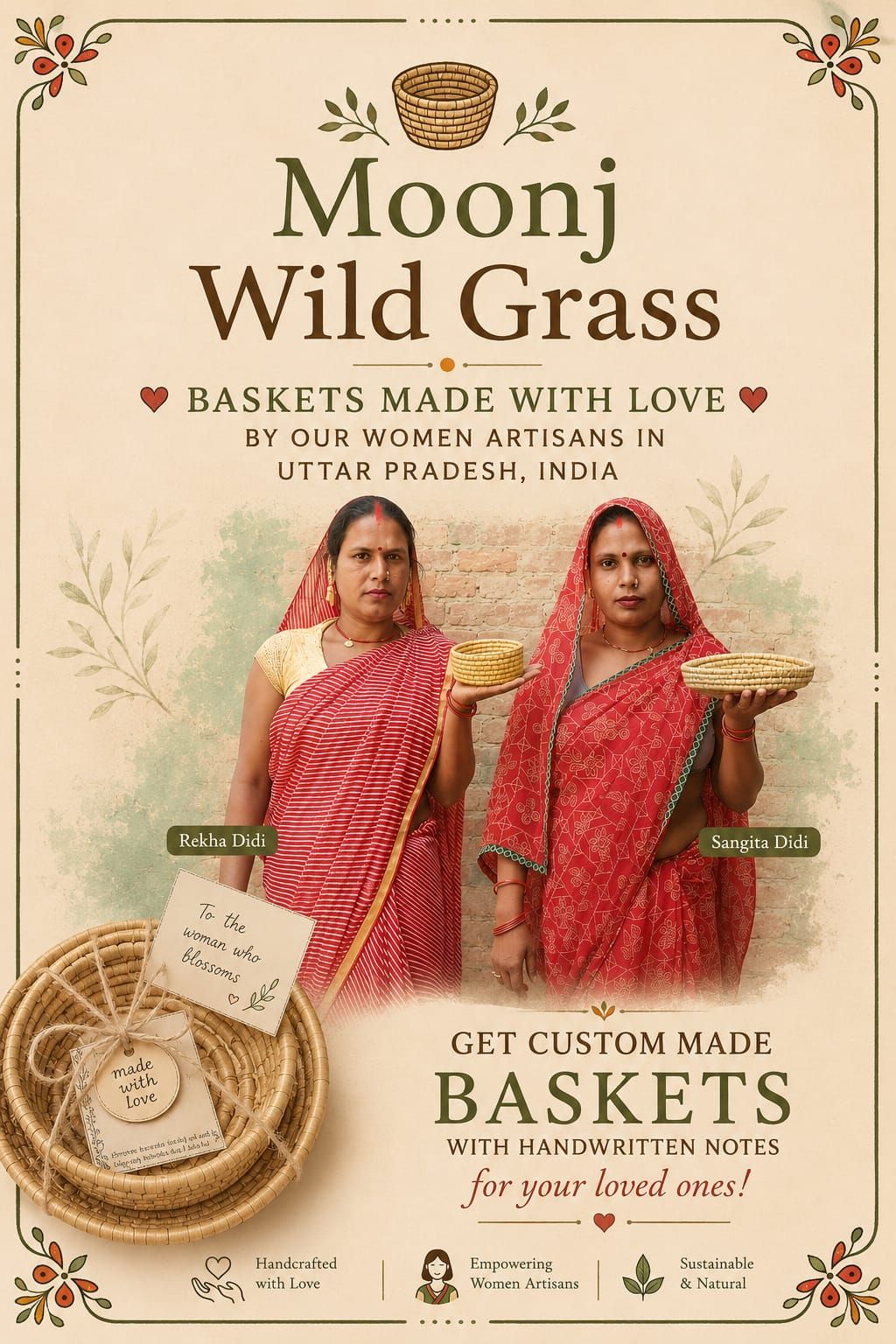
WE STORE Showcases Handcrafted Moonj Grass Baskets by Women Artisans from Uttar Pradesh
WE STORE proudly presents its collection of handcrafted Moonj wild grass baskets, lovingly created by skilled women artisans Rekha Didi and Sangita Didi from rural Uttar Pradesh. Woven using traditional techniques passed down through generations, each basket reflects the artisans' craftsmanship, cultural heritage, and commitment to sustainable living. Made from naturally sourced Moonj wild grass, the baskets are eco-friendly, durable, and thoughtfully designed for everyday use or special occasions. Every handcrafted piece tells a story of resilience, creativity, and the transformative power of artisan-led livelihoods, while preserving a traditional craft that continues to support rural communities.
Adding a personal touch, the baskets are now available with custom handwritten notes, making them thoughtful and meaningful gifts for family, friends, colleagues, and loved ones. Whether presented as a festive gift, a wedding keepsake, or a token of appreciation, each basket combines timeless craftsmanship with heartfelt personalization. Through this initiative, WE STORE continues to empower women artisans by creating sustainable market opportunities for their handmade products while encouraging consumers to choose environmentally responsible, handcrafted alternatives that celebrate India's rich artisanal traditions.
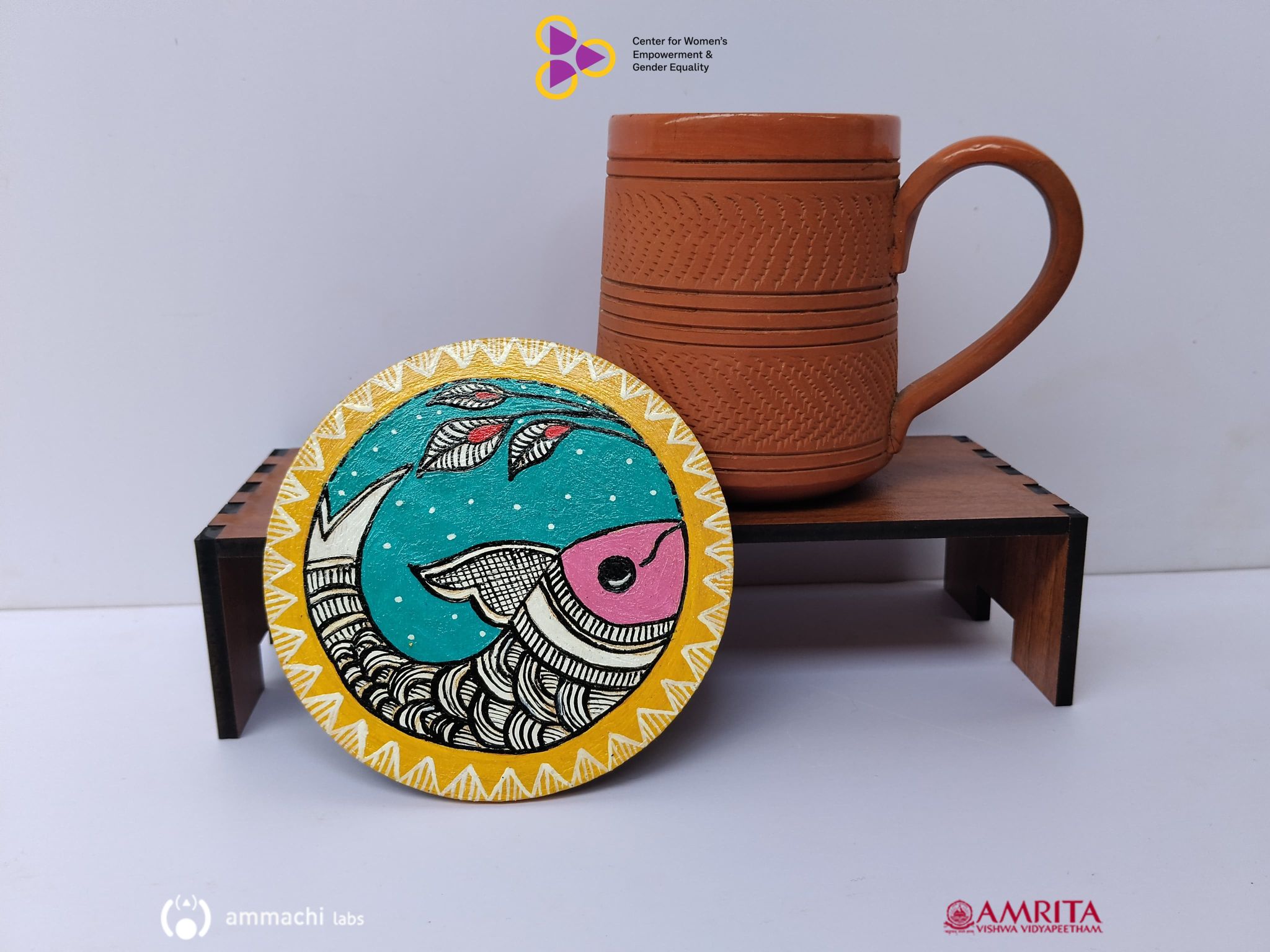
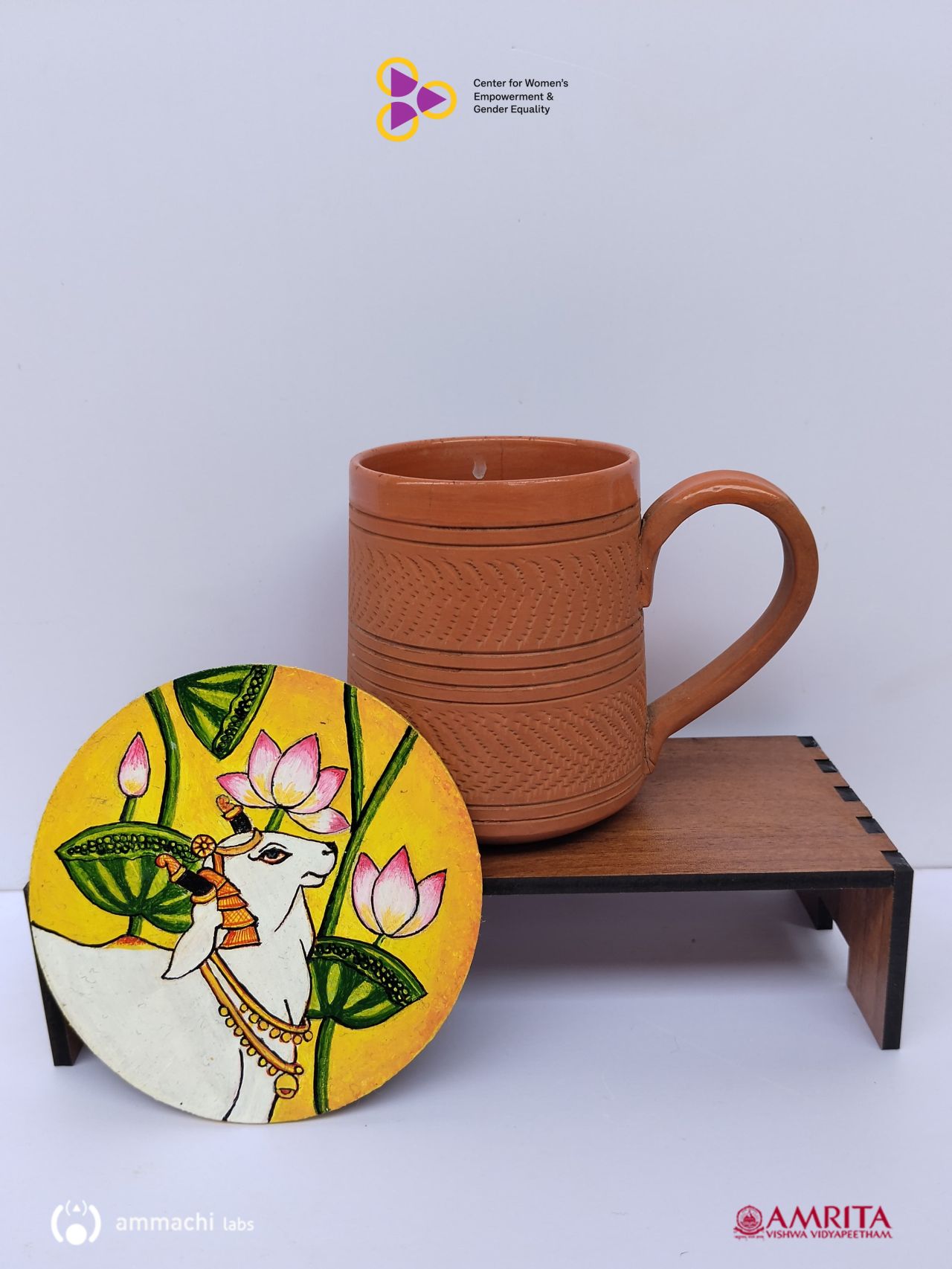
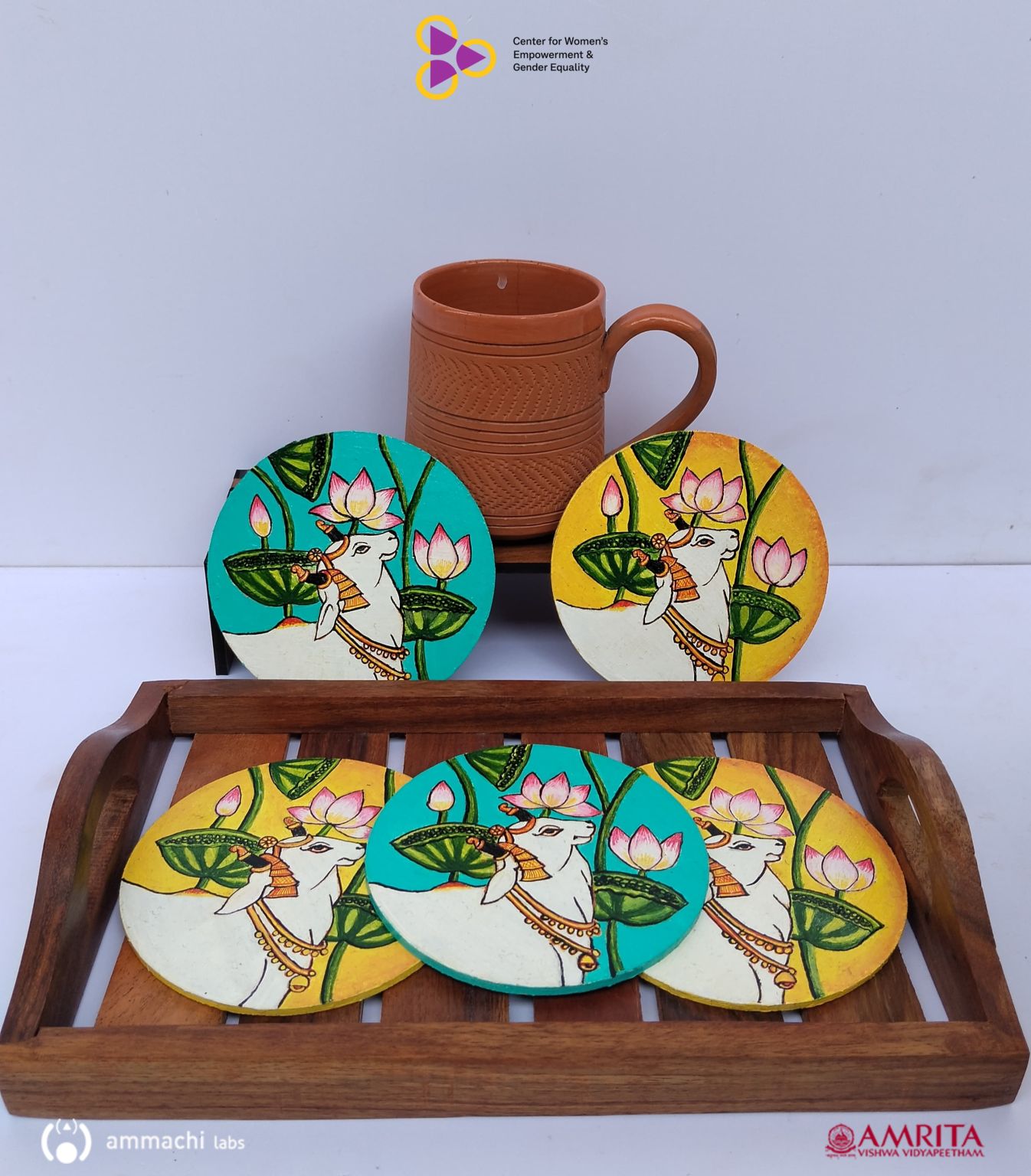
WE STORE Introduces Hand-Painted Folk Art Coasters Crafted by Women Artisan
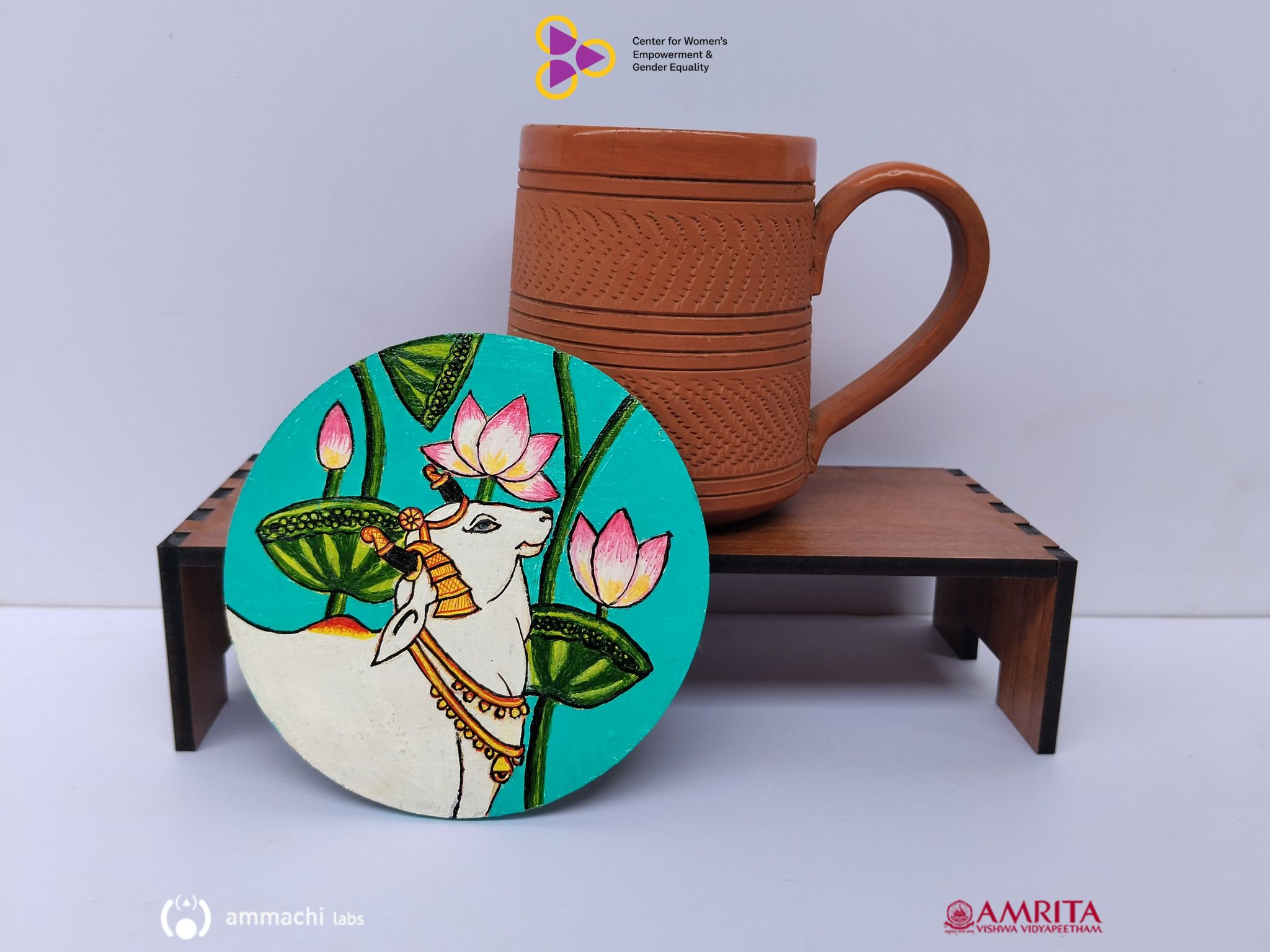
WE STORE introduced a vibrant collection of hand-painted coasters inspired by traditional Indian folk art, celebrating the richness of India's artistic heritage while creating sustainable livelihood opportunities for women artisans. Featuring intricate motifs, delicate lotus blooms, and colourful traditional patterns, each coaster has been meticulously handcrafted by Princy, an artisan trained through the Fabric Painting Course conducted by AMMACHI Labs under the United Nations Democracy Fund (UNDEF) Women's Empowerment Project. The collection beautifully blends cultural storytelling with contemporary craftsmanship, transforming everyday utility into meaningful works of art. Every handcrafted coaster represents more than artistic excellence—it reflects a journey of learning, resilience, and empowerment. Through structured skill development and livelihood initiatives, artisans like Princy have been able to transform their traditional talents into sustainable income-generating opportunities while preserving India's rich folk art traditions.
Ideal as thoughtful gifts or elegant home décor, the coasters offer customers a unique opportunity to support women-led enterprises while choosing handcrafted, eco-conscious products. Each piece carries the story of the artisan behind it, making every purchase a celebration of creativity, cultural heritage, and social impact. This launch reaffirms WE STORE's commitment to empowering women through skill development, preserving traditional crafts, and promoting sustainable handcrafted products that connect artisans with wider markets while fostering inclusive economic growth.
WE Project Store Advances Second Batch of Tula Garments with Enhanced Design and International Quality Review
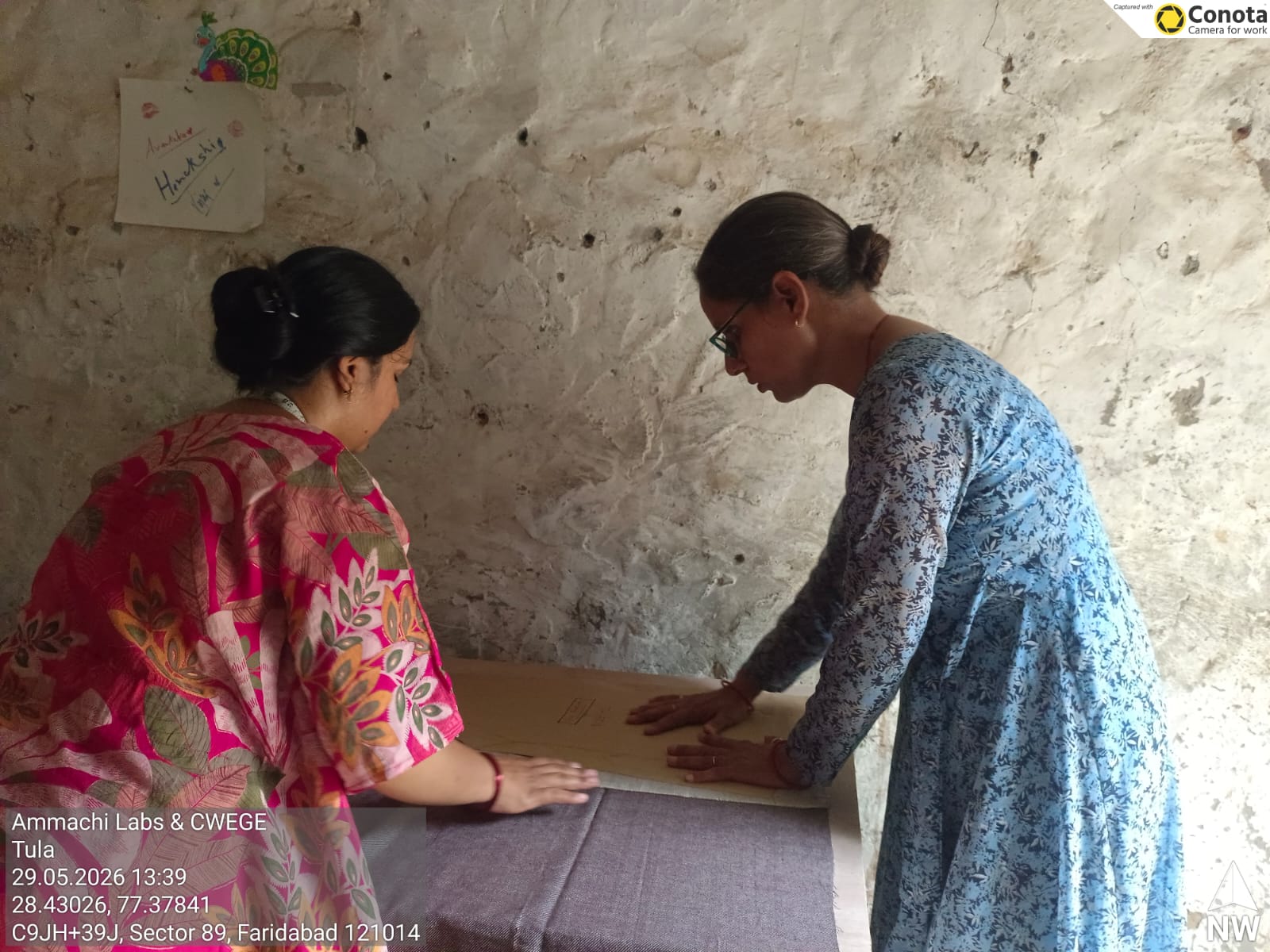
The WE Project Store commenced production of the second batch of Tula garments in collaboration with Sankalp Shree Boutique, Deha Village, Faridabad. Building on the insights and feedback gathered during the initial production phase, the team introduced a series of design refinements and garment modifications to further enhance the quality, fit, functionality, and overall finish of the collection. The revision process was carried out under the guidance of Ms. Muskan Chhatwal, the WE Project Store's in-house designer, who provided technical expertise on garment construction, design improvements, and quality assurance. Working closely with the production team, she ensured that every refinement aligned with the project's design objectives while maintaining consistency in craftsmanship and production standards. Following the implementation of the recommended modifications, a new set of prototype garments was carefully developed and dispatched to Australia for review and evaluation by project stakeholders. This international assessment formed a key part of the quality assurance process, enabling valuable feedback to be incorporated before proceeding with large-scale production.
The initiative not only strengthened the technical capabilities of the production unit but also enhanced the artisans' understanding of export-oriented product development and international quality expectations. By integrating continuous design improvement with collaborative production practices, the project reinforces high standards of craftsmanship while preparing artisan-made products for global markets. This milestone reflects the WE Project Store's ongoing commitment to design innovation, collaborative product development, and sustainable livelihood creation. Through strategic partnerships, technical mentoring, and market-driven production, the initiative continues to empower artisan communities while promoting high-quality handcrafted products for both national and international markets.
WE Project Store Explores Global Partnership with Smathers & Branson to Empower Women Artisans
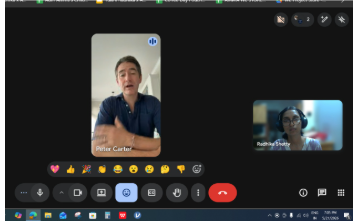
The WE Project Store held a strategic meeting with Mr. Peter Carter, Co-founder of Smathers & Branson, to explore the establishment of a Memorandum of Understanding (MoU) for developing needlepoint embroidery production clusters with women artisans trained through Amrita's skill development and livelihood initiatives in Uttarakhand, Rajasthan, and Uttar Pradesh. The discussions focused on creating a collaborative framework that would connect the craftsmanship of Amrita-trained women artisans with international market opportunities. The proposed partnership aims to establish a structured production ecosystem capable of delivering export-quality handcrafted products while maintaining high standards of quality, consistency, and timely delivery. A major focus of the meeting was identifying suitable products for the collaboration. Needlepoint embroidered belts and key fobs were shortlisted as the initial product categories, based on their strong international market demand and alignment with the artisans' embroidery expertise. The meeting also covered key aspects of product development, including design specifications, embroidery techniques, colour palettes, finishing methods, material sourcing, quality benchmarks, packaging standards, and production timelines to ensure compliance with global customer expectations. The proposed collaboration also envisions the development of standardized training modules, prototype creation, sample evaluation, and robust quality assurance systems to prepare artisan clusters for large-scale export production. By strengthening technical skills, improving productivity, and introducing internationally accepted manufacturing practices, the initiative seeks to enhance the competitiveness of women-led artisan enterprises..
Beyond expanding market access, the partnership is expected to generate sustainable livelihood opportunities for rural women by connecting their handcrafted products with international buyers. It also aims to preserve the rich tradition of needlepoint embroidery while encouraging innovation, product diversification, and value addition. This initiative reflects the WE Project Store's commitment to building meaningful global partnerships, strengthening industry–institution collaboration, and promoting women-led rural entrepreneurship. By linking traditional craftsmanship with international markets, the project advances inclusive economic development, sustainable livelihoods, and the global recognition of India's artisan communities..
Women Artisans Continue Production of Second Batch of Tula Garments for International Brand
As part of its ongoing commitment to empowering women artisans through market-linked livelihood opportunities, the WE Project Store continued the production of the second batch of Tula garments for Karri Smisek's brand in collaboration with Sankalp Shree Boutique, Deha Village, Faridabad. The production was led by Ms. Neena Ji and Ms. Jyothi Ji, who worked closely with the WE Project Store to develop garments that meet international design and production standards. The production process was carried out under the technical guidance of Ms. Muskan Chhatwal, the WE Project Store's in-house designer. Based on feedback received from the initial production batch, particular attention was given to refining garment sizing, improving fit, maintaining measurement consistency, and ensuring uniformity across all pieces. Technical mentoring throughout the process helped the artisans achieve greater precision while adhering to the required quality benchmarks.
The team meticulously reviewed pattern specifications, garment construction techniques, stitching accuracy, finishing quality, and overall workmanship to ensure that every garment met the expected design standards. Continuous monitoring and collaborative problem-solving enhanced production efficiency while minimizing variations in sizing, construction, and finishing. Beyond garment production, the initiative provided a valuable opportunity for advanced skill development. Through hands-on experience and design mentoring, the artisans strengthened their knowledge of professional garment manufacturing practices, quality assurance procedures, and export-oriented production requirements. The experience has further enhanced their technical capabilities and prepared them for larger and more complex production assignments in the future. This collaborative initiative reflects the WE Project Store's commitment to empowering women artisans through continuous skill enhancement, design innovation, and market-oriented production. By connecting rural production units with national and international design partners, the programme continues to create sustainable livelihood opportunities, strengthen women-led enterprises, and promote high-quality handcrafted apparel for global markets.
WE Project Store Advances Production of Tula Gathered Raglan Sleeve Dress
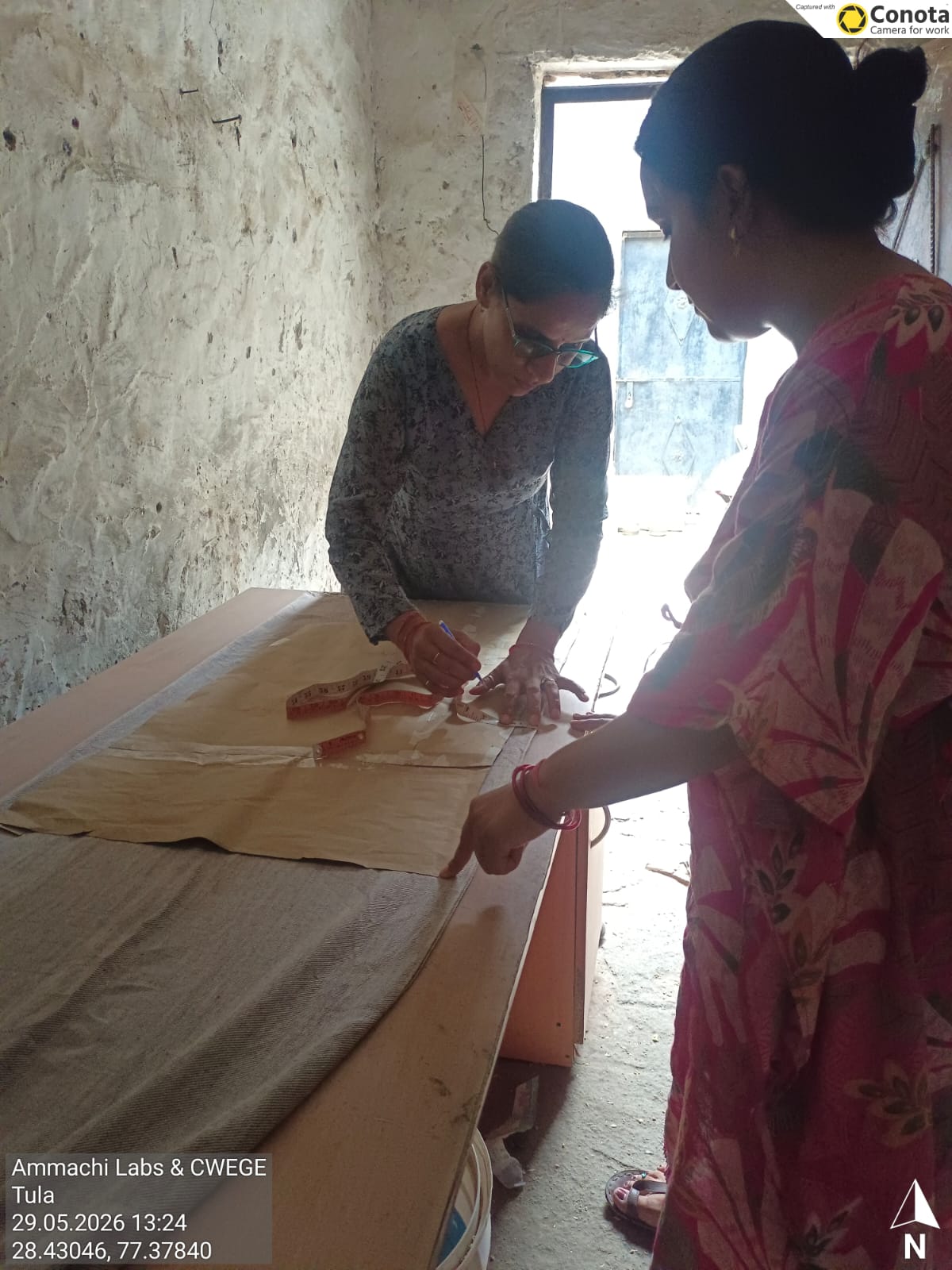
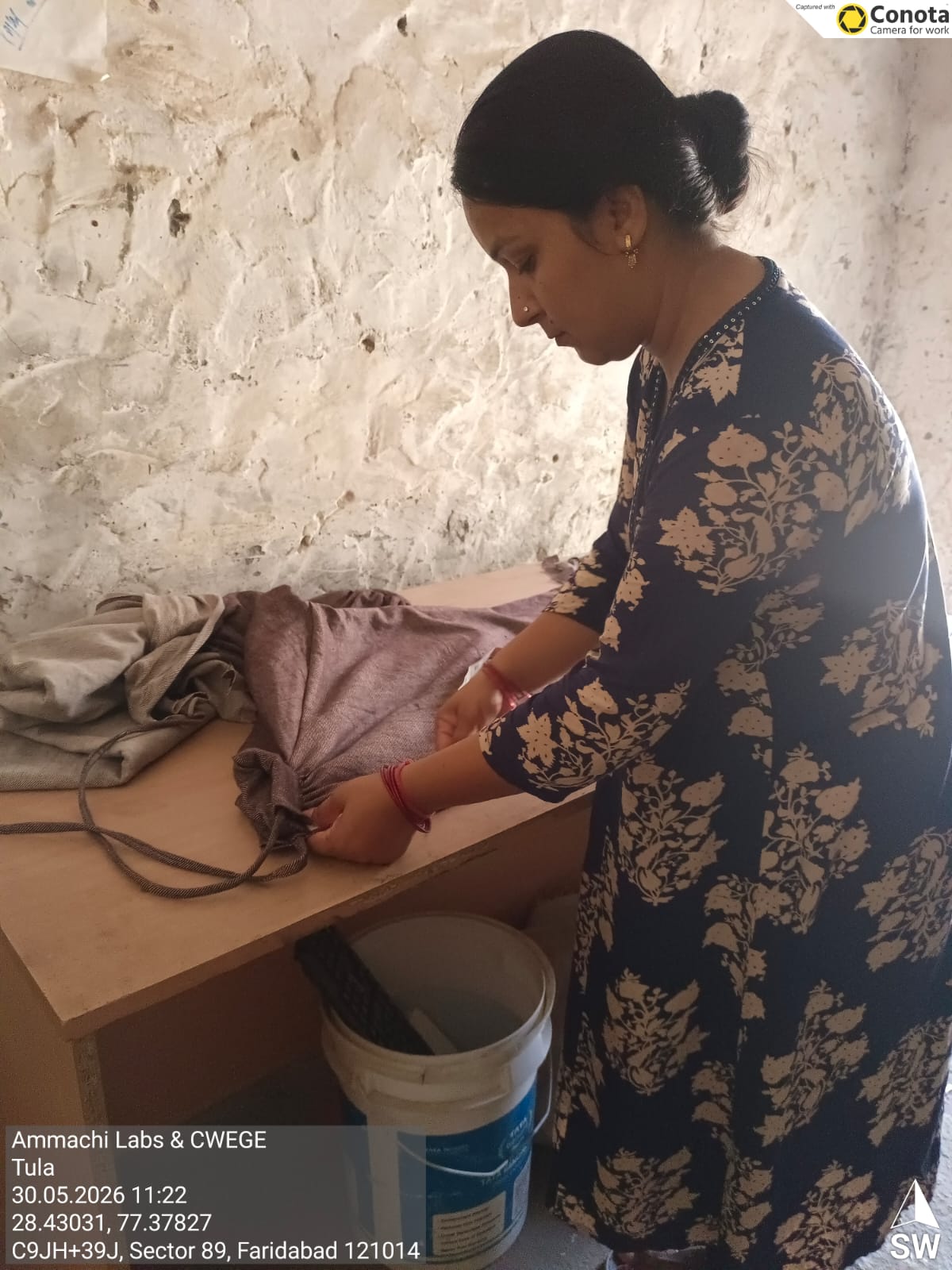
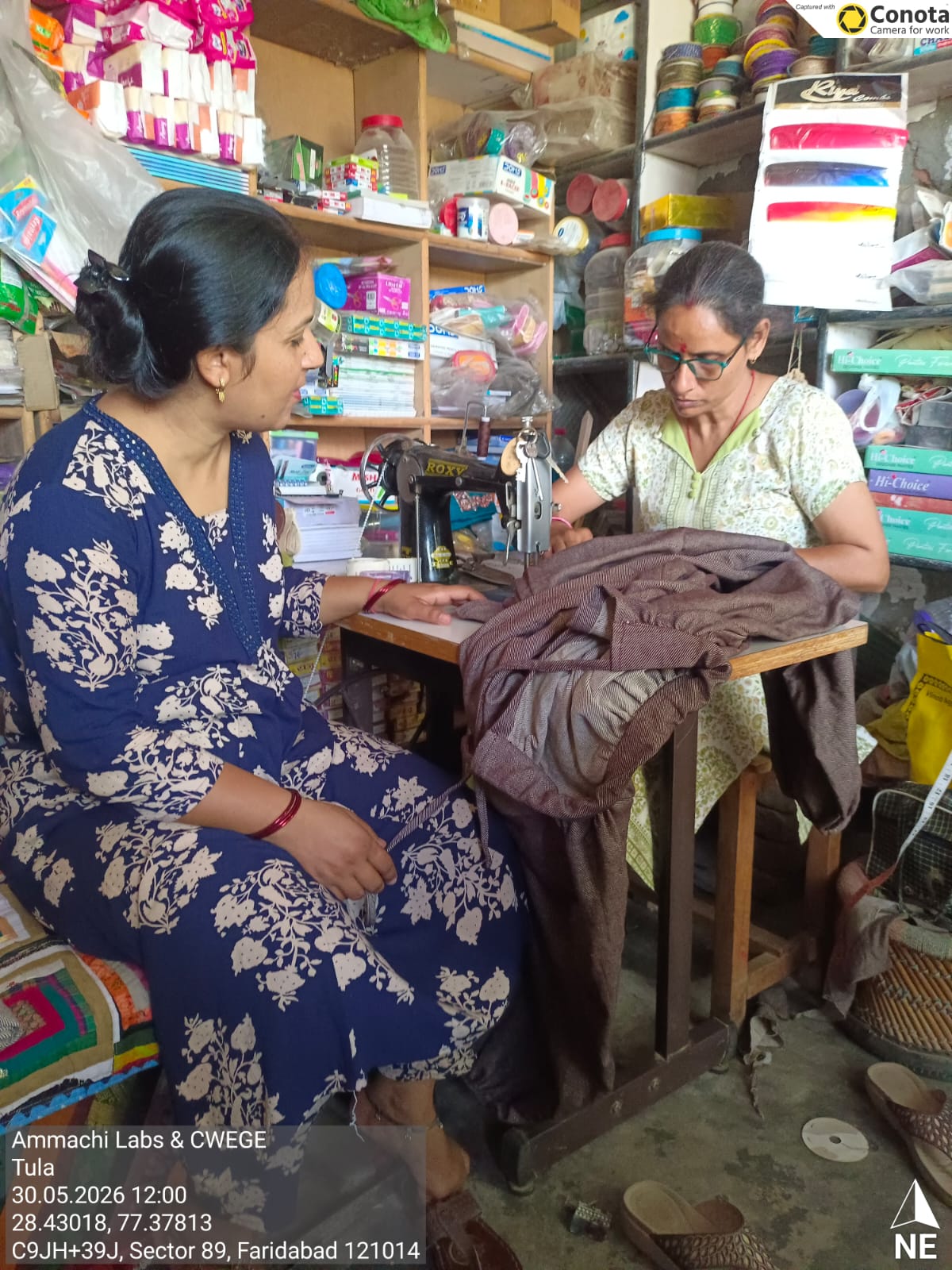
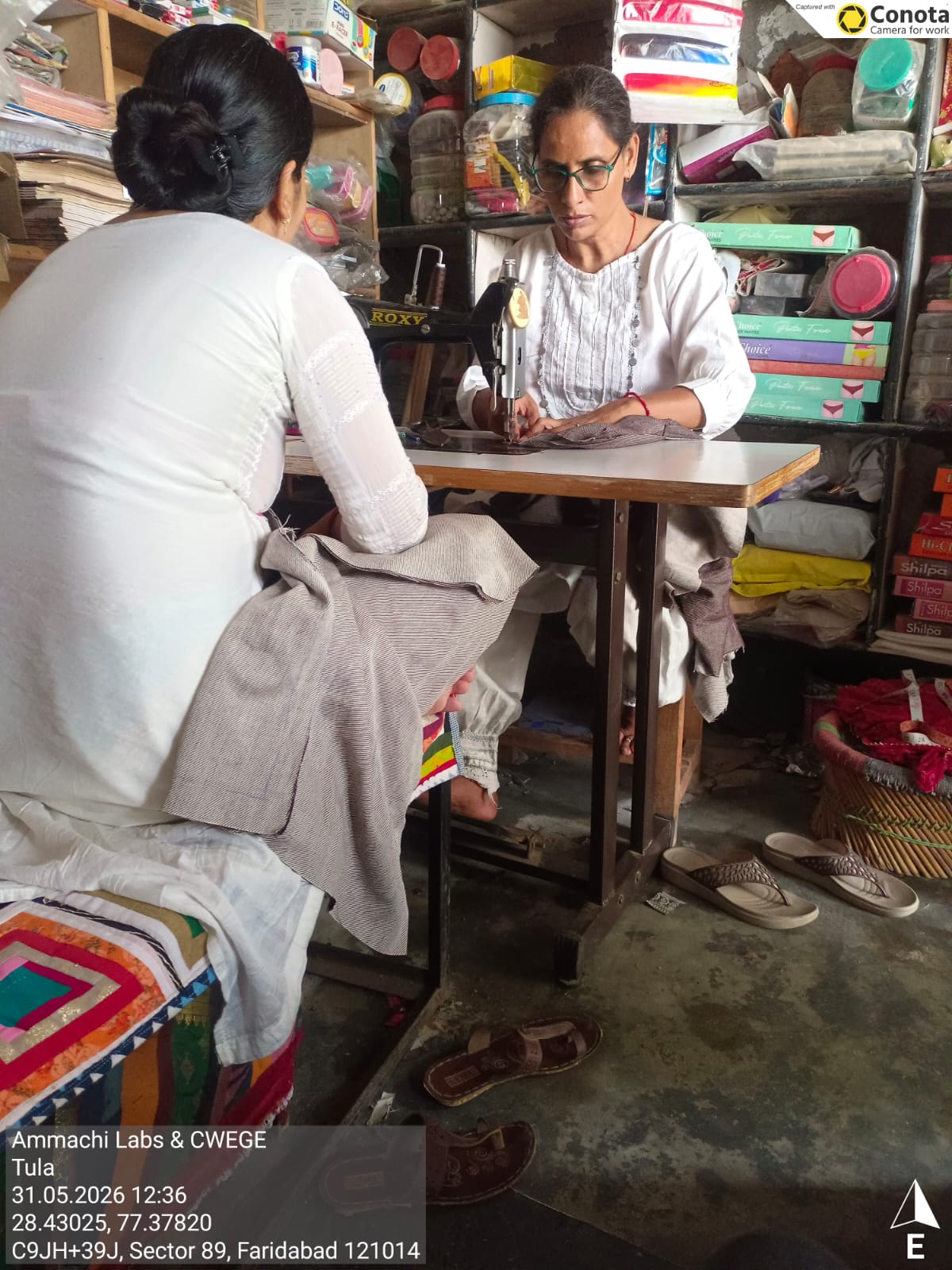
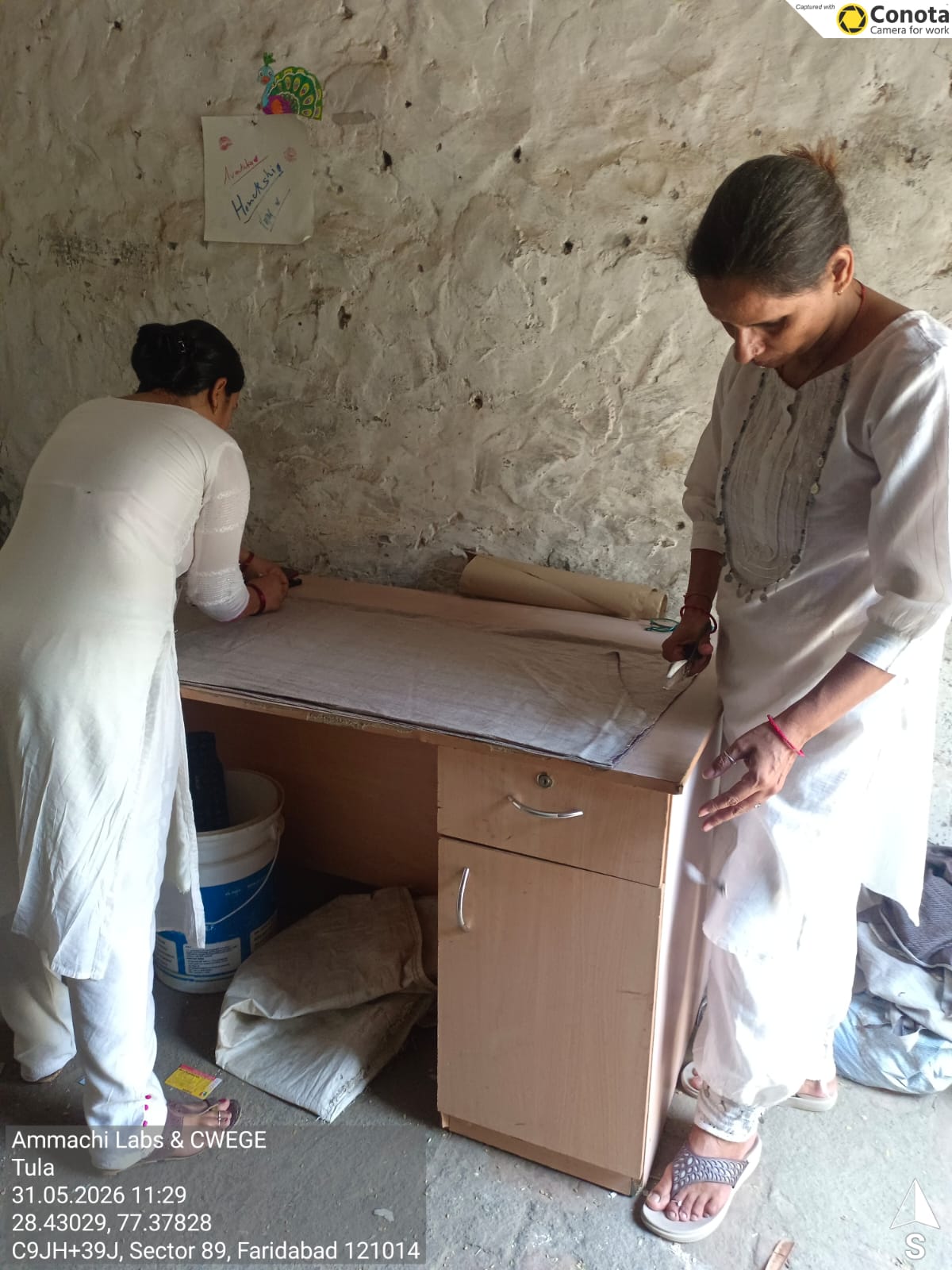
The WE Project Store continued the production of the Tula Gathered Raglan Sleeve Dress in collaboration with Sankalp Shree Boutique, Deha Village, Faridabad, Haryana, as part of the ongoing apparel development initiative for Karri Smisek's Tula brand. The day's work focused on developing the second size variant of the garment, ensuring consistency in fit, quality, and craftsmanship across the collection. Production activities were carried out under the supervision of Ms. Muskan Chhatwal, the WE Project Store's in-house designer, who provided continuous technical guidance throughout the garment development process. Particular attention was given to pattern placement, efficient fabric utilization, accurate garment measurements, construction techniques, and finishing details to ensure that every size variant adhered to the approved design specifications and international quality standards.
The production began with precise fabric marking and cutting based on finalized patterns, followed by the stitching process. Special emphasis was placed on achieving accurate garment proportions, maintaining seam precision, and carefully constructing the gathered raglan sleeves—a signature design feature of the dress. Regular quality inspections were conducted at every stage to ensure consistency, precision, and compliance with export-quality requirements. The production process also served as an advanced hands-on learning opportunity for the artisans of Sankalp Shree Boutique, enabling them to strengthen their expertise in garment sizing, pattern execution, quality control, and professional apparel manufacturing practices. Through continuous mentoring and technical support, the artisans enhanced their production capabilities and gained valuable experience in meeting the expectations of international fashion markets. This initiative reflects the WE Project Store's commitment to design innovation, quality assurance, artisan capacity building, and sustainable livelihood generation. By fostering collaborative production models that connect rural women artisans with national and international apparel brands, the programme continues to create meaningful employment opportunities while promoting high-quality, export-ready handcrafted garments..
WE STORE Makes Debut at Amma's 2026 South India Tour in Mangalore
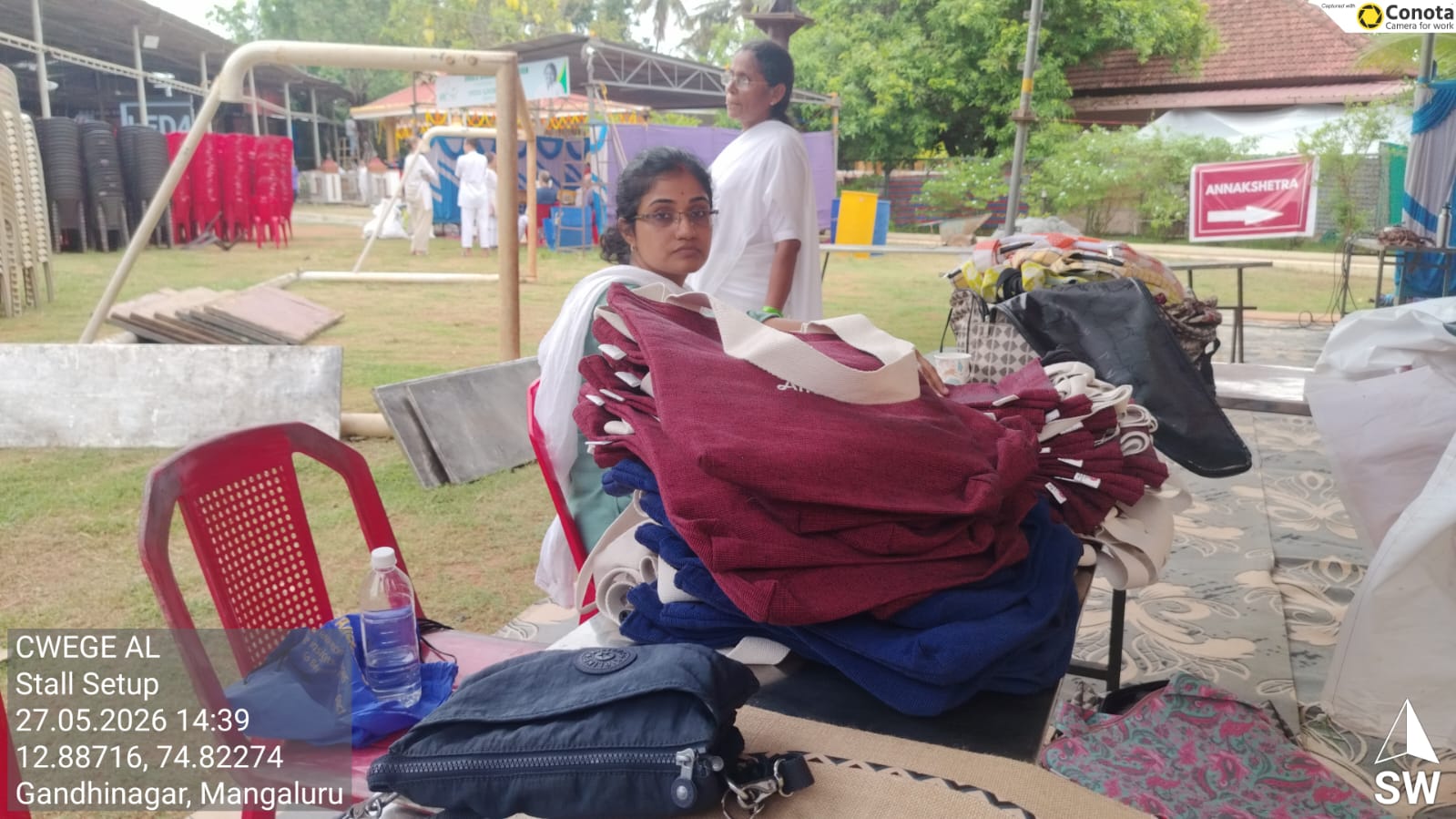
As part of Amma's South India Tour 2026, WE STORE marked a significant milestone with its first-ever exhibition of handcrafted products created by women artisans trained through the Centre for Women's Empowerment and Gender Equality (CWEGE) and AMMACHI Labs skill development programmes. Preparations began on May 27 at Mangalore, Karnataka, where dedicated volunteers came together to tag products, organize displays, and set up the WE STORE stall in anticipation of the event. Their collective efforts ensured that the exhibition space was thoughtfully arranged and ready to welcome visitors from the following day. The WE STORE exhibition was held at Mangalore Amrita Vidyalayam on May 28 and 29, coinciding with Amma's tour programme. The event marked the first time that products handcrafted by women artisans trained under CWEGE and AMMACHI Labs were showcased during Amma's public programmes, providing a unique platform to celebrate the artisans' skills and entrepreneurial journeys.
More than a retail space, the WE STORE stall served as a window into the transformative rural development initiatives led by Amma. Visitors and devotees were introduced to a diverse range of handcrafted products while learning about the skill development, women's empowerment, and sustainable livelihood programmes implemented across villages adopted by the Mata Amritanandamayi Math. Each handcrafted product represented not only the creativity and dedication of the artisans but also the broader impact of these community development initiatives. For many devotees, the handcrafted products became meaningful keepsakes to take home following Amma's darshan, serving as tangible reminders of her vision of compassion, self-reliance, and community empowerment. By connecting artisan-made products with a wider audience, the exhibition created new market opportunities for women artisans while raising awareness about the social impact of WE STORE and AMMACHI Labs' livelihood programmes. The successful debut of WE STORE during Amma's South India Tour reflects its commitment to empowering women through sustainable livelihoods, preserving traditional craftsmanship, and creating meaningful connections between artisans, communities, and supporters across the country.
WE STORE Showcases Women Artisans' Handcrafted Products at Amma's Kozhikode Programme
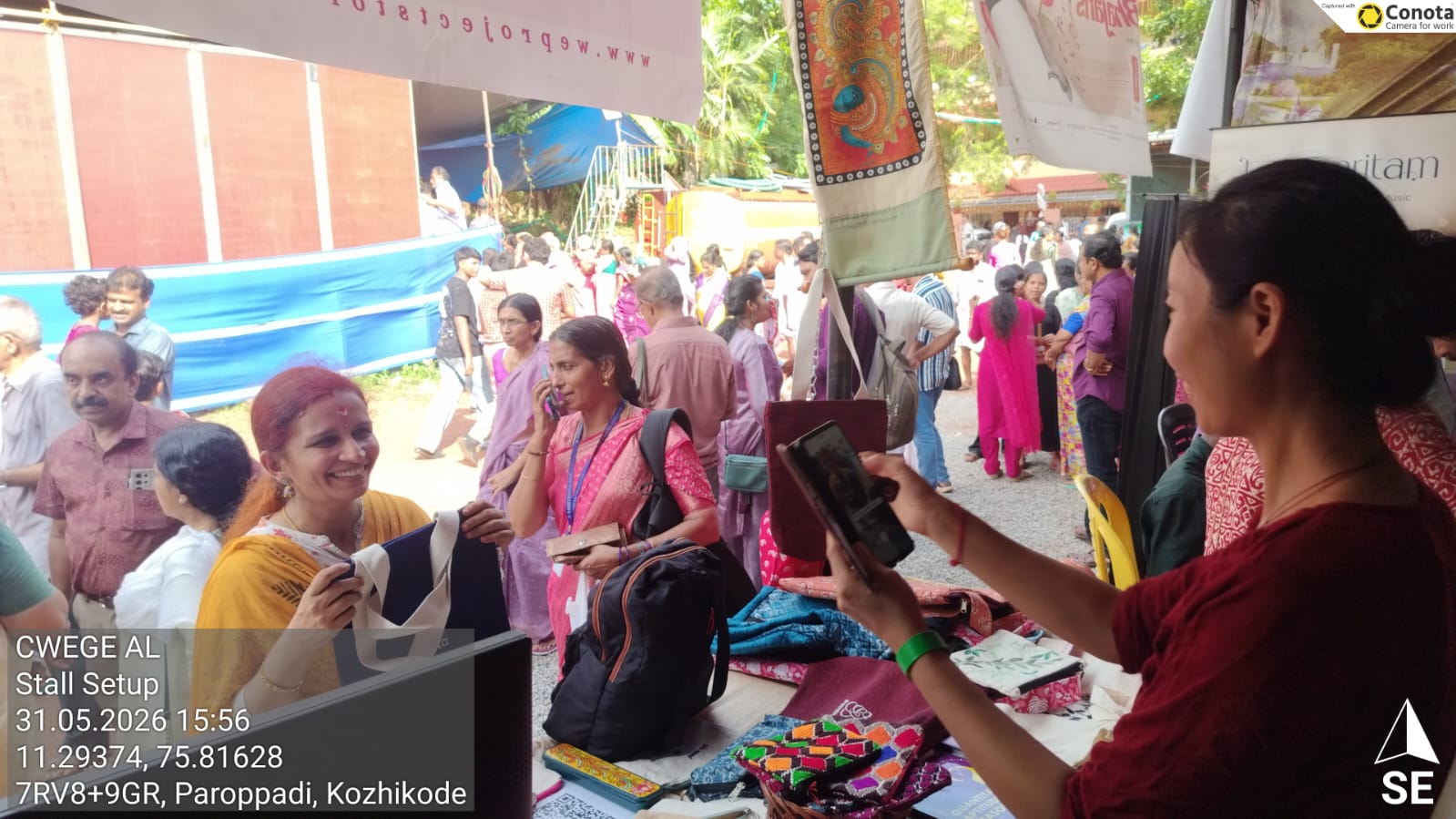
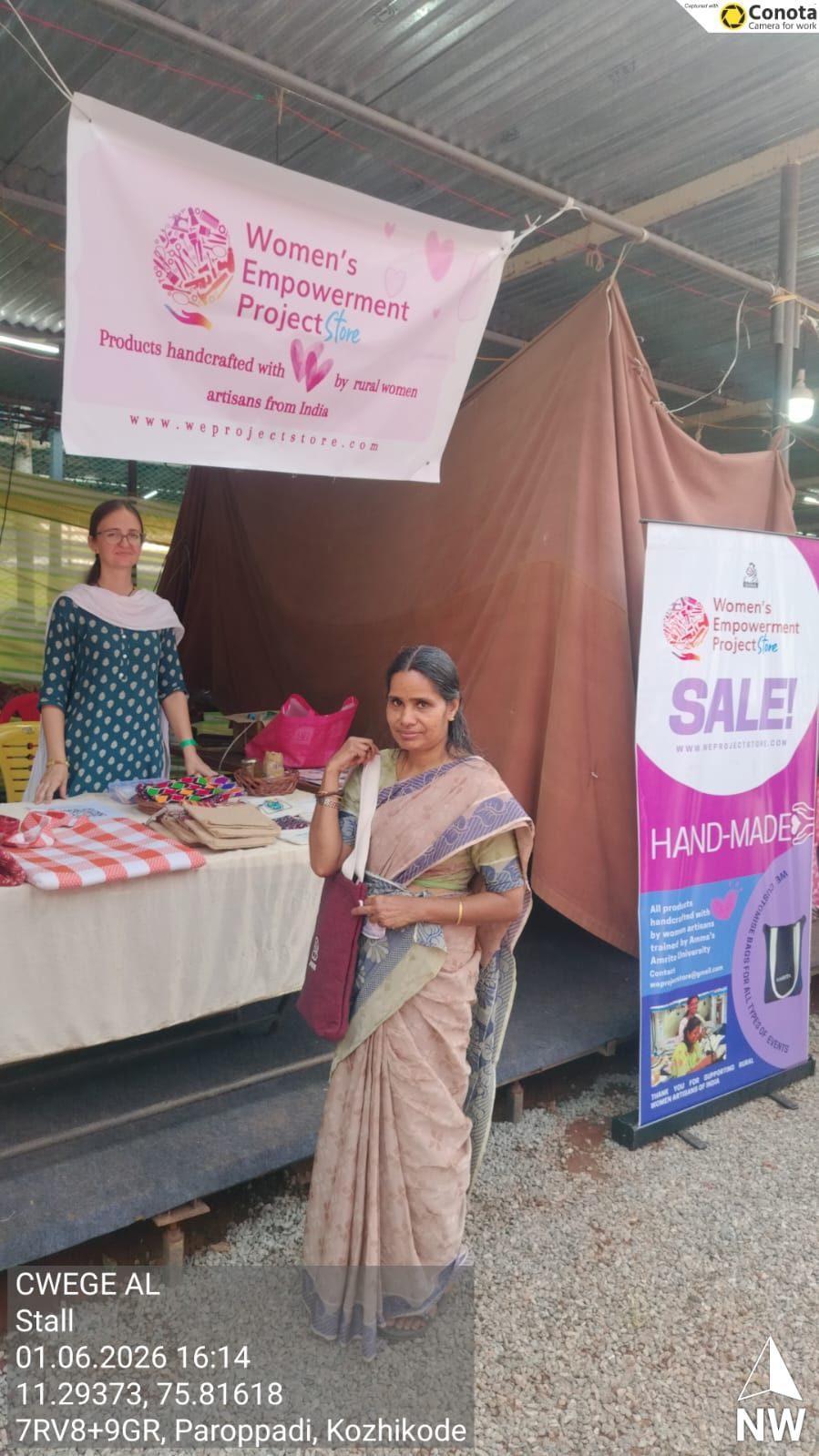
As part of Amma's South India Tour 2026, WE STORE continued its outreach with an exhibition at the Kozhikode Brahmasthanam, the first stop in Kerala during the tour. The stall remained open throughout the two-day programme, offering devotees an opportunity to explore and purchase handcrafted products created by women artisans trained through the Centre for Women's Empowerment and Gender Equality (CWEGE) and AMMACHI Labs. The exhibition brought together a diverse collection of artisan-made products, each representing the creativity, craftsmanship, and entrepreneurial spirit of women who have benefited from Amrita's skill development and livelihood initiatives. The stall not only promoted sustainable, handcrafted products but also highlighted the transformative impact of community-based women's empowerment programmes.
Members of AMMACHI Labs actively volunteered at the stall, contributing their time and effort to assist with product displays, customer engagement, and sales. The event also provided a meaningful opportunity for lab members who were not directly involved in the WE STORE initiative to participate in supporting the livelihoods of the women artisans. Their involvement strengthened the spirit of collaboration and reinforced the shared commitment to empowering rural communities through sustainable income-generation initiatives. The stall received an enthusiastic response from devotees, many of whom appreciated the quality and uniqueness of the handcrafted products. Several customers happily posed for photographs with their purchases, celebrating not only the artistry of the products but also the inspiring stories of the women artisans behind them. These interactions reflected the growing appreciation for handcrafted, socially impactful products and the meaningful connection they create between artisans and consumers. The successful exhibition at Kozhikode Brahmasthanam further strengthened WE STORE's mission of creating sustainable market opportunities for women artisans while raising awareness about the wide-ranging rural development initiatives undertaken by Amma. By connecting handcrafted products with a larger audience during Amma's tour, WE STORE continues to foster women's entrepreneurship, preserve traditional crafts, and promote socially responsible consumer choices.
Monthly Highlights
May 2026 was a month of significant milestones for the WE Project Store, marked by impactful collaborations, artisan empowerment, product innovation, institutional partnerships, and expanded market outreach. Through customized product development, skill-building initiatives, international collaborations, and participation in major events, WE Project Store continued to strengthen sustainable livelihood opportunities for women artisans across India.