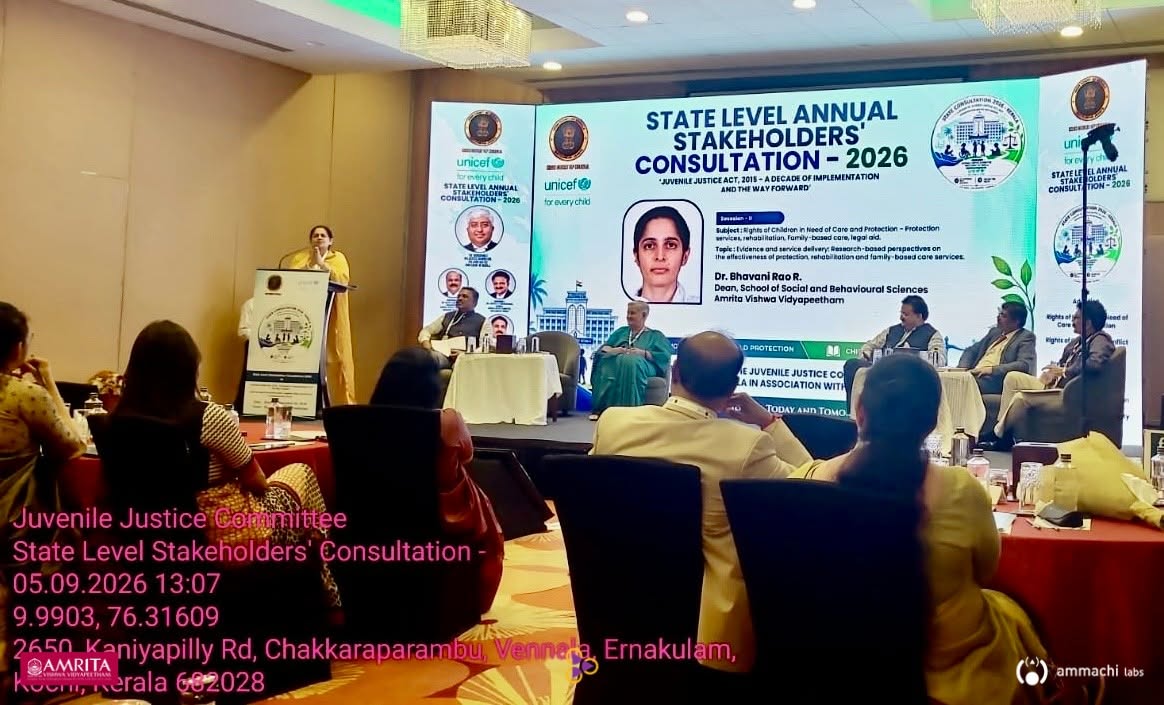
Kochi, September 5, 2026: Dr. Bhavani Rao R., Dean of the School of Social & Behavioural Sciences (SSBS), Amrita Vishwa Vidyapeetham, and Director of the Center for Women’s Empowerment and Gender Equality (CWEGE), participated in the State-Level Annual Stakeholders’ Consultation on “Juvenile Justice Act, 2015 – A Decade of Implementation and the Way Forward.”
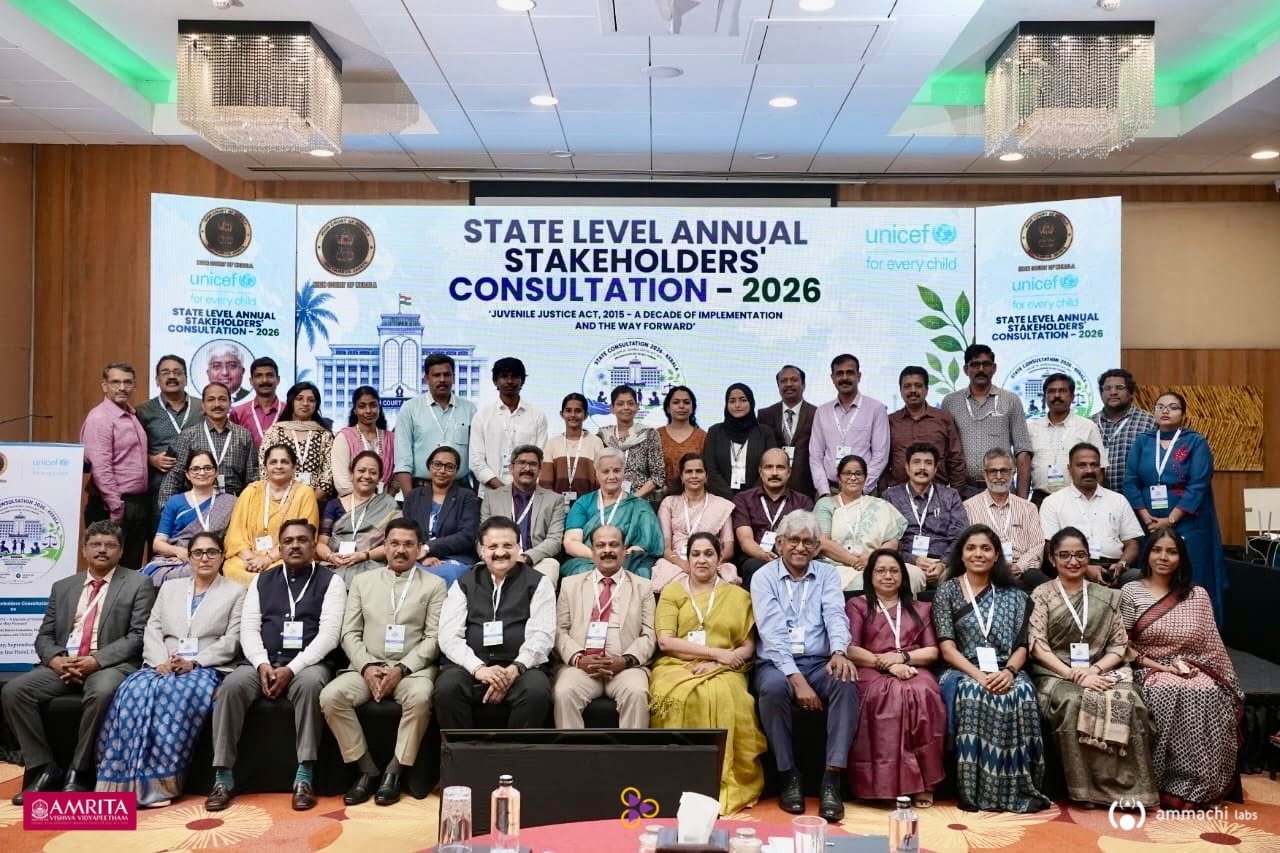
The consultation was organised by the Juvenile Justice Committee of the High Court of Kerala, in association with UNICEF, bringing together key stakeholders working in juvenile justice, child protection, care and rehabilitation.
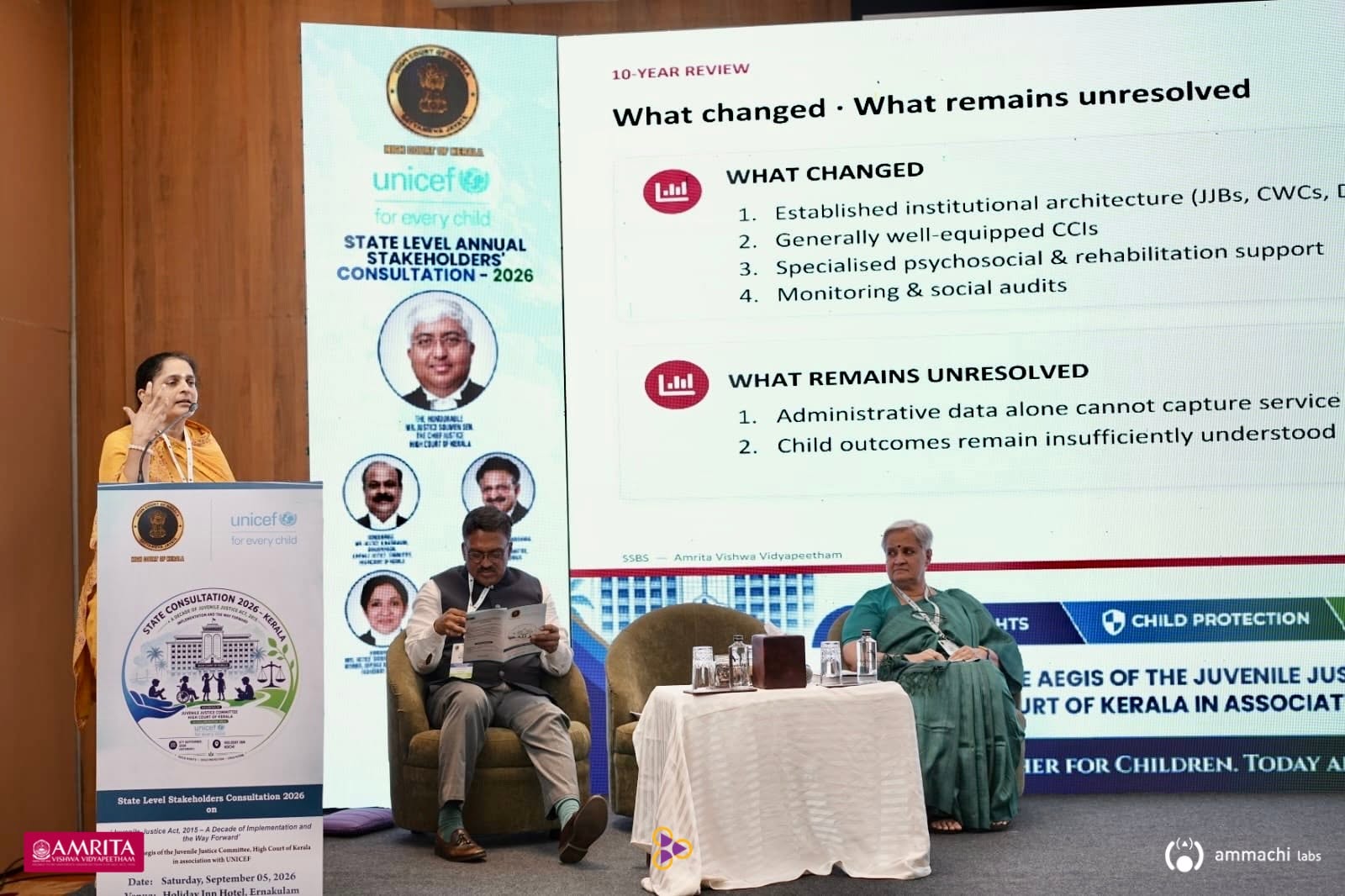
Addressing the session on Children in Need of Care and Protection, Dr. Bhavani Rao raised a critical question: How can we move beyond measuring whether services are being delivered to understanding whether those services are actually improving children’s lives?
She emphasised that conventional quantitative indicators alone may not adequately capture the complex and evolving realities experienced by children. She called for a stronger focus on qualitative, child-centred and longitudinal approaches that can document children’s experiences, vulnerabilities and changing needs over time.
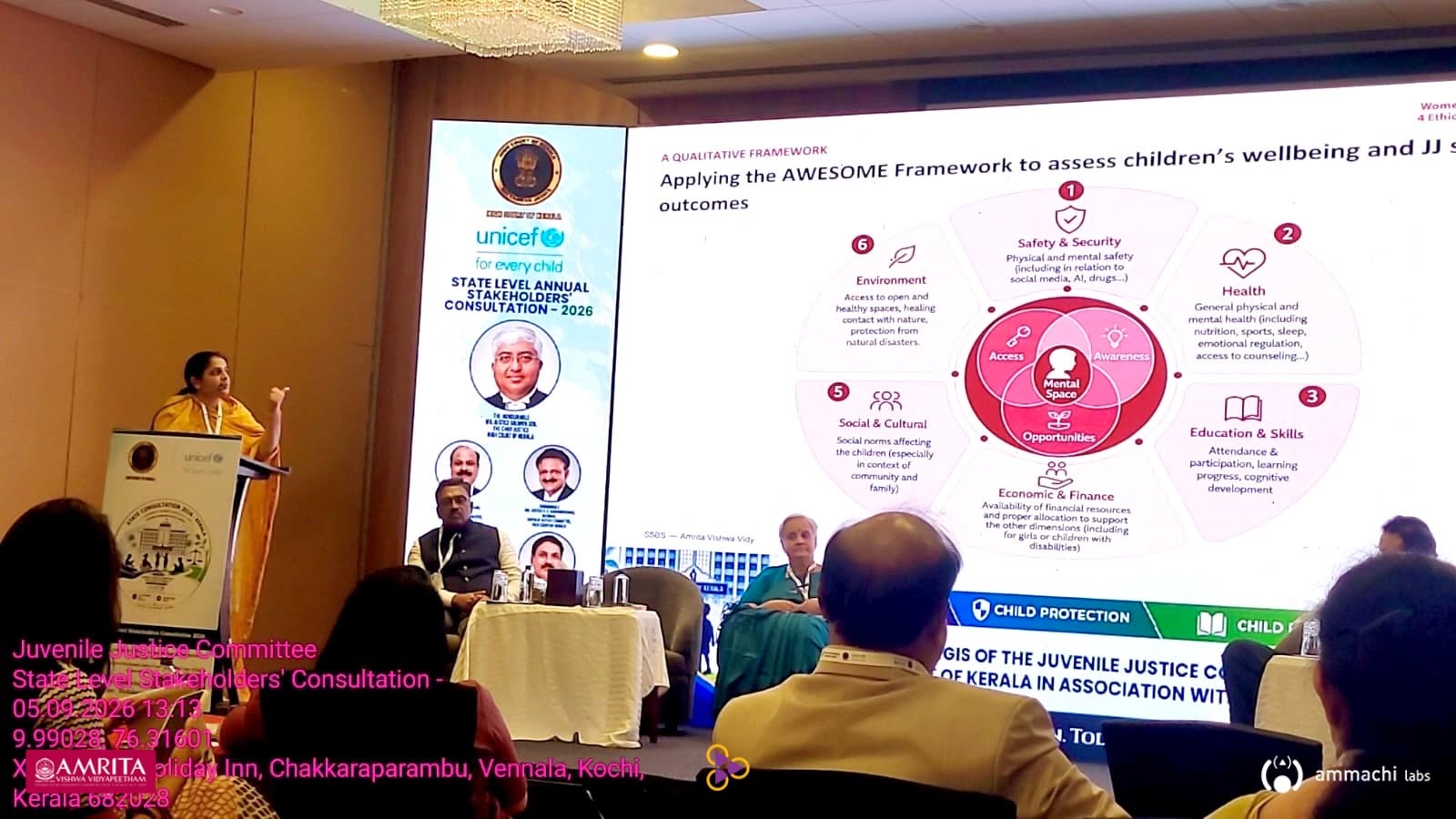
CWEGE’s AWESOME Framework for Child-Centred Interventions
A key component of Dr. Bhavani Rao’s presentation was the AWESOME Framework, developed by CWEGE as a child-centred, systems-based and longitudinal framework for designing and assessing interventions.
The framework examines six interconnected dimensions of a child’s wellbeing:
- Safety & Security
- Education
- Economic & Financial
- Health
- Environment
- Socio-Cultural
Rather than viewing children’s challenges in isolation, the framework encourages stakeholders to understand how different aspects of a child’s life interact and influence their overall wellbeing.
Addressing Emerging AI-Related Risks
Dr. Bhavani Rao also demonstrated the relevance of the AWESOME Framework in addressing the rapidly evolving risks associated with Artificial Intelligence (AI).
Her presentation highlighted how AI-related vulnerabilities can cut across all six dimensions of a child’s life. Risks associated with AI can potentially intersect with a child’s family circumstances, social environment, education, health, economic situation and overall wellbeing.
This systems-based perspective, she noted, is particularly important as emerging technologies create new forms of vulnerability and new challenges for child protection and juvenile justice systems.
Strengthening Juvenile Justice Responses to AI-Related Crimes
The presentation called for greater attention to AI within juvenile justice and child protection systems, with emphasis on three key areas:
- Capacity-building: Strengthening the knowledge and preparedness of juvenile justice and child protection stakeholders to understand AI and emerging technology-related risks.
- Fast-track mechanisms: Developing responsive processes for cases involving AI-related crimes affecting children.
- Priority attention to children: Ensuring that children involved in AI-related cases receive appropriate care, protection, support and rehabilitation.
Dr. Bhavani Rao’s intervention reinforced the need for juvenile justice systems to evolve alongside emerging social and technological challenges while keeping the best interests, dignity and wellbeing of children at the centre.
The presentation was positively received and contributed to the consultation’s broader emphasis on evidence-based research, child-centred approaches, inter-sectoral coordination, and stronger systems of care, protection and rehabilitation.
The consultation provided an important platform for reflecting on a decade of implementation of the Juvenile Justice Act, 2015, while identifying pathways to build more responsive, integrated and child-sensitive justice and protection systems for the future.