Amrita Vishwa Vidyapeetham showcases technology-enabled approaches for wildlife monitoring, early detection and protection of farming communities.
Amrita Vishwa Vidyapeetham’s Rural Technologies team participated in the State-Level Conclave on Farmer Safety and Human–Wildlife Conflict Mitigation held at Parish Hall, Thiruvambady, in Kozhikode district, Kerala.
The conclave brought together government representatives, policymakers, researchers, academic institutions, technology developers, startups and community stakeholders to explore practical and sustainable approaches to reducing human–wildlife conflict.
Protecting farmers, agricultural land, livelihoods and communities affected by human–wildlife conflict.
Technology-enabled monitoring and early warning systems supporting preventive action.
Innovative approaches for monitoring wildlife movement and identifying potential conflict situations.
Cooperation between government, academia, researchers, technology providers and local communities.
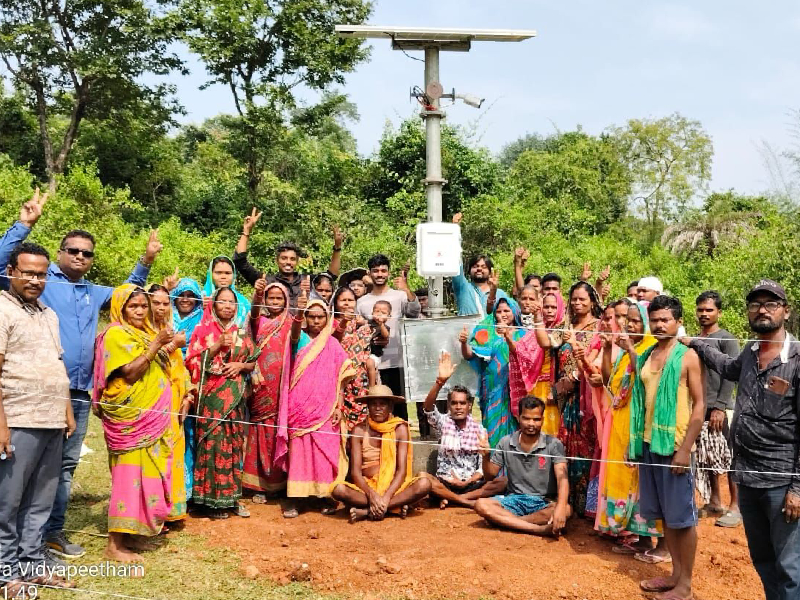 AMRITA RURAL TECHNOLOGIES
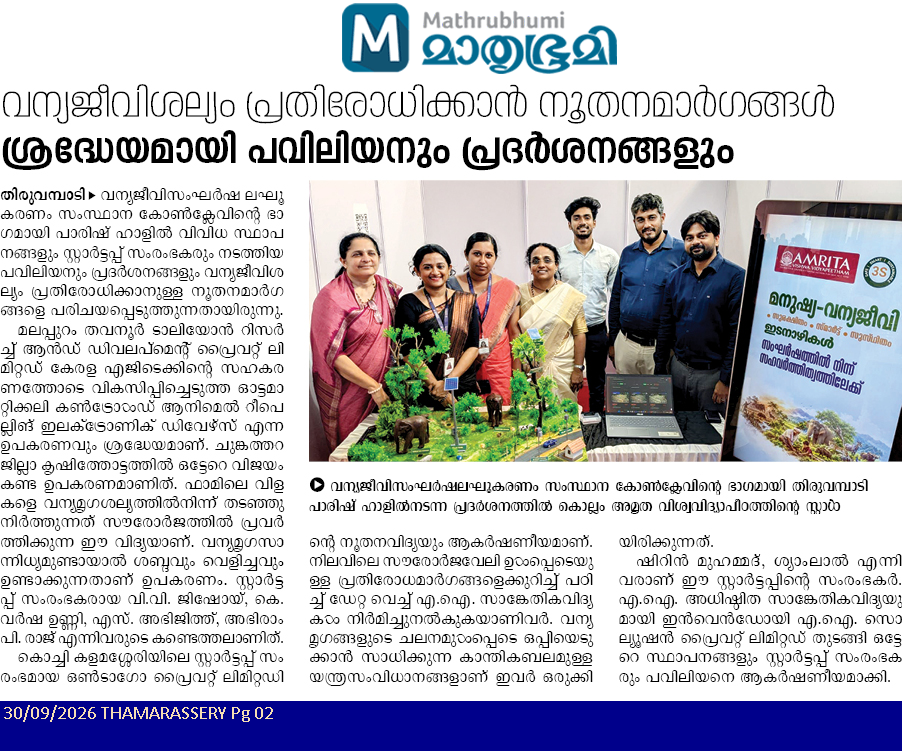
As part of the exhibition, Amrita Vishwa Vidyapeetham’s Rural Technologies team showcased a technology-enabled approach to human–wildlife conflict mitigation.
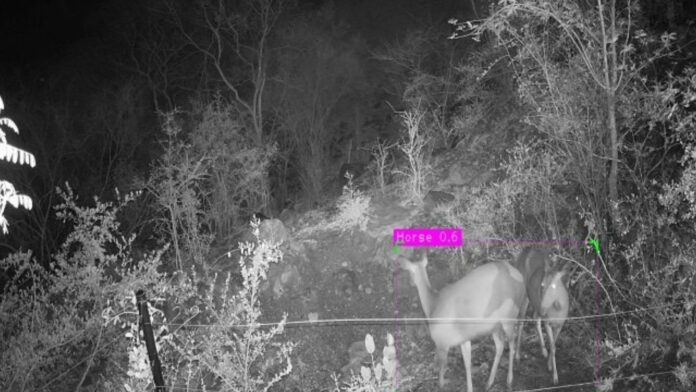
The exhibit combined a physical field model with a digital monitoring dashboard to demonstrate how multiple interventions can work together in agricultural and forest-edge environments.
Technology can provide timely information, support preventive action and help protect people, livelihoods and wildlife.TECHNOLOGY • CONSERVATION • COMMUNITY
The demonstration illustrated how field-level monitoring, sensor technologies and digital dashboards can support timely information, decision-making and preventive action.
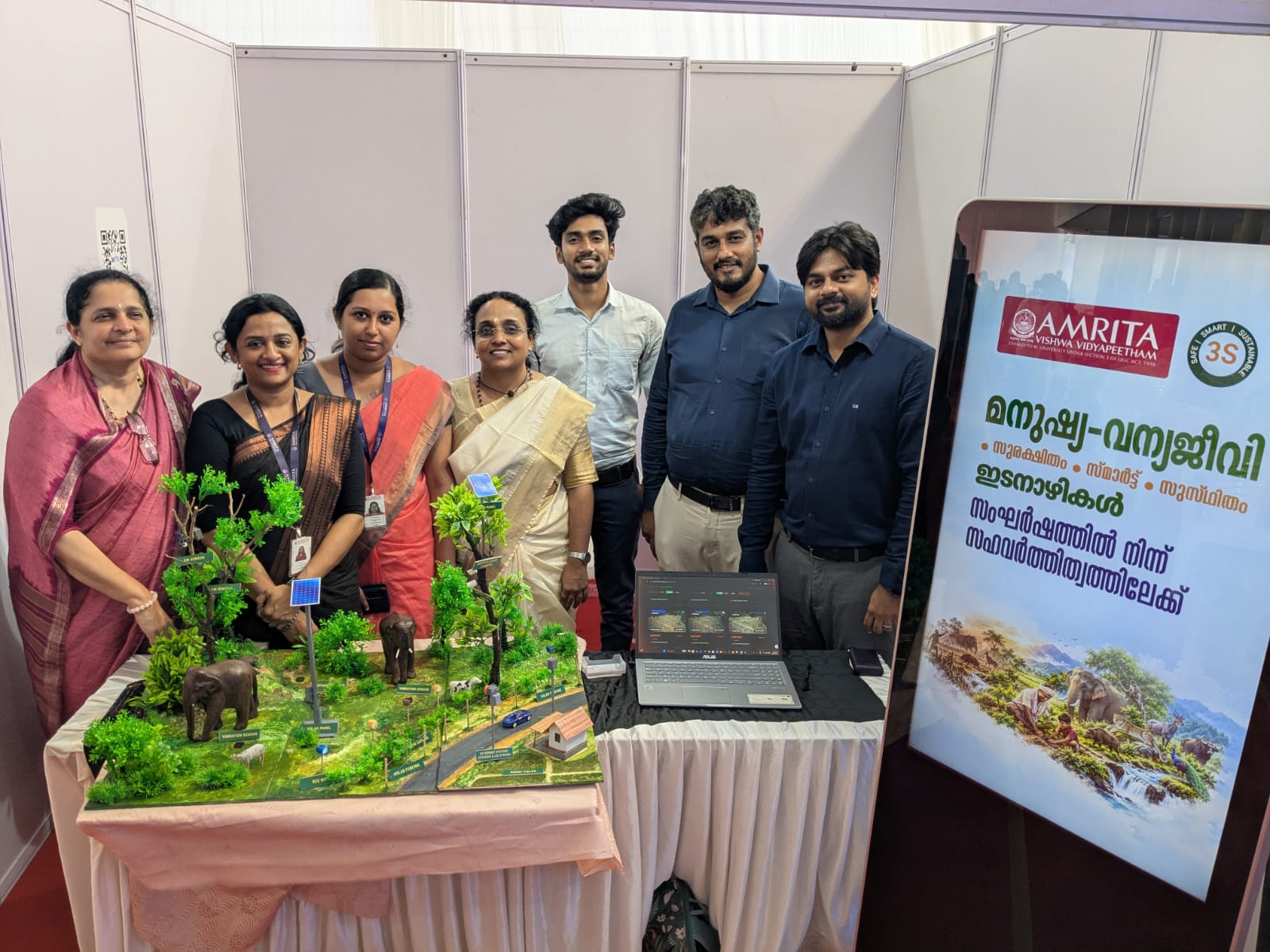
Identify wildlife movement and potential conflict situations.
Track information through a connected digital dashboard.
Provide timely information to support preventive action.
Help safeguard farmers, crops, communities and wildlife.
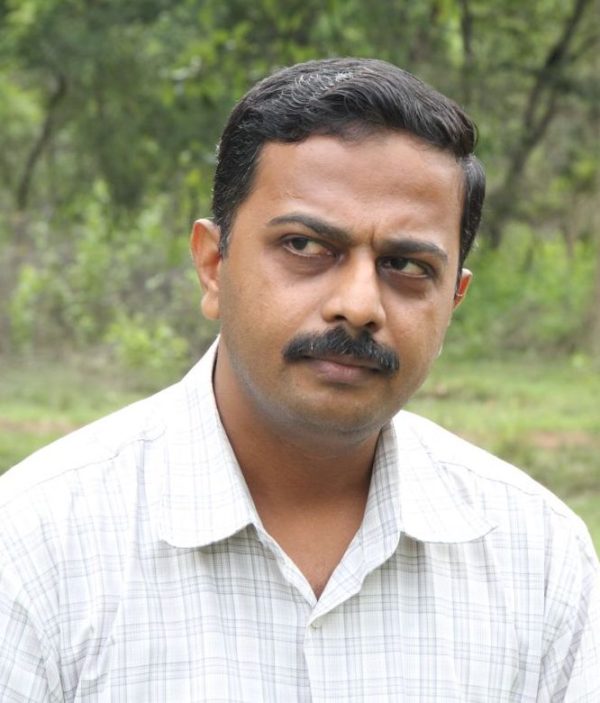
Addressed human–monkey conflict and management strategies.
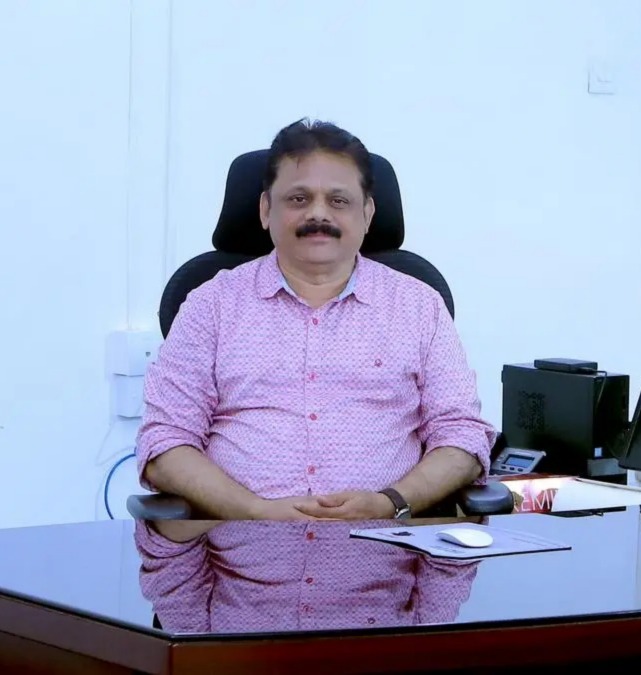
Discussed challenges related to farmer safety and human–wildlife conflict.

Participated in discussions on farmer safety, human–wildlife conflict and community-focused solutions.
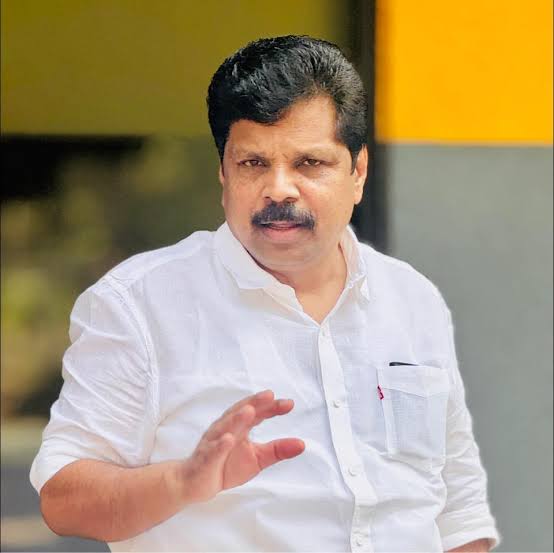
Contributed to discussions on coordinated approaches to human–wildlife conflict mitigation.

Engaged in discussions around farmer protection, community concerns and sustainable conflict mitigation.
The conclave provided a platform for connecting policy, research, technology, conservation and community needs towards developing scalable and sustainable approaches to human–wildlife coexistence.
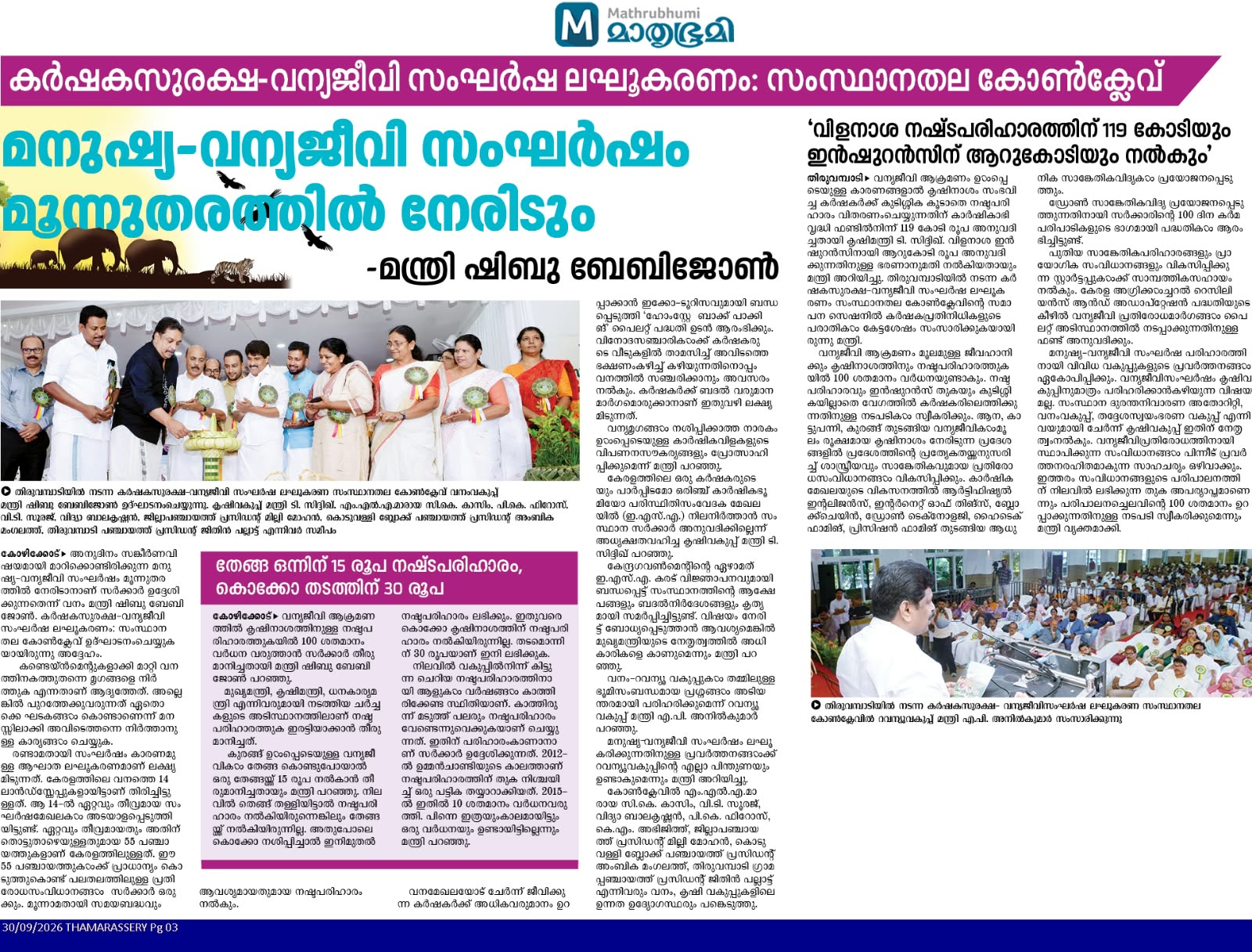
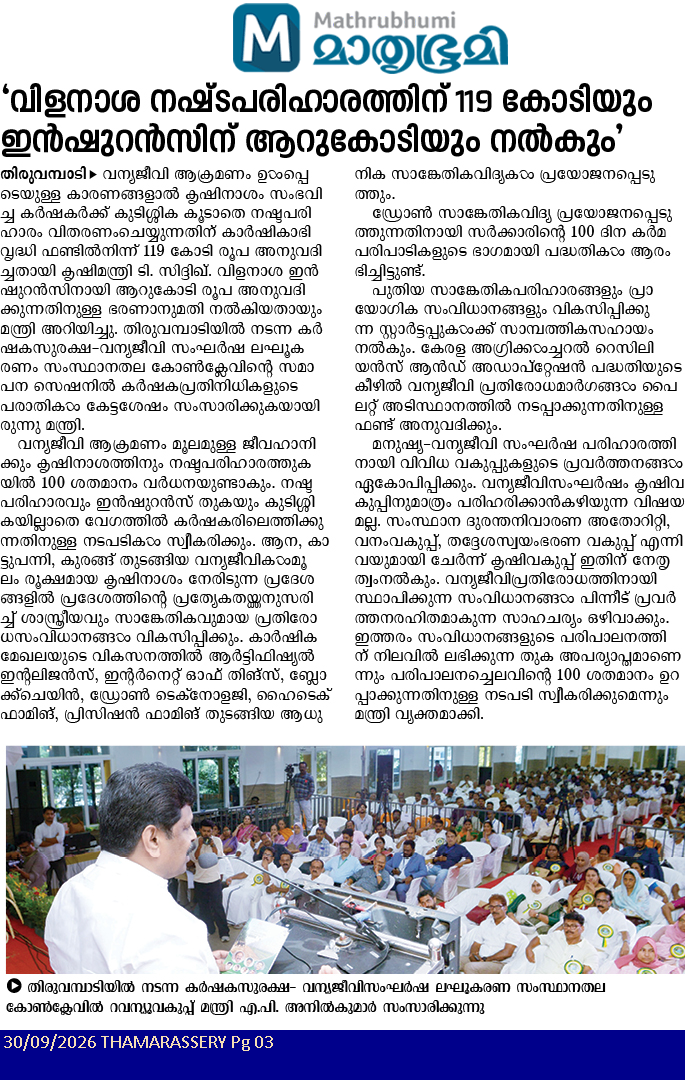
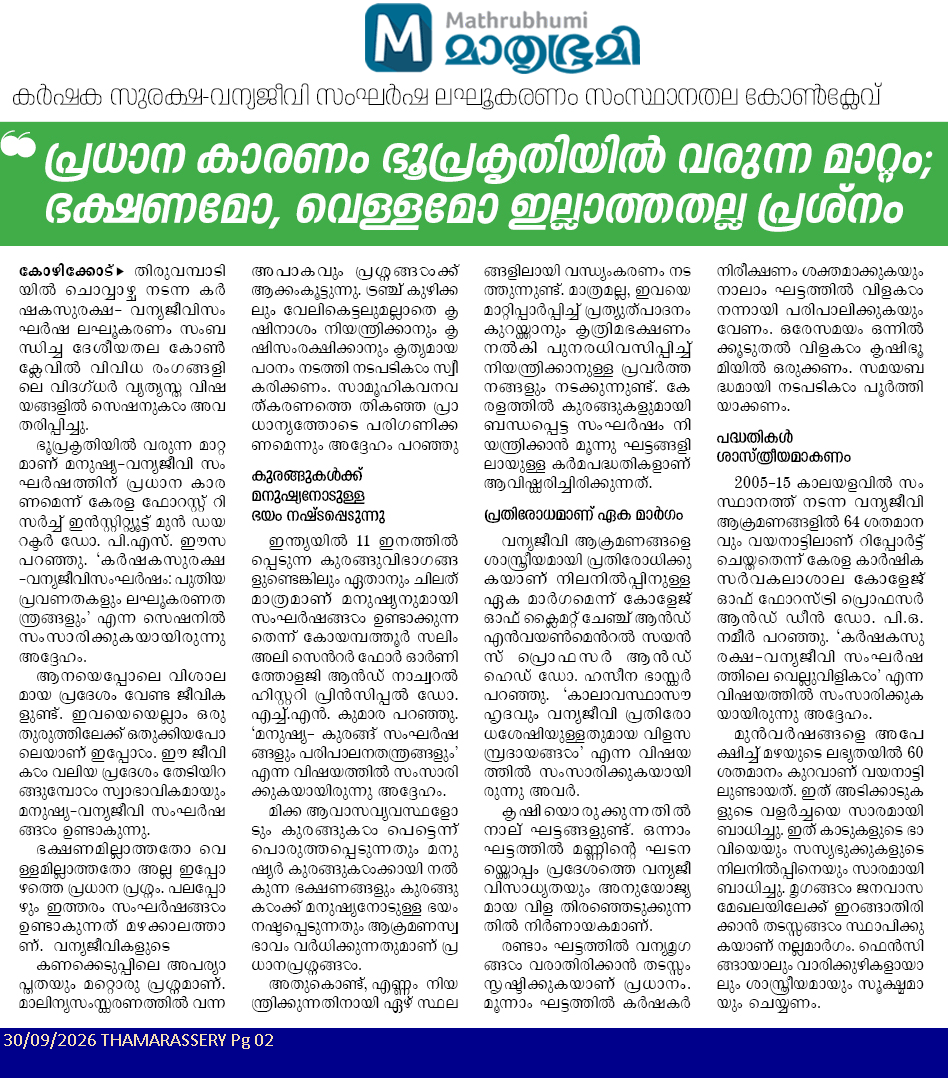
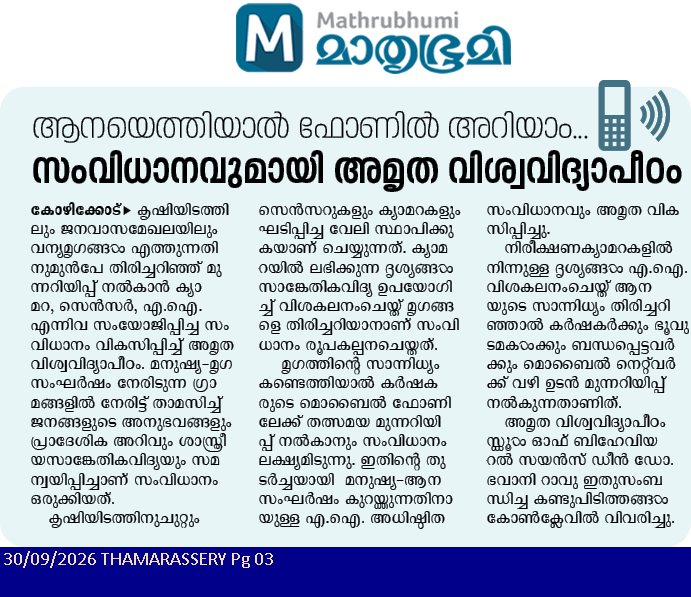
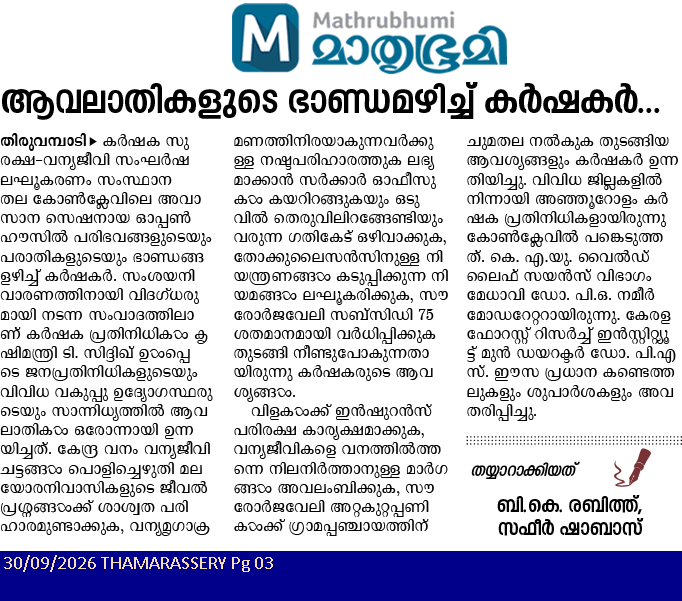
The conclave received media attention for bringing together experts, policymakers and technology teams to explore innovative approaches to farmer safety and human–wildlife conflict mitigation. Mathrubhumi highlighted the event and Amrita’s technology-enabled exhibition showcasing wildlife monitoring, early detection and community protection measures.
The state-level discussions and exhibition received media attention, highlighting the importance of farmer safety, wildlife monitoring and technology-enabled approaches to human–wildlife conflict mitigation.
Coverage highlighting the conclave, exhibition and technology-enabled human–wildlife conflict mitigation.
Explore videos from the conclave, exhibition and technology demonstrations.
The initiative connects farmer safety, innovation, sustainable communities, wildlife conservation and collaborative action across five Sustainable Development Goals.
Supporting safer agricultural environments and protecting farming livelihoods from human–wildlife conflict.
Demonstrating sensor-based monitoring, digital dashboards and technology-enabled early warning systems.
Building resilient communities through coordinated approaches to safety, conservation and sustainable coexistence.
Supporting wildlife conservation and sustainable approaches to human–wildlife coexistence.
Encouraging collaboration between government, academia, technology teams, researchers and local communities.