


Bridging Computational Science and Social Inequalities
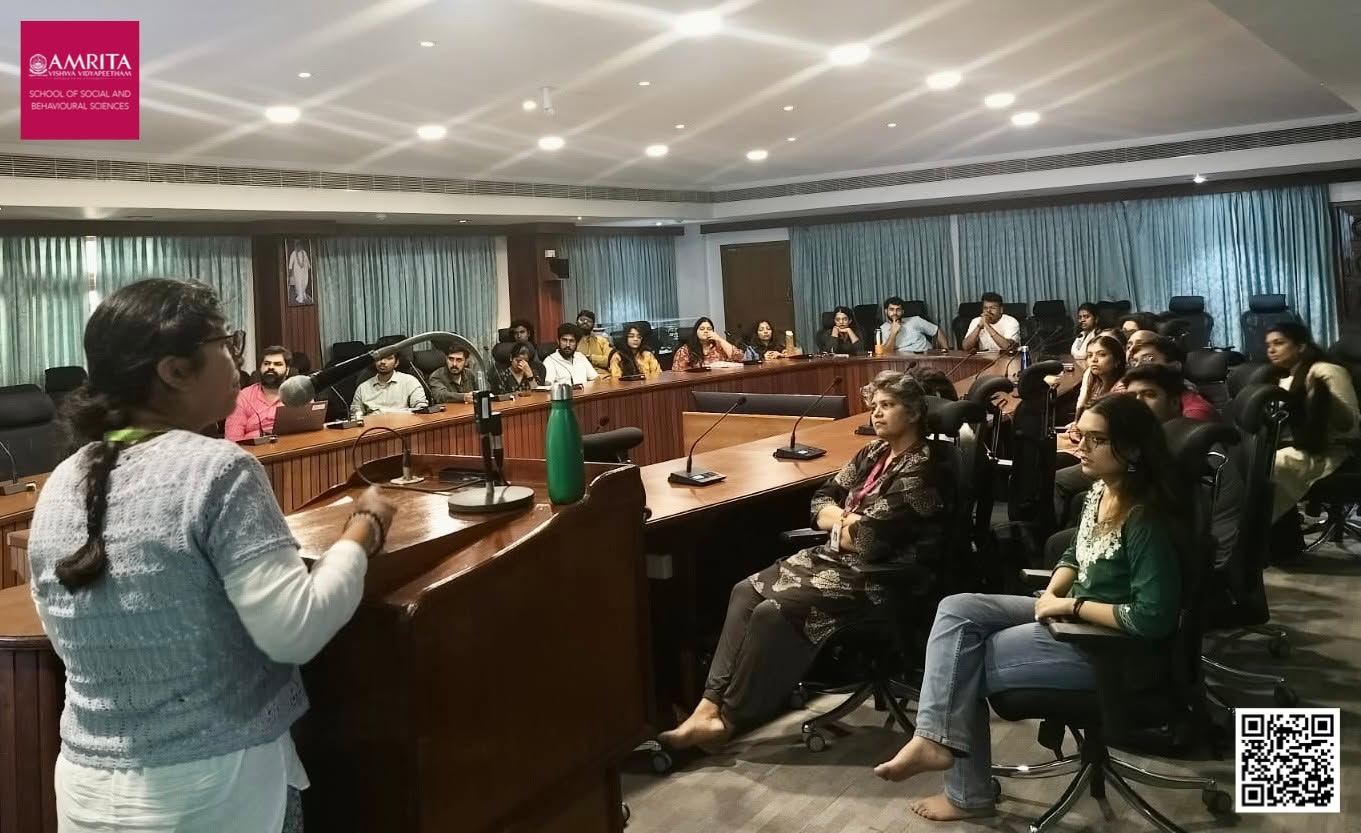
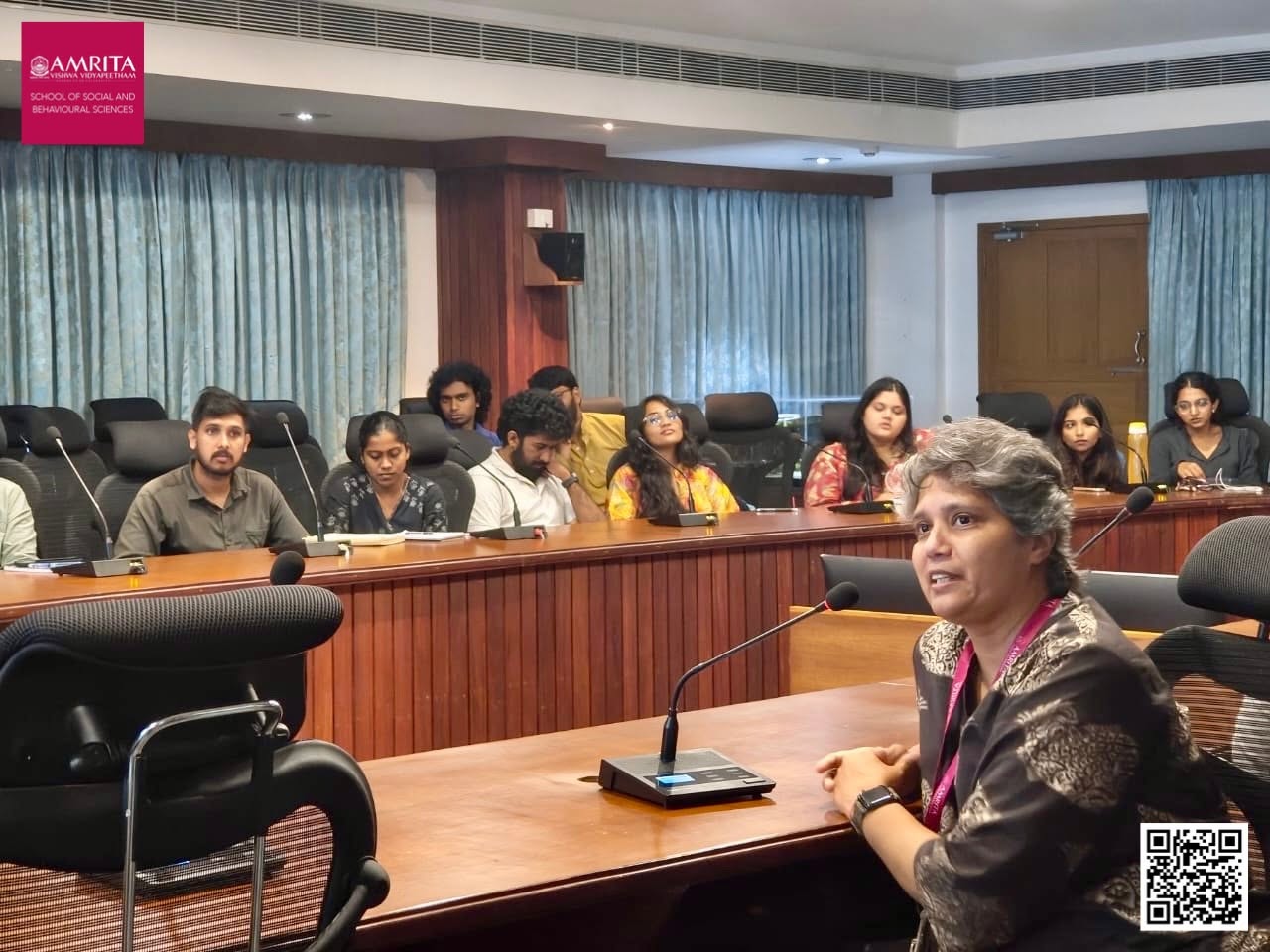
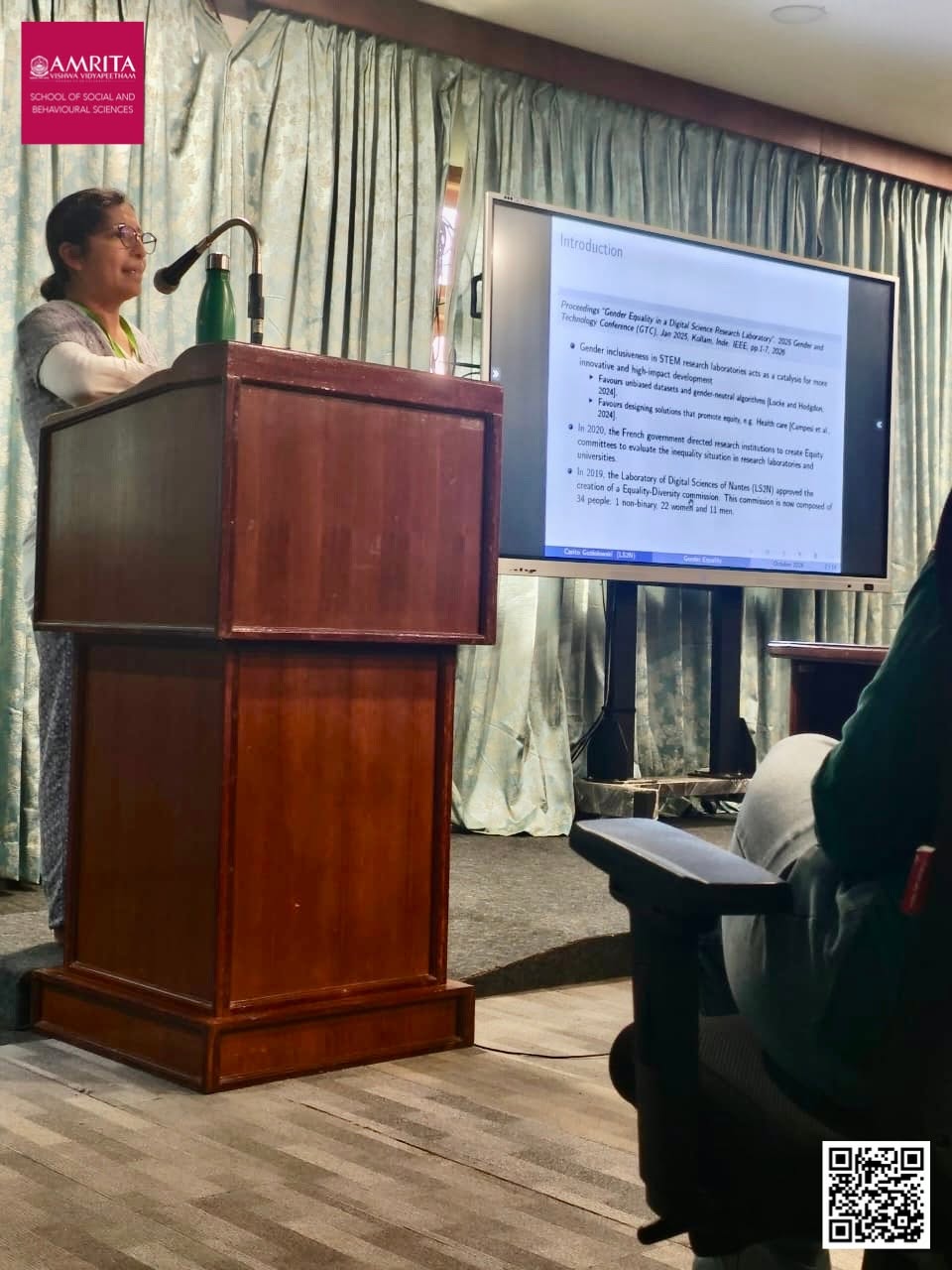
How can computational science contribute to a deeper understanding of gender inequalities, discrimination and other complex social phenomena? Exploring this question, Amrita Vishwa Vidyapeetham welcomed Dr. Carito Guziołowski, Associate Professor at École Centrale de Nantes, France, and researcher at the Laboratoire des Sciences du Numérique de Nantes (LS2N), to its Amritapuri campus from 21 to 24 October 2026.
During her visit, Dr. Guziołowski delivered an invited talk titled “Computational Modeling of Inequalities,” examining how computational approaches can offer new perspectives for investigating social inequalities and understanding the complex relationships that shape social phenomena.
The academic exchange brought together perspectives from computational science, formal methods and social science research, highlighting the potential of interdisciplinary approaches to address challenging societal questions.
Connecting Computational Thinking with Social Sciences
Drawing on her interdisciplinary background in computer science, formal logic, bioinformatics and computational systems biology, Dr. Guziołowski's work brings computational thinking into dialogue with the study of social systems.
Computational approaches can provide structured ways to represent complex relationships, analyse patterns and explore how different factors interact within social systems. Such approaches offer opportunities to complement qualitative and theoretical research when investigating issues such as gender inequalities and discrimination.
Exploring Interdisciplinary Research Opportunities
During the visit, discussions with faculty members and researchers from Amrita's Center for Women's Empowerment & Gender Equality (CWEGE), AMMACHI Labs, and the Amrita School of Social and Behavioural Sciences (SSBS) explored potential areas of academic and research collaboration.
Key Areas of Research Discussion
The discussions focused on computational analysis of qualitative testimonies, knowledge representation and formal modelling of social phenomena. These areas offer possibilities for connecting computational techniques with research on gender, inequality and broader social challenges.
The interactions also highlighted the value of interdisciplinary collaboration in developing new research perspectives and methodologies that connect computational approaches with real-world social contexts.
Advancing Academic Exchange and Collaboration
Dr. Guziołowski's visit fostered academic exchange between researchers working across computational sciences and social sciences. It also opened avenues for future interdisciplinary research connecting computational methods, social inequalities and gender studies.
The engagement reflects the importance of collaborative research in addressing complex societal challenges through diverse academic perspectives, innovative methodologies and knowledge sharing.
Contributing to the Sustainable Development Goals
The academic exchange connects with the broader global agenda for equality, inclusive societies and collaborative research.