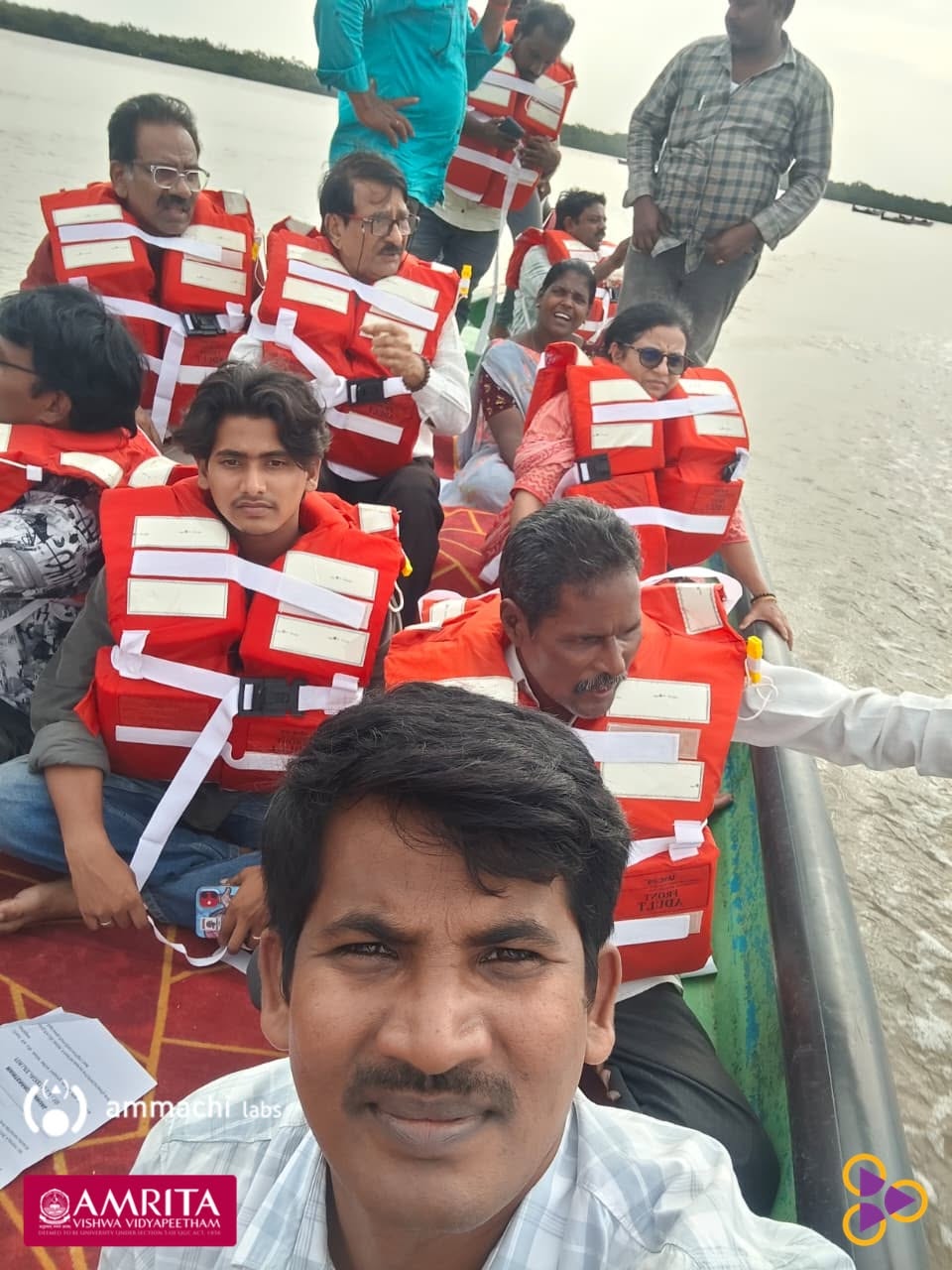
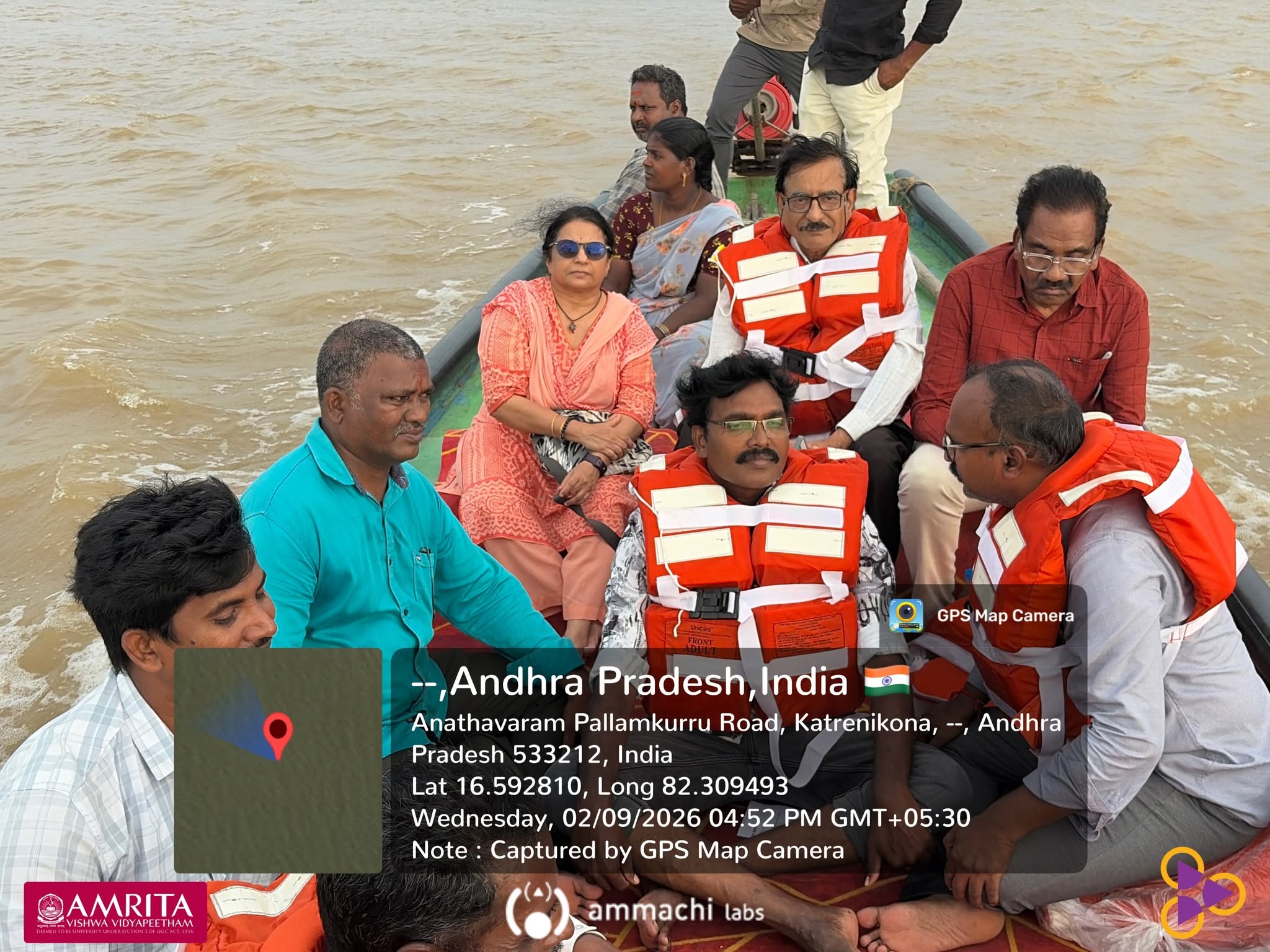
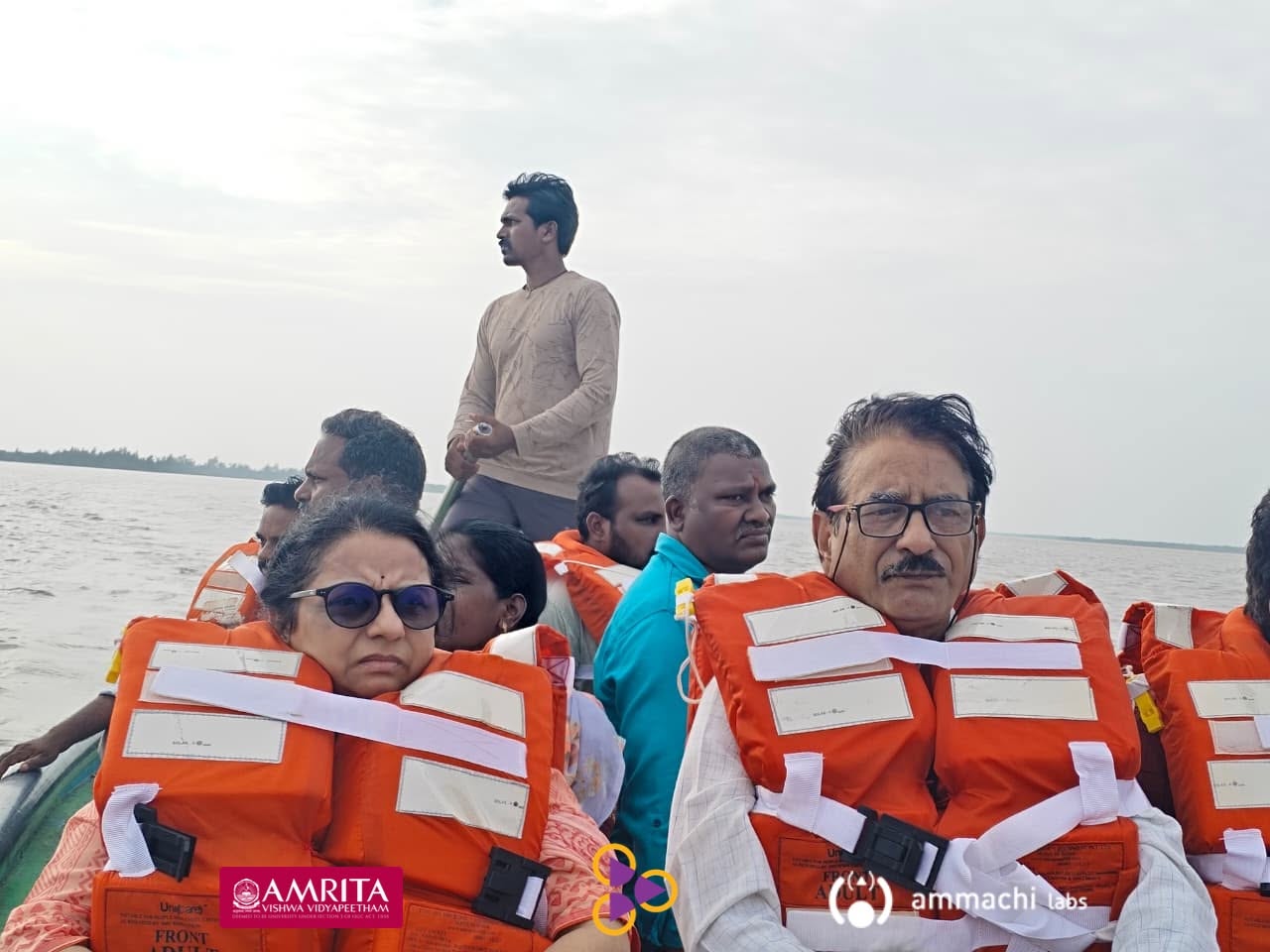
Konaseema, Andhra Pradesh: As part of the ongoing Blue is the New Pink – Women Driving Sustainable Seaweed Cultivation and Climate Solutions project in Andhra Pradesh, a team from Amrita Vishwa Vidyapeetham conducted site visits to Kothapalem and Molletimoga villages in Dr. B.R. Ambedkar Konaseema District to assess the potential for seaweed cultivation in the region.
The field visits brought together the project team, representatives from the Society for Elimination of Rural Poverty (SERP), the Fisheries Department and the technical team from Amrita Vishwa Vidyapeetham. The assessment focused on understanding local water conditions, identifying suitable cultivation locations and exploring practical approaches that could support community-led seaweed farming.
Assessing Local Conditions
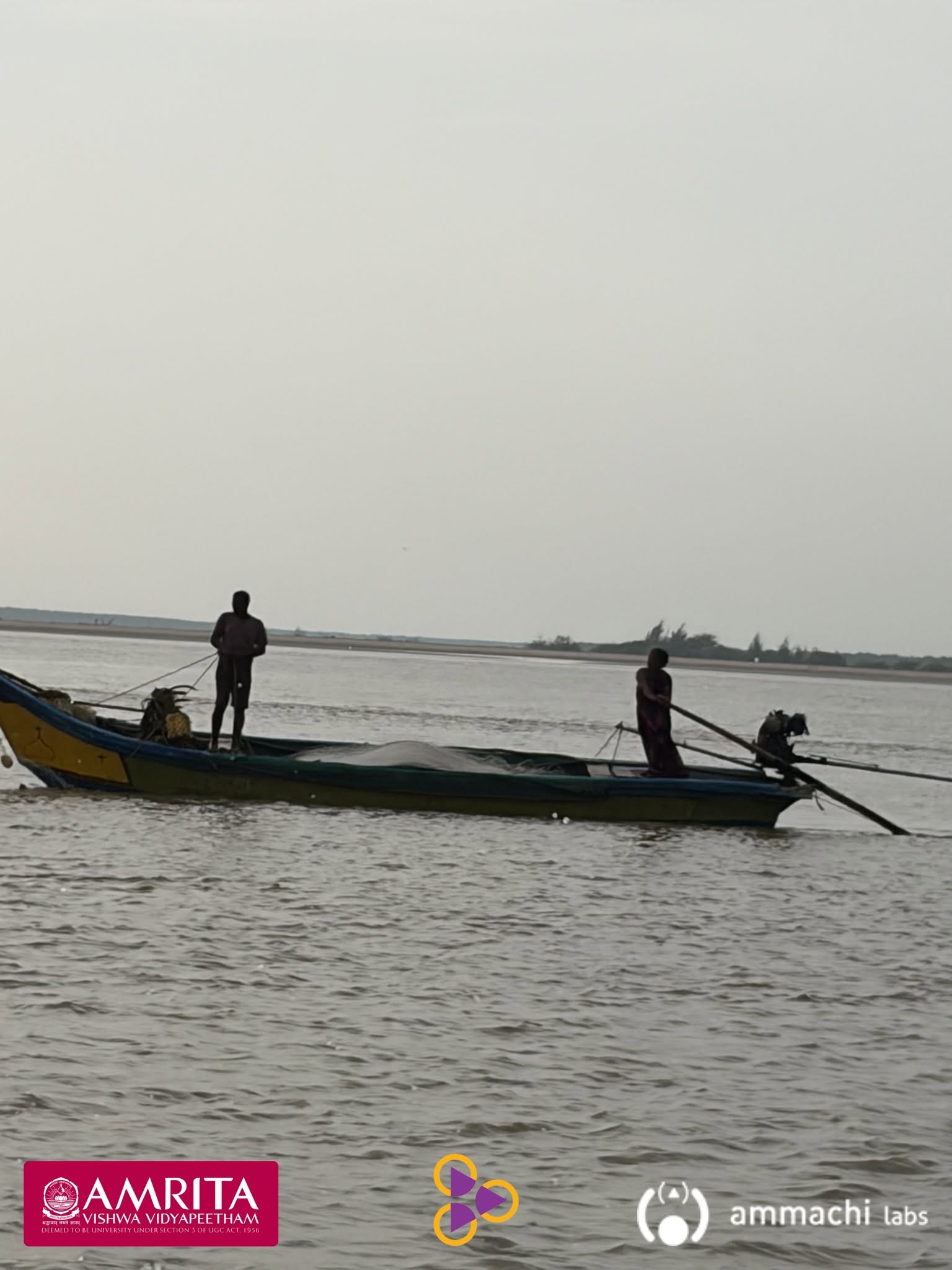
At Kothapalem, the team assessed a large creek adjoining the open sea. Initial observations indicated that the current salinity levels are not yet suitable for cultivating seaweed varieties such as Kappaphycus and Gracilaria. However, local fishermen shared valuable knowledge about seasonal changes in the area, indicating that water conditions are expected to become more favourable for seaweed cultivation from November.
The observations highlighted the importance of combining technical assessment with local ecological knowledge when identifying suitable locations for seaweed farming.
Exploring Pilot Cultivation in Molletimoga
In Molletimoga, the team explored opportunities to establish a pilot cultivation study using low-cost cultivation methods. Potential approaches include bamboo raft and monoline systems, which could allow different seaweed varieties to be tested and evaluated under local environmental conditions.
A pilot study would help generate practical insights into the performance, adaptability and cultivation requirements of different seaweed varieties while providing an opportunity for local communities to gain hands-on experience with cultivation techniques.
Community Participation at the Centre
Strong interest among local community members in taking up seaweed cultivation provided an encouraging foundation for the next phase of the initiative. Their willingness to explore seaweed farming reinforces the importance of community participation in developing sustainable livelihood opportunities linked to the coastal economy.
The field assessment also demonstrated the value of a collaborative approach, bringing together scientific expertise, government departments and community knowledge to identify locally appropriate solutions.
The Blue is the New Pink seaweed cultivation efforts in Andhra Pradesh are implemented by the Center for Women’s Empowerment & Gender Equality (CWEGE) and AMMACHI Labs, with support from the Society for Elimination of Rural Poverty (SERP).
Through continued field assessments, pilot studies and community engagement, the initiative aims to explore sustainable seaweed cultivation models that can contribute to livelihood development, women’s empowerment and climate-resilient coastal communities.
Site assessment. Local knowledge. Community participation. Practical solutions.