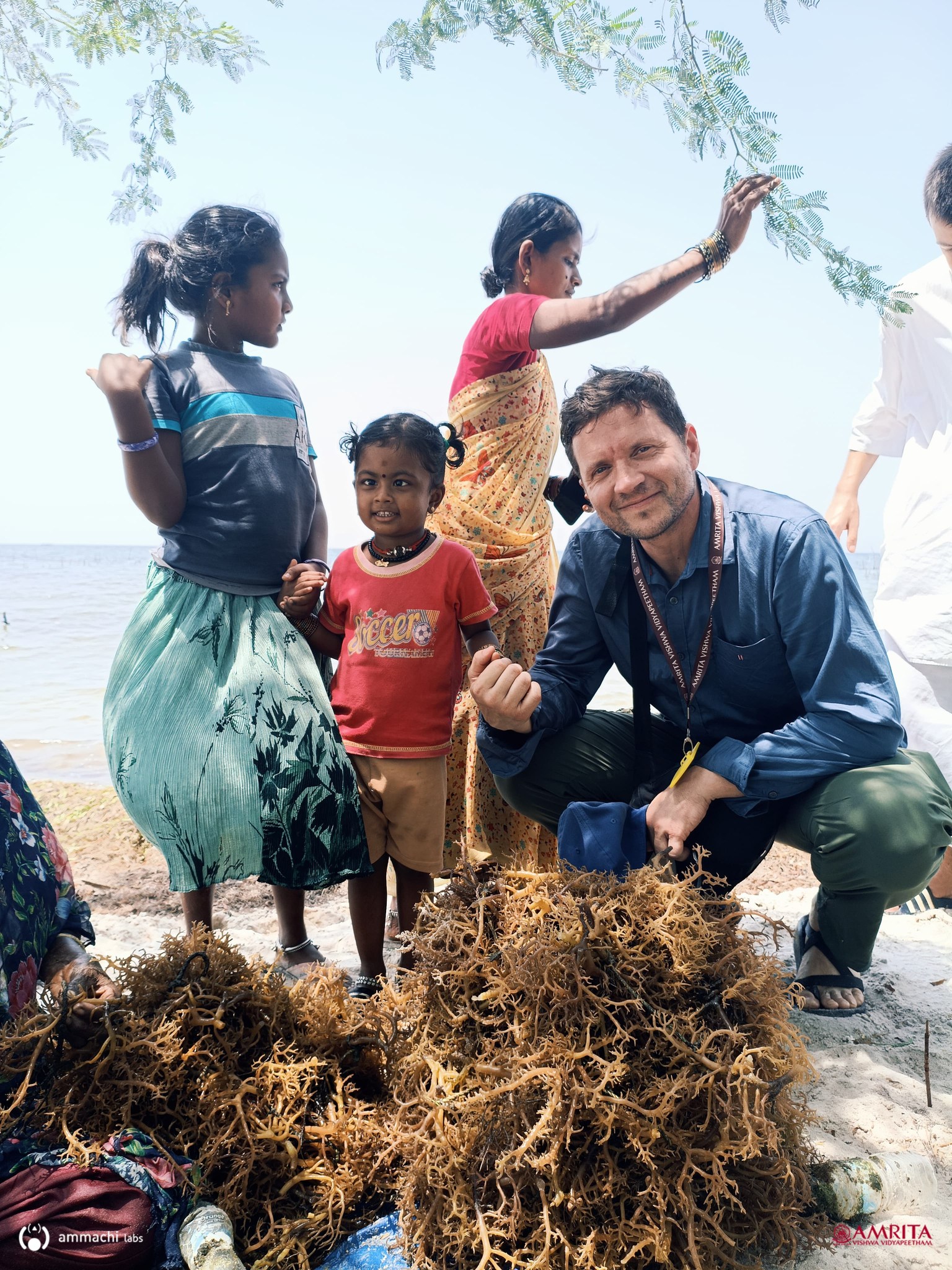
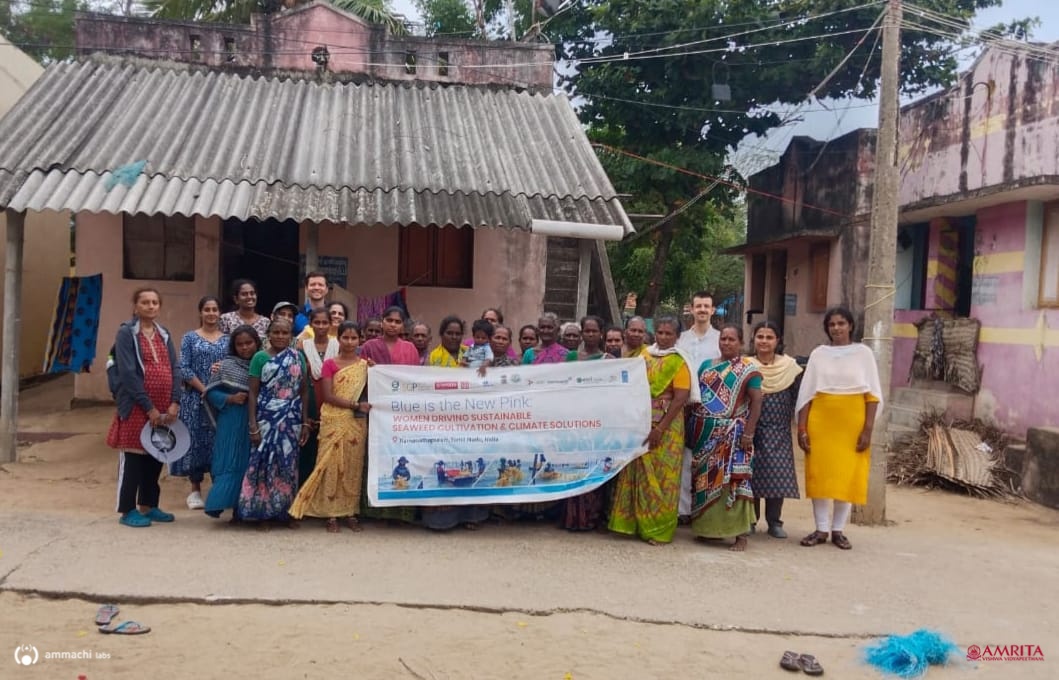
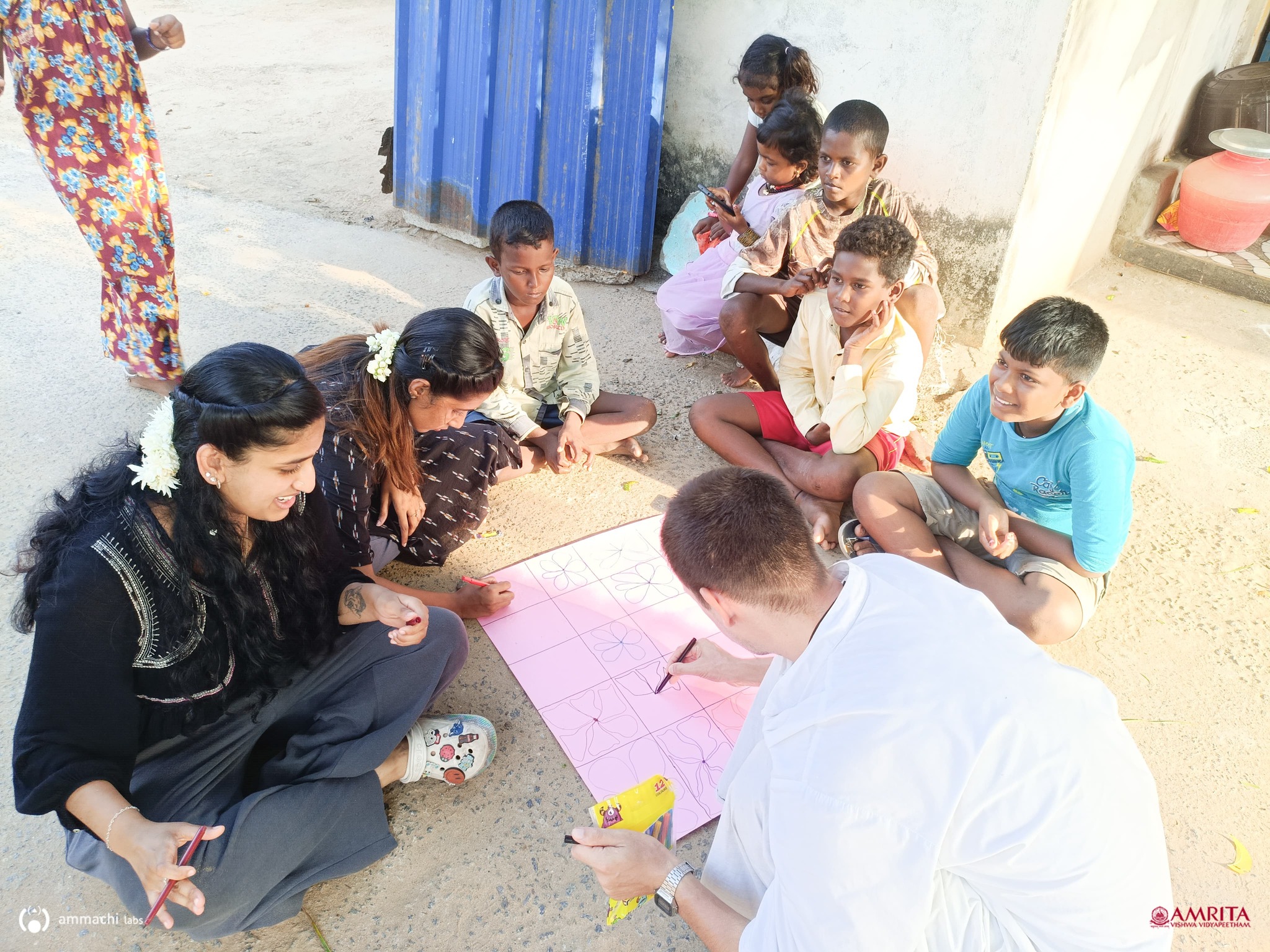
Soliyakudi, Tamil Nadu – June 2025 — In a vibrant fusion of science, culture, and empowerment, Amrita Vishwa Vidyapeetham’s Live-in-Labs® program, in collaboration with The University of Arizona, spearheaded an impactful marine conservation initiative in the coastal village of Soliyakudi, Tamil Nadu. This hands-on engagement not only educated participants on ecological stewardship but also celebrated the strength and resilience of local women working in seaweed harvesting.
The program was led by Dr. Matthijs Fakkel, Mona, and Soundariya from AMMACHI Labs, operating under the umbrella of the Center for Women’s Empowerment & Gender Equality, with dynamic contributions from University of Arizona students Aaron and Anusha.
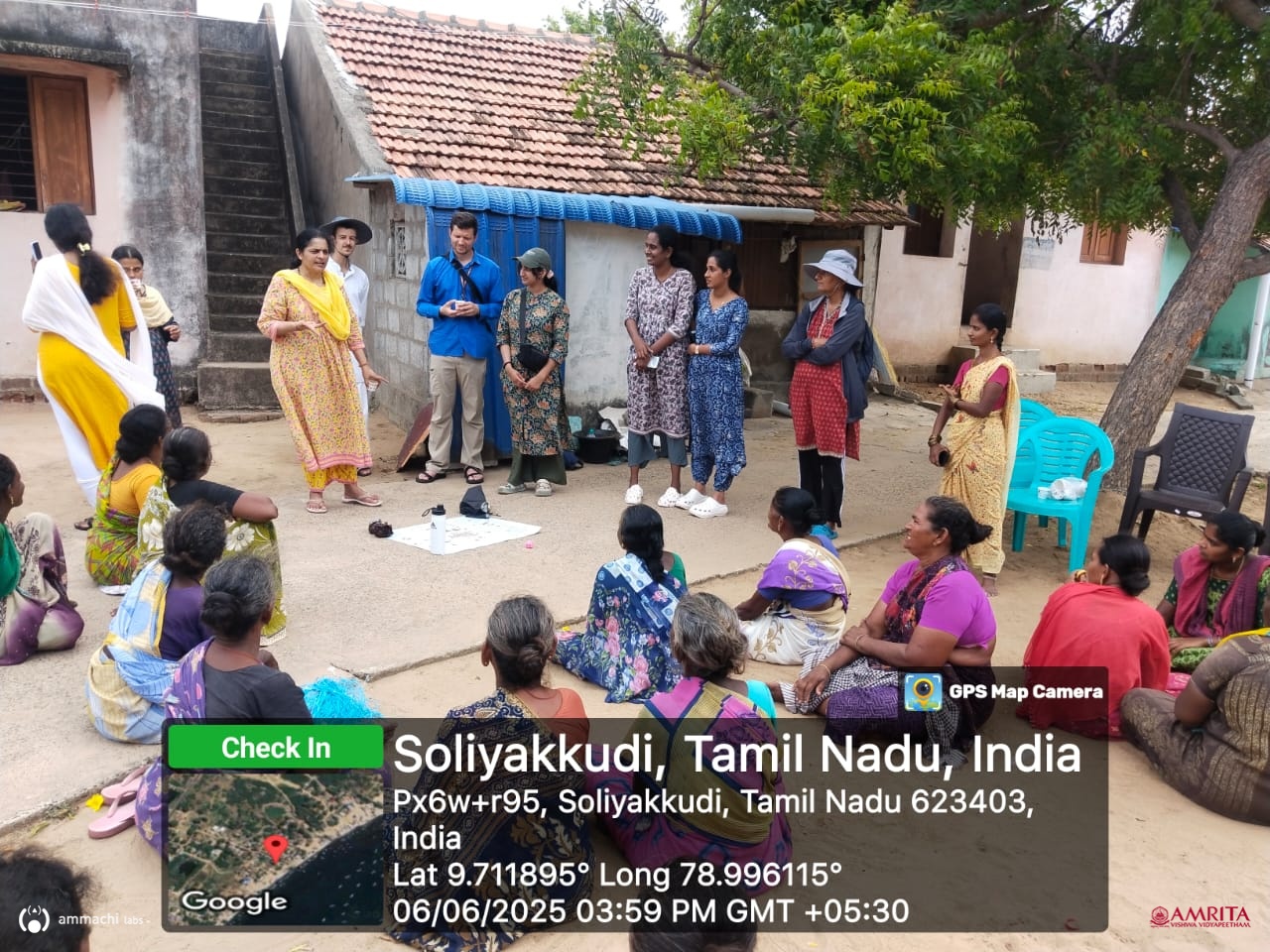
A core highlight was the interactive workshop “How Much is Too Much?” — a creative dice-and-shell game that made the concept of over-harvesting tangible for community members. This was followed by the reflective “Rose, Bud, and Thorn” activity, allowing participants to share their takeaways, hopes, and challenges in an open and supportive space.
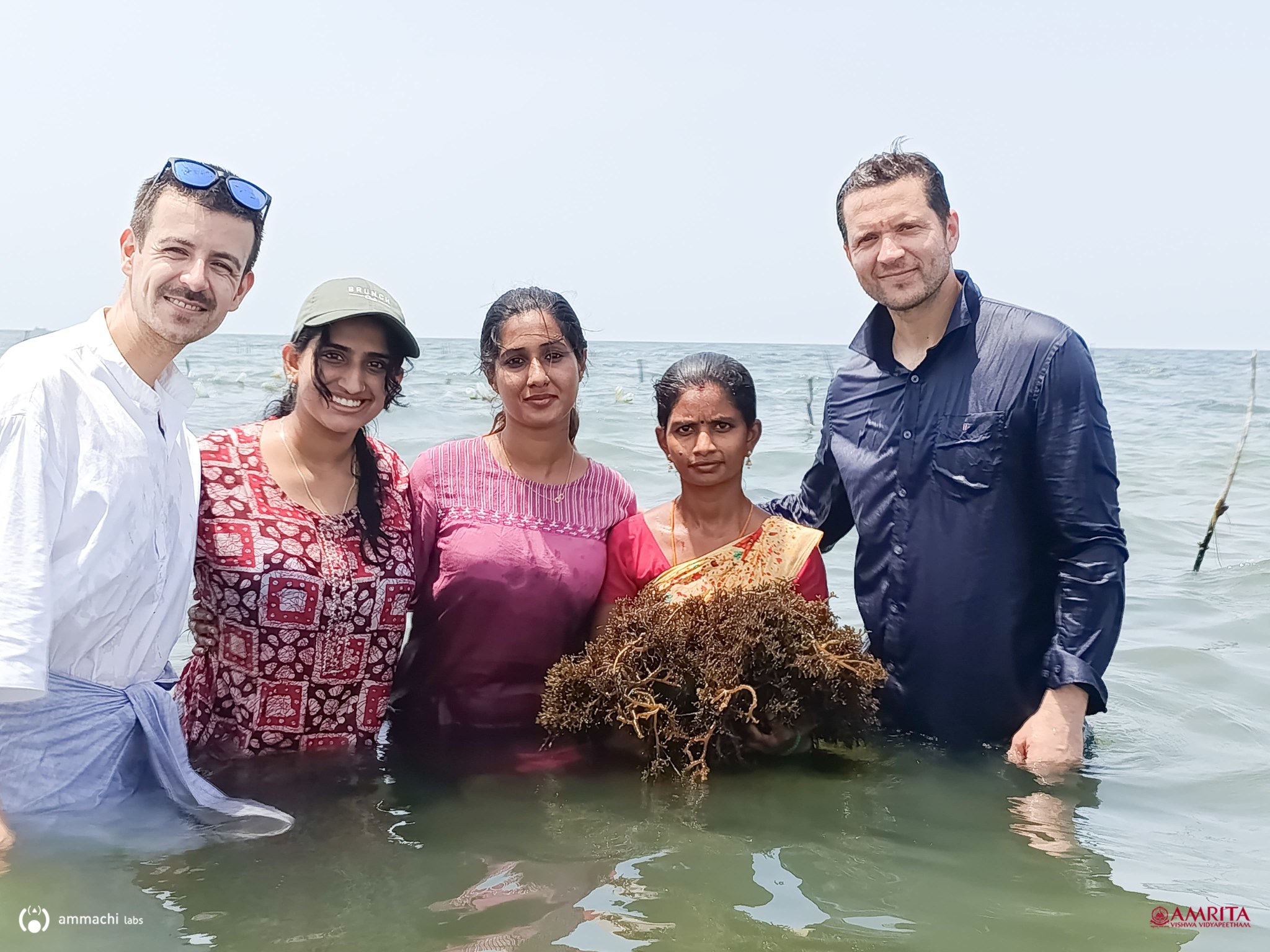
While many of the village women were already seasoned swimmers due to their seaweed farming experience, the program further strengthened their skills and confidence through open-sea training sessions. Activities like floating and doggy paddling not only enhanced safety but fostered a sense of camaraderie and mutual encouragement.
Ecological awareness took center stage through “The Ocean Web” activity and participatory coastal mapping, deepening the community’s understanding of local marine ecosystems. A key environmental intervention was the Seagrass Restoration initiative, led by Dr. Shalini and Rupa Ji of Amrita, where participants used sand-filled jute bags to restore vital seagrass habitats, crucial for marine biodiversity and sustainable livelihoods.
Adding a humanistic touch, Aaron from the University of Arizona facilitated a storytelling session exploring sustainable relationships with the ocean — blending ecological knowledge with personal narratives. The workshop concluded with a collective “Gratitude to Nature” ritual, reinforcing the spiritual and cultural connection between the community and the sea that sustains them.
This collaborative effort is a testament to how global academic partnerships can cultivate sustainable practices, ecological awareness, and women’s empowerment at the grassroots level. The initiative forms part of Amrita’s broader Ocean Farming projects, supported by Transworld Group, the GEF Small Grants Programme (Operational Phase 7), United Nations Development Programme (UNDP), Ministry of Environment, Forest & Climate Change, Esri, and TERI – The Energy and Resources Institute.
With community-led conservation at its heart, the Soliyakudi initiative is a beacon of hope for a more sustainable and inclusive blue economy.